

Jenner Kanalo
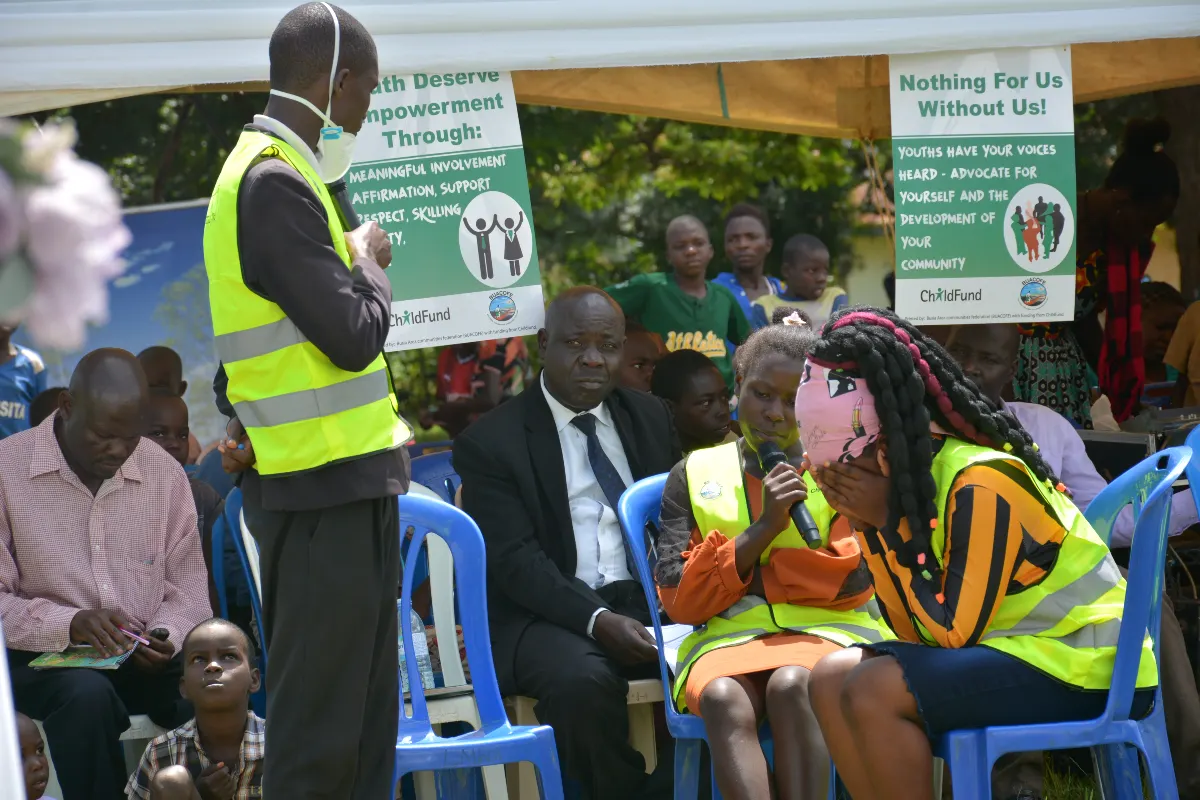
Young people from Busia perform a skit addressing pregnancy and other challenges they face.
Improving Youth Engagement in Uganda
Every 12th of August, Uganda joins the rest of the world in commemorating the International Youth Day (IYD). The aim of having a designated day is to celebrate and highlight the achievements of these young stars, in both the informal and formal sector. But how practical and relevant is IYD to today’s youth and the challenges that affect them.
This year’s theme: “Youth Engagement for Global Action” seeks to highlight the ways in which the engagement of young people at the local, national and global levels is enriching national and multilateral institutions and processes. This statement affirms the fact that youth have a lot to offer and contribute to development if they are empowered and given opportunities.
Uganda, despite having the youngest and energetic population in Africa, has a high prevalence of poverty, unemployment and exploitation with limited space for engagement. The exodus of young people from Uganda to the Middle East is because the prevailing environment does not adequately support their survival so they would rather risk their lives to earn a living. Youth have limited access to Sexual reproductive health knowledge and services; all culminating in frustration leading to undesired traits such as gambling, drug abuse and violent behaviour.
According to UNFPA quick facts 2018, 83% of Ugandan youth are unemployed and only ¼ of those graduating from various institutions are absorbed in the employment sector. Only 42% of youth live in communities that support their participation in civic life. Only 16% of secondary school going age youth (13-17 years) are in secondary school.
Uganda AIDS Commision 2018 statistics indicate that 66% of all new HIV infections are concentrated among adolescent girls and 34% of those who have sought AIDS support services are not able to access them.
Among all life stages, the youth remain the least understood and their challenges unresolved.
A National Institutes of Health project that studied over a hundred young people as they grew up during the 1990s showed that our brains undergo a massive reorganisation between our 12th and 25th years. This entails extensive remodelling and reassembling networks of thought upgrade. It is a stage of balancing impulses, desires, goals, self-interests, rules, ethics, selflessness and risky behaviour. Scientists further allude that people between 18 to 25 years have a high likelihood of experiencing mental illness.
Adults usually associate any maladjustment among youth to hormones, but the fact is that hormones are only part of their adjustment associated with physical impact such as change in height, acne and reproductive development. The changes in an adolescent’s brain and the events that occur around him/her are more likely to shape their mood than the hormonal shifts occurring inside of them.
As adults, in the form of caregivers, parents, mentors, teachers and role models of youth, we should know that they need attention, love, care and most importantly that they need to be heard. Our failure to recognise this exacerbates the situation and creates a continuous sense of dilemma amongst youth.
Furthermore, an analysis of gender impact by life stage indicates that from the age of 6-14 years, girls are overlooked for education are most likely to drop out of school. Traditional roles start to emerge and are reinforced, puberty increases vulnerability to intimate partner violence and sexual assault. By 15 years, girls have taken on full traditional gender roles and are extremely vulnerable to early/forced marriage, pregnancy and gender-based violence.
On the other hand, boys reaffirm their behaviours, attitudes and beliefs about girls and women. They also continue to establish their safety and security in the educational and employment realms.
Currently, Uganda’s youth bulge is simmering and this can be a blessing or curse for us. It can be a blessing if these young, energetic and opportunity hungry youth are supported to engage in meaningful and productive development ventures. I strongly believe that the youth are Uganda’s diamond in the rough and if refined are potentially the key to achieving middle income status by 20240. This can also be a curse for us if the youth are continuously side-lined and their voices not heard. Based on their global slogan “Nothing for us without us”, the time to make meaningful engagements with youth is now.
Youth should be treated as partners and not recipients of programs. This approach envisaged in the Youth-Adult partnership will graduate us at a level where young people take initiatives and tap in the wisdom of adults for guidance.
It is good that government has in place several initiatives under the National youth policy-2001, such as the Youth Livelihood Programme, the facilitatory Youth Livelihood Fund, Youth Venture Capital Fund designed to support young people with self-help employment opportunities.
The establishment of the Business Technical and Vocational Education and Training strategic plan 2011-2020 code-named Skilling Uganda is positively focused on equity, access, quality, relevance, management and financial sustainability of youth development initiatives, which under good workmanship could bring an array of hope for the youth in Uganda.
We stand to reap more gains from our vibrant youth if Civil Society Organisations, NGOs, Faith Based Organisations and other non-state actors embrace and support the government to effectively implement the National Youth Policy. The policy reiterates the commitment of the government to undertake systematic youth programming through a multi-sectoral strategy involving relevant Ministries, Departments and Agencies, development partners, private sector, civil society organisations, communities and the youth themselves.
This op-ed was first published in the New Vision.


