Every child has the right to live free from violence, exploitation and abuse

Violence against children not only causes deep trauma but also hinders their education, growth, and ability to reach their full potential. However, thousands of children in Uganda continue to suffer from abuse, neglect, exploitation and various forms of violence that hinder their development.

According to the 2018 Uganda Violence Against Children Survey (VACS), one in four girls (25%) and one in ten boys (11%) reported sexual violence. Most of the perpetrators (among 13–17-year-olds) were neighbours and strangers. Findings also highlighted that one in four children (girls, 28%; boys, 24%) between ages 13-17 years experienced physical violence and more than one in five 13–17-year-old children reported experiencing emotional abuse. This harm can be inflicted by anyone in a child’s life—including strangers, teachers, peers, parents and neighbours.

Keeping children safe wherever they are is critical to their physical and mental health, well-being and overall development, and it is a priority at ChildFund.

Our Impact

Facts and  figures from 2024 data.

Our Approach to Protecting Children

Our child protection programs address children’s protection needs as they grow from infancy through young adulthood. Parents, caregivers, teachers and children themselves learn to question cultural norms that perpetuate, justify and normalize violence, and are encouraged to speak out and act against it. And communities are supported to build safe places where their children can learn and play — at home, at school, online, in the community and during humanitarian emergencies.

Child protection systems function best when their individual components strengthen and reinforce each other. Our interventions focus on how and where we can complement work already underway by government, institutional donors, the private sector, our local partners and communities to strengthen those systems. Collaborations include community-based child protection mechanisms, public awareness campaigns, data collection and research, advocating for improved laws and policies.

For example, through the Joining Forces Alliance, we worked with other child-focused organizations to advocate for better policies, strengthen national child protection systems, and equip children, schools, and communities to prevent and respond to abuse and exploitation.

Learn More: Joining Forces to Protect Children Beyond Pandemics

We support our local partner organizations to build and strengthen existing community child protection mechanisms so that children and community members drive their own protection. We also link them with government systems and services, as well as other parts of the child protection system, so that they don’t operate in isolation but instead coordinate and work effectively together to protect children. Our approach to violence prevention also focuses on addressing harmful practices that can disproportionately affect girls and young women, like early marriage and intimate partner violence. 

For instance, through awareness raising, the Hands4Good campaign  in 6 districts (Gulu, Obongi, Kampala, Wakiso, Busia, and Bugiri) reduced cases of corporal punishment by increasing families’ knowledge on what constitutes violence in the home and by improving capacities to respond to violence within the community. 

Learn More: Hands4Good Campaign

  • The Child Friendly Accountability (CFA) approach ensures children can effectively safely participate in monitoring child protection systems and hold duty bearers accountable. Using this approach, we provide children, youth, and communities with knowledge about their rights and the child protection system, enabling informed dialogue with decision-makers and collaboration with key stakeholders to drive positive change at community, national, and global levels.

Learn more: Commemorating the International Day of the Girl Child, 2023: Girls speak up for their rights!

Our work in humanitarian situations includes preventing and responding to abuse, neglect, exploitation and other forms of violence in protracted situations. After a disaster or amid conflict, migration or other crises, children need tangible relief items, but just as importantly, they need psychological and emotional support.

In the Palorinya Refugee Settlement in Obongi District, our programs provide safe, community-based child protection mechanisms to prevent and respond to protection risks. These initiatives also improve the psychosocial well-being of children participating in group activities within Child-Friendly Spaces. This project, aligned with the Uganda National Refugee Response Plan draws on our expertise in child protection in disaster and conflict settings, by integrating child protection in emergencies in our humanitarian programs.

Learn More: ChildFund’s Humanitarian Response: Working With South Sudanese Refugees in Palorinya 

This model aims to prevent and reduce violence against children in schools and homes. It enhances the skills of children, caregivers and teachers to prevent, mitigate and respond to violence against children by participating in a violence prevention program and activities focused on social emotional learning skills and self-protection.

Learn more: 

  •  

ChildFund leads advocacy initiatives that champion children's rights. As an active member of networks like the Joining Forces Alliance and the Uganda CSO Network, we collaborate with other organizations to promote child protection legislation and policies. Our efforts are amplified through local implementing partners, supporting child-led advocacy to ensure children engage meaningfully with decision-makers at all levels. Our Advocacy Plan (2016-2025) aims to increase budgetary allocations to the child protection sector at both national and district levels for effective policy and legislative implementation.

ChildFund, in partnership with AfriChild Centre, commissioned a budget analysis to assess the Government of Uganda's national and sub-district-level budget allocation trends for child protection over the five fiscal years (FY2017/18–FY2021/22). The study examined processes, stakeholder participation, and accountability in child protection, utilizing quantitative methods to extract data on allocations and expenditures from government reports. Five districts—Gulu, Katakwi, Busia, Wakiso, and Mbarara—were selected for sub-national coverage, with participants including government officials, child rights organizations, parents, and children.

Following this study), the findings have strengthened advocacy efforts for increased funding for child protection programs at both national and local levels. The study has also encouraged greater participation from key stakeholders, improved transparency in budget allocation and expenditure, and supported capacity-building for local governments and organizations to monitor budgets more effectively. 

Learn more:

  • ChildFund and AfriChild Analysis on the Allocation of Resources for the Child Protection Sector in Uganda. Learn More
  • Report calls for government increased funding to all child protection structures. Learn More
  • Why investment in child protection is important. Learn More 

Our child protection and inclusive development work supports children and young people to learn to use their voices to enhance their own protection. Children’s experiences and perspectives inspire adults to understand that change is possible and turn hope into action. 

What do children need protection from?

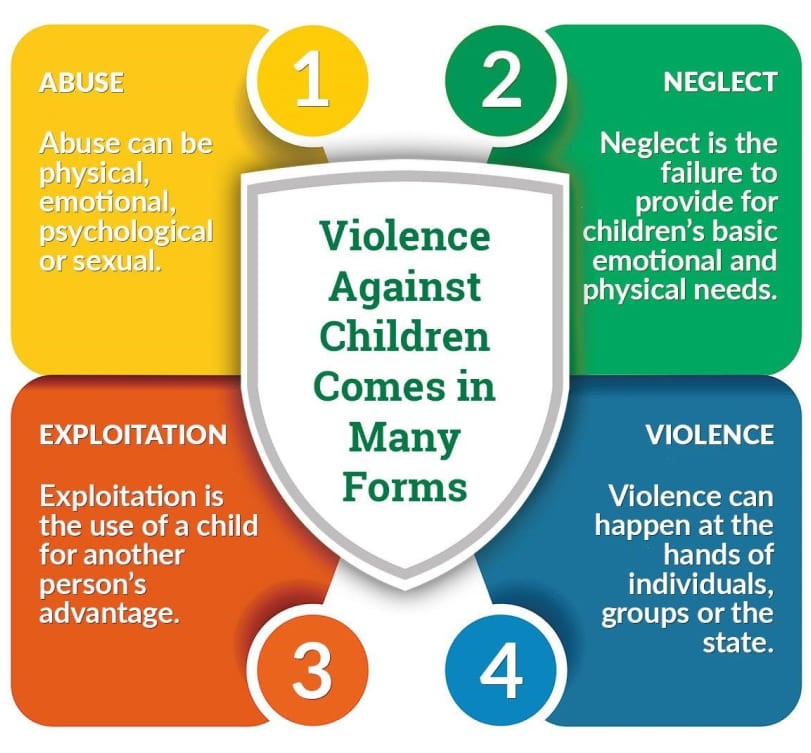
  • Abuse

    It may be harsh, humiliating corporal punishment, female genital mutilation, or online sexual abuse and exploitation (OSEAC). Child, early or forced marriage, a type of gender-based violence, can set the stage for a variety of abuses.

  • Exploitation

    It includes child labor; child trafficking; sexual exploitation, including the production of child sexual abuse materials, child prostitution, early marriage and sex tourism; and, in many countries, recruitment into armed forces.

  • Neglect

    Abandonment and other types of neglect leave children vulnerable to institutionalization, exploitation and other hazards.

  • Violence

    Violence can be physical, sexual, emotional or psychological and can take many forms: bullying, forced displacement and separation, torture, mutilation, physical punishment, rape and other forms of gender-based violence.

Featured Project

Joining Forces to Protect Children Beyond Pandemics

The COVID-19 pandemic increased risks for children, exposing them to violence, neglect, and disruptions in essential services. In response, the Joining Forces Alliance (JOFA) project worked to strengthen child protection systems. This included facilitating case conferences that provided justice, counseling, and family reunification for 1,742 individuals, including children with disabilities. Additionally, the Hands for Good campaign, aimed at reducing corporal punishment, reached over 4.6 million people through media campaigns with 1,500 children and their parents participating in sessions on Parenting Without Violence.

What's New?

  • All Posts
  • child-protection-front