


Moses Otai
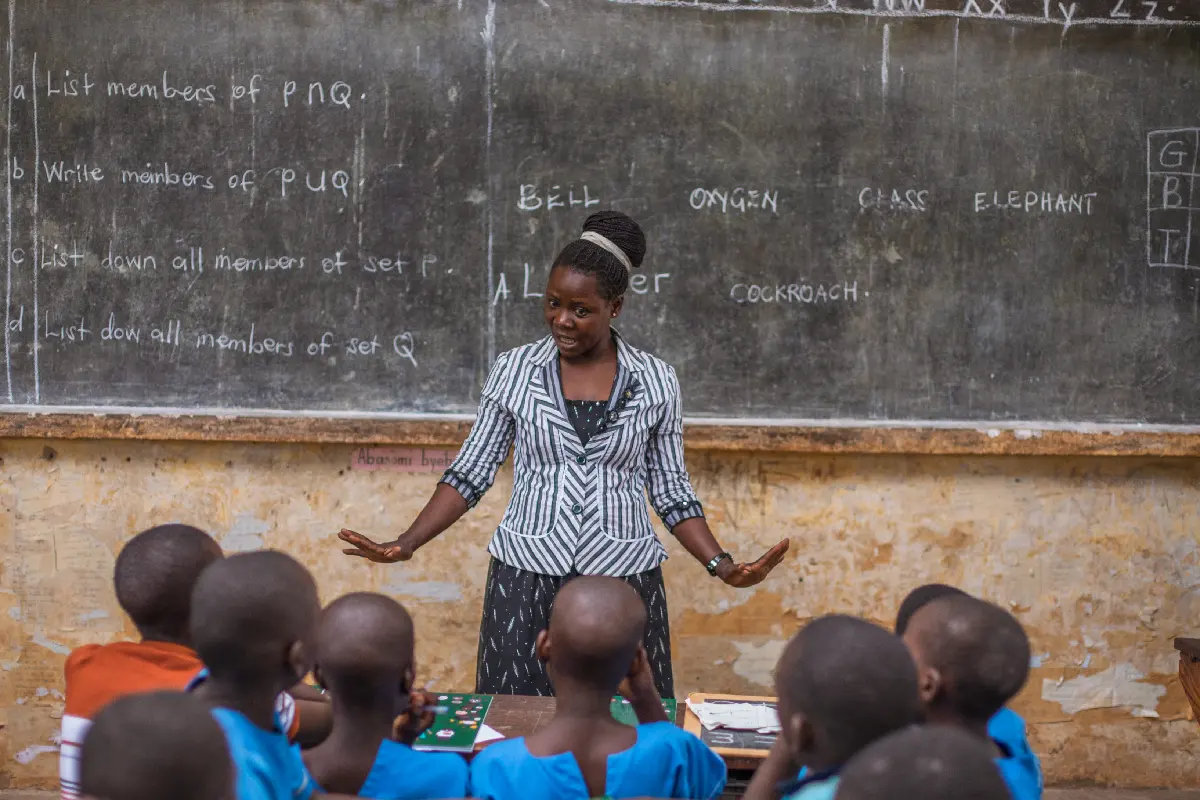
A teacher takes learners through a literacy class session
Let’s restructure our education delivery to accommodate more learners
As we mark International Day of Education today (January 24) it’s time to reimagine, restructure learning to make it more suited to children irrespective of where they are, what they are, or their family’s socio-economic status.
Globally, learning for most children has been severely affected in the past two years due to the Covid-19 pandemic disruption. The United Nations Educational, Scientific and Cultural Organization (UNESCO) in its various reports during the pandemic period has highlighted growing poverty, inequalities, injustices, violence, among other ills in society.
An excerpt in a concept released to commemorate the day by the UN body says” education is key to charting the course towards more justice and sustainability, but it is failing millions of children, youth and adults, increasing their exposure to poverty, violence, and exploitation.”
In Uganda, the pandemic gravely exposed the gaping growth in inequalities and injustices regarding accessing education and learning opportunities in addition to other social services. Many families couldn’t afford or access learning materials for their children.
This is despite the government efforts and scattered endeavors by other actors. The resultant effects for such children have been a stagnation of learning and a high likelihood of dropping out of school.
To this, the National Planning Authority reported that nearly 4.5m learners may not return to school. Compounding all this for adolescents has been the phenomenon of teenage pregnancies reported in every corner of the country and said to have quadrupled during the period of school closures.
However, there are opportunities to explore and build on to re-shape the future of education and learning in this country. When the closure of schools was announced by the government, many of these institutions innovated and collaborated with digital solutions providers to launch online learning platforms.
These have got better and cheaper over time and successfully aided the learning of children whose parents/guardians could afford them.
The government’s move to develop home learning materials for children who had no access to their teachers to ensure they continued to learn with the support from family members was equally creative.
These tried and tested practices that yielded considerable results need not be abandoned because schools have reopened but rather reviewed and strengthened to foster blended learning.
Learners can for instance be relieved of physical attendance of classes 5-6 days a week to three days a week and use other days to engage with their teachers for revisions online/ or having self-study time.
The role and capacities of parents too at all levels can also be strengthened and streamlined to match the efforts of teachers. Even those parents unable to read and write can support the learning of their children by ensuring a conducive family environment for self-study.
The government is implementing several reforms in the educational sector including operationalizing the revised curriculum in primary and lower secondary levels, retooling teachers, and revising their training curricula among other developments.
This is an opportunity to embed the learnings and innovations that have happened during the pandemic period. For instance, having ICT savvy teachers and the expansion of ICT hubs and labs to all institutions is critical.
Resourcing this would mean that the country is building a critical mass of ICT literate people in the next generation, and this lays foundations for Science, Technology, Engineering, and Math (STEM) that the president is championing and a key bridge for our economic and social development.
Learning should be inclusive for all children irrespective of their circumstances. Currently, there is a raging debate on whether to allow pregnant adolescents or child mothers back to the classrooms. Though every divide of the debate seems to have its own legitimate opinions, it is evident that the affected adolescents will be the ultimate losers, and this should not be the case with all the opportunities around us.
Where possible and depending on the informed thought of the learners involved, they can be supported with home learning provided the system of strengthening outreach support by the school and teachers including counselors is in place.
During the closure of schools, many individual learners were checked on by their teachers and these engagements encouraged children to keep learning. This same approach can be reviewed and adapted to support the children who have befallen such circumstances as pregnancies and motherhood to aid continued learning and successful return to schools.
For the adolescents who have given birth and can return to schools, these can be supported and trained as resources to counsel their fellow learners based on their experiences. They would also be a source of encouragement to others to return to school to reduce the level of dropouts.
Education that promotes the achievement of successful learning outcomes is critical for the human capital development of any country.
This day poses an opportunity for us as the citizenry and leadership of this country to reject and devise actions that can transform education to enable all to realize their fundamental rights to education as well as strengthen our progress to achieving Sustainable Development Goal 4.
Let’s use the lessons from the last two years to create opportunities for more children to easily access education.
First published in the New Vision
SHARE:


