

Fauzia has reclaimed her future after teenage pregnancy
July 17, 2025
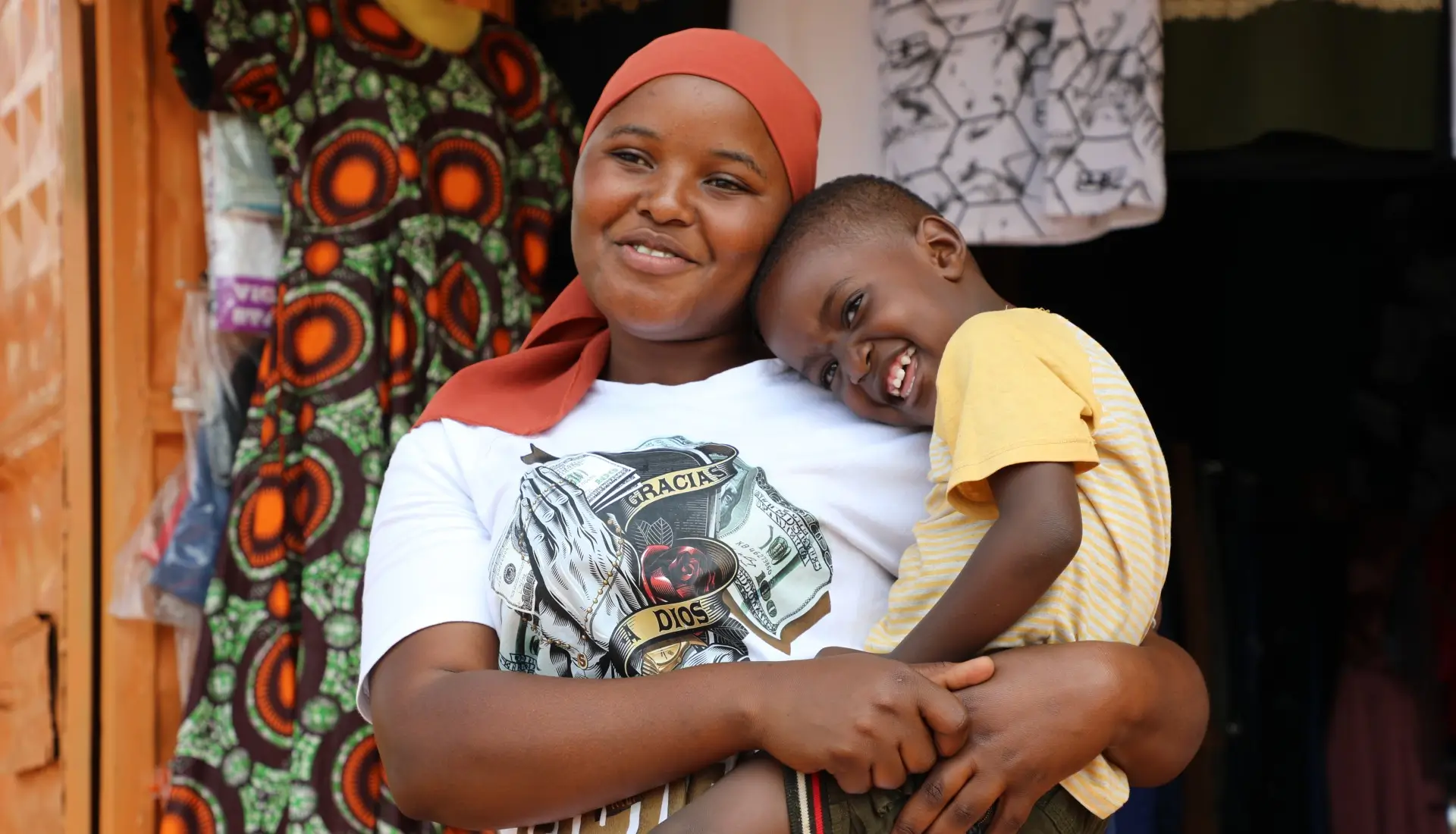
Fauzia with son outside her shop.
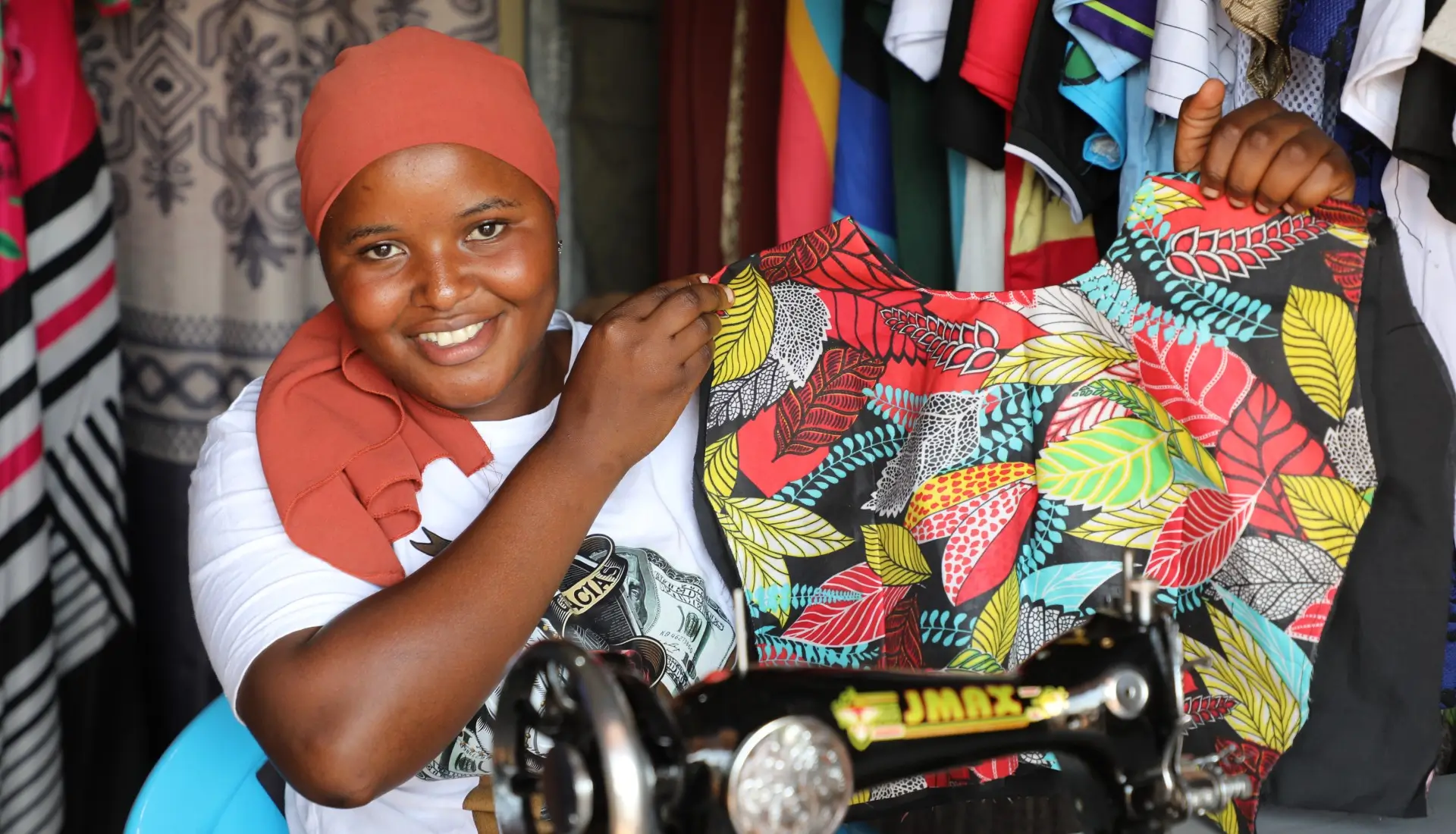
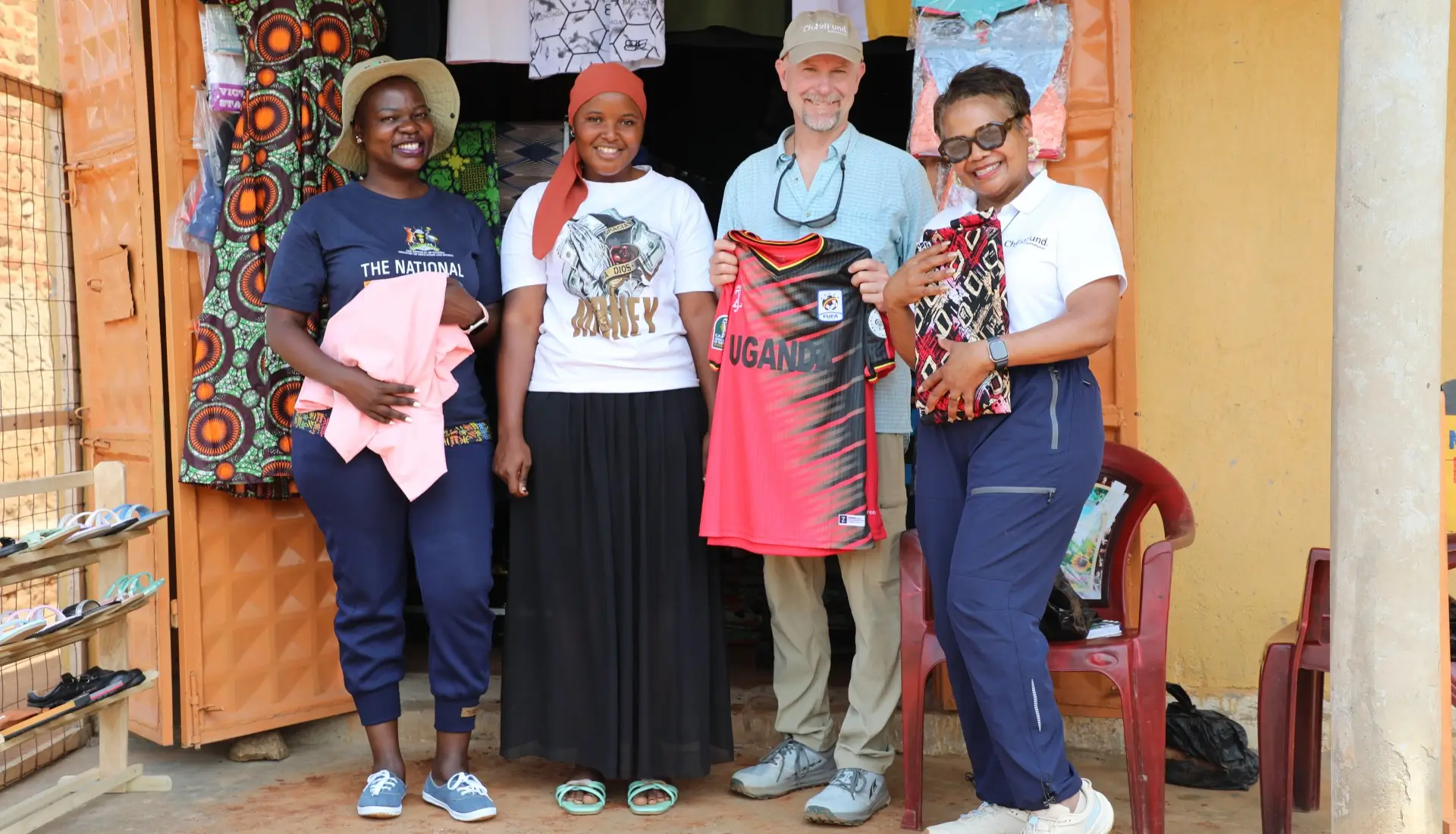
Twenty two-year-old Fauzia sits behind her sewing machine at a trading centre in Busia District. “Welcome,” she says warmly, ushering us into her small shop. The neatly arranged space is lined with colourful kitenge (African print) fabrics, ready-made clothes and a rack of shoes. In one corner stands a mobile money kiosk, another sign of her growing enterprise.
As we settle in, Fauzia’s hands move seamlessly over bright fabric, stitching pieces into beautiful dresses. Her four-year-old son Arian, whose smile is impossible to miss, circles playfully around her as she works.
We are here to see how far Fauzia has come since she fell pregnant as a teenager, an event that nearly cost her dreams. But as she would later tell us, it was never enough to stop her from pursuing them.
Born into a large polygamous family of 23 children, she was the last born on both sides. “We were so many children struggling for support,” she recalls. “I wore the same school uniform from Primary One to Primary Five, even when it was torn.”
Given the size of the family, Fauziah says the family needed roughly two kilograms of cassava flour each day but often survived on half a kilo.
When she fell ill, there was rarely money for proper treatment. Yet, Fauzia was determined to go to school. Her journey to school on foot started at 5 a.m., taking nearly three hours to reach school. “If you arrived late, teachers sent you back home,” she remembers.
However, all this changed when ChildFund, through its local partner Busia Area Federation of Communities (BUACOFE) gave her a bicycle in secondary school in senior One. “That bicycle was my ticket to education,” she says, smiling. “I used to admire students who parked their bikes under the big tree at school. When I got mine, I felt like I finally belonged.”
That same year, she also wore her first pair of shoes, another memory she holds dear. “I would remove them and put them in my bag when it rained so they wouldn’t get dirty,” she laughs.
Through ChildFund’s support, Fauzia thrived in school, becoming a peer educator and later a youth leader, roles that not only boosted her confidence but also earned her small allowances, which she saved diligently. Her dream was to become a nurse, but life took an unexpected turn after Senior Four.
“I fell ill during exams and didn’t perform well. My father couldn’t afford to pay for further studies and I stayed home. Then, during the COVID-19 lockdown, I became pregnant.” Overwhelmed by stigma and pressure from her brothers to get married, she nearly gave up. “I felt my dreams had ended. At one point, I thought of ending my life but my mother stood by me.”
Fauzia reached out to BUACOFE, who linked her to ChildFund’s program designed to help young mothers regain their confidence, learn vocational skills and rebuild their futures.
She was enrolled in a vocational training program where she discovered her passion for fashion and design. “Tailoring was close to my childhood dream of becoming a fashion designer,” she says. She emerged best in her class. With her savings, she started a small boutique using just sh300,000, later expanding it after ChildFund provided her with a start-up kit that included a sewing machine, fabrics and a sh200,000 capital boost.
Today, Fauzia earns between sh15,000 and sh35,000 a day, enough to support herself and Arian. “Raising my son hasn’t been easy,” she admits. “When he was younger, he often fell sick, but I used what I earned to care for him.”
Now, Arian is a bright baby class pupil, loves football and yogurt and recently topped his class. “I want him to become a doctor so he can help others the way I once wanted to,” she says proudly.
Fauzia’s story mirrors the mission of ChildFund, which works to protect, support and restore hope among adolescent mothers through mentorship, psychosocial support and vocational training. Across Uganda, thousands of girls like Fauzia are finding their footing again which is proof that teenage pregnancy is not the end of the road, but a chance to begin anew.
As a member of the Youth Advisory Council, Fauzia now mentors other adolescents, helping identify girls in distress and referring them for guidance and counselling. “I tell them, never get pregnant at an early age,” she says. “But if it happens, don’t lose hope. Don’t abort. Raise your child and focus on your dreams. You can still make it.”
Her sponsor, from Korea remains one of her biggest inspirations. “Thank you for the good work you’ve done in my life,” Fauzia says. “Without your support, I wouldn’t be where I am. Your efforts helped me rise higher.”
ChildFund’s adolescent and youth reproductive health (RH) interventions focus on supporting young people with the knowledge, skills and confidence to make informed life choices. Through partnerships with community-based organizations, schools and health facilities, we train peer educators, health workers and teachers to deliver accurate reproductive health information and promote positive behaviour change.
Our programs include life skills development, mentorship and youth-friendly health services that address key topics such as sexuality education, menstrual health, mental health and substance abuse. By strengthening community and health systems, we ensure that adolescents can access and utilize RH services without stigma or barriers.
Across Uganda, these efforts have reached thousands of young people, both in and out of school through peer education, community outreaches and school-based sessions. Participants have gained vital life skills, improved self-esteem and developed clearer career goals, leading to healthier and more supported transitions into adulthood.
SHARE:


Related Resources
How one family changed the lives of three generations
When Joseph Rainer, an American national, began sponsoring a child in Uganda several decades ago,...
Turning childhood dreams into a teaching career
Every morning, seven-year-old Judith Akumu would tie her dress, grab her books and dash out...
A passion made possible through sponsorship
We recently paid a courtesy visit to one of the schools that had recruited two...