Select Program
Child Protection
Education
Emergency Response
Youth Development
Health & Nutrition
Food Security
Climate Action
Child Sponsorship
Early Childhood Development
Localization
Environmental Sustainability
Select Type
Capacity Statement
Case Study
Manual, Toolkit or Guide
Policy Brief
Project Brief
Report
Research
Select Year
2026
2025
2024
2023
2022
2021
2020
2018
Select County
All Districts
Busia
Obongi
Amuria
Dokolo
Kaberamaido
Kapelebyong
Katakwi
Kole
Kwania
Lira
Serere
Soroti
Agago
Gulu
Kitgum

2022

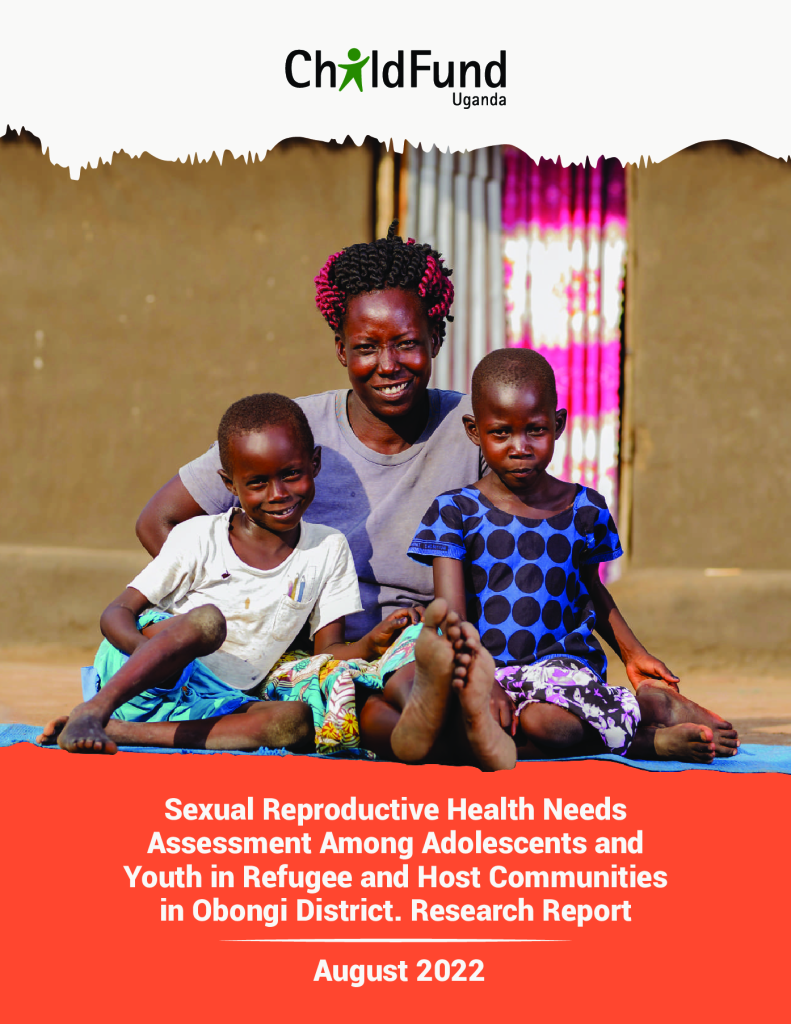
The study focused on assessing reproductive health and gender-based violence knowledge, attitudes and practices among adolescent girls and boys (ages 13-19) and youths (ages 20-24) in Palorinya Refugee Settlement and host communities in Obongi district, West Nile, Uganda. The assessment revealed that most participants were adolescent females under 15, with limited reproductive health knowledge, high early marriage and pregnancy rates, widespread misconceptions, low contraceptive use, and significant prevalence and underreporting of sexual and gender-based violence
2020

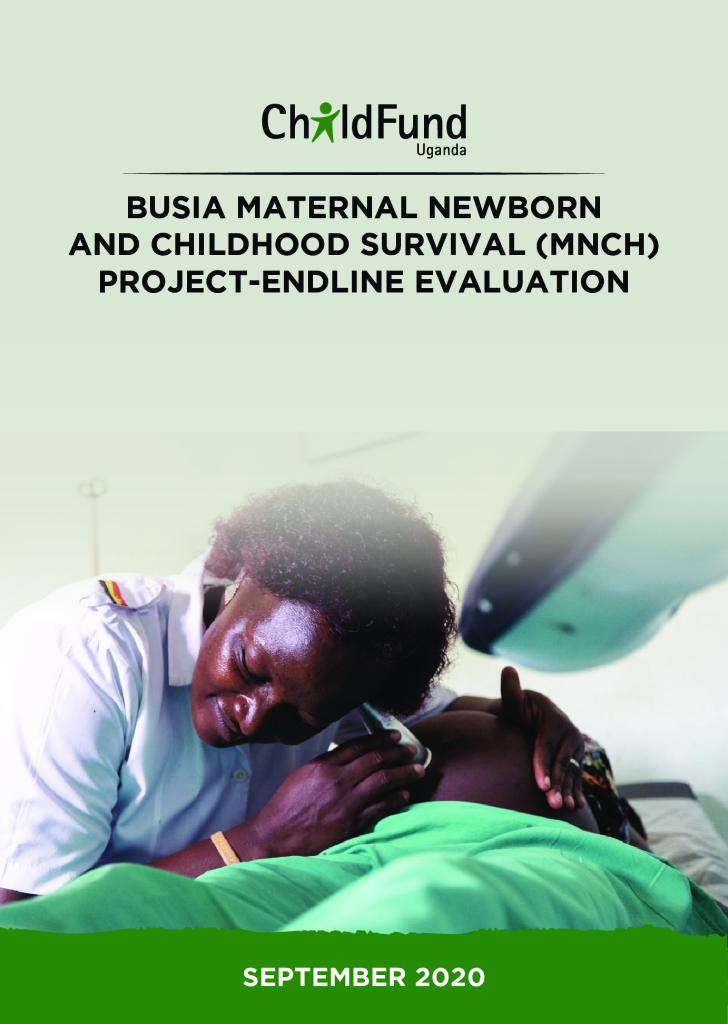
Between September 2017 and August 2020, ChildFund Uganda implemented a maternal, newborn and child health project in Busia District to improve health outcomes for pregnant and postpartum mothers and children under two. An endline evaluation confirmed significant improvements across nearly all project indicators, except for immunization coverage, which dropped, likely due to data source inconsistencies. Overall, the project achieved its intended health impact in the target communities.

2020

This brief highlights the performance of ChildFund’s nationwide Vitamin A Supplementation project implemented in partnership with the Ministry of Health. With funding from Nutrition International, the campaign reached over 6.2 million children aged 6–59 months through two national mop-up phases. ChildFund managed funds while MoH led planning and delivery through national and district health structures.

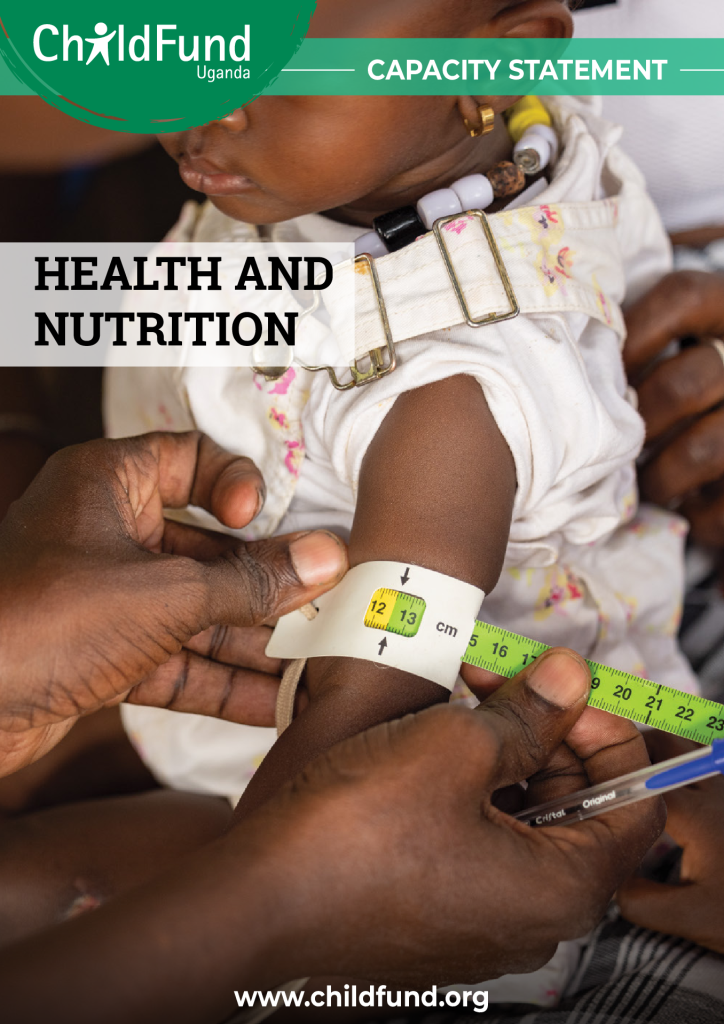
ChildFund strengthens national, district and community health systems by bridging the gap between service providers and communities. We support policy development, participate in Ministry of Health task forces and build the capacity of health workers and district managers. At the community level, we raise awareness on child and maternal health, promote positive health behaviors and train local volunteers to extend services where formal healthcare is limited. Our programs strengthen linkages between community and facility-based systems, ensuring inclusive, culturally appropriate care and supporting communities to participate in health planning, service delivery and monitoring.