


Moses Otai
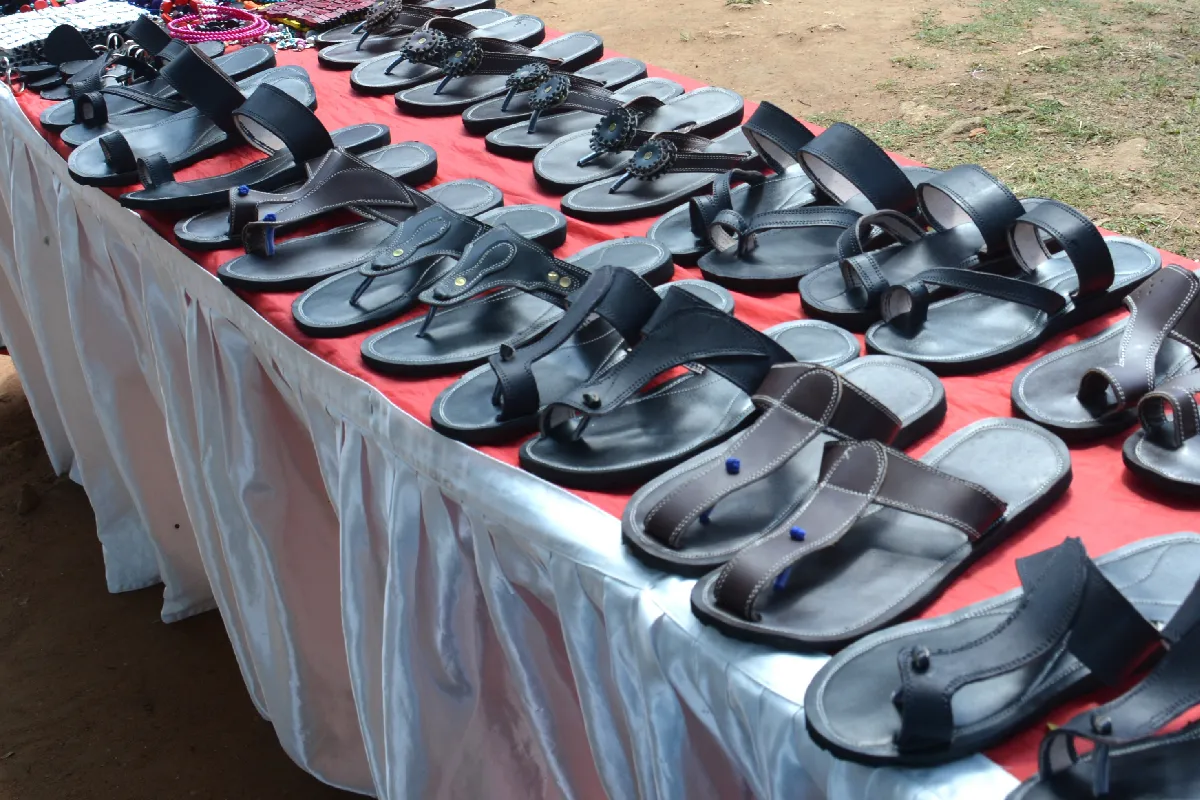
A display of locally made sandals made by our youth in Teso and Lango sub regions.
Bolster job strategies to spur inclusive growth among youth
Uganda is endowed with immense potential. Whereas this should provide decent jobs to young adults joining the labour market as well as the working population at large, accessing dignified work, particularly for the youth exiting tertiary institutions, remains an uphill task.
It is worse for those who have not obtained any qualifications in recognised skills. Consequently, the majority who contribute to the informal economy encounter several challenges, including abuse of labour rights.
A wide range of draft Bills were promoted to improve the status of the labour market in recent years, especially job creation and decent work, but several have not yet signed and are therefore not law.
Among these, for example, the labour ministry has the job externalisation strategy for those heading to the Middle East and Asia for mostly low-key menial work, various unco-ordinated skilling initiatives in the public and private sectors, tertiary institutions internship programmes, but not fully supervised and coordinated with employers or the ministry responsible to ensure better outcomes.
The recent strikes by the senior house officers and junior doctors practising in hospitals for non-payment of the basics to enable them carry out their noble duties, typify the situation.
The planning challenge has also reared its ugly head as seen by the Ministry of Health’s failure to deploy intern doctors for the mandatory one-year supervised tour of duty before independent practice.
The outcome of this is, we will continue to miss opportunities to build a skilled human capital pool with the right work ethic and entrepreneurial spirit.
Important to note is that the country is experiencing high population growth with the attendant positive and negative effects that come with a young population. The World Bank reports that Uganda is one of the youngest countries in the world, with a median age of 15.9 years.
In addition, it has one of the highest fertility rates in the world at 5.91 children per mother. The combination of youthfulness and high fertility rate means growth in the working age population is rapid. It was 3.92% growth per annum between 2011 and 2017, faster than GDP growth in three of the six years from 2012-2017 (using WDI data).
It is estimated that an additional 13 million workers will enter the job market by 2030. This and Uganda’s high dependency rate – of 1.42 dependants per employed person, means Uganda must raise labour productivity while increasing the number of jobs created in order to match the per capita income growth of other economies with lower dependency.
This requires, on the one hand, increasing the productivity of agriculture where most people work, while simultaneously increasing the rate of movement of young workers away from agriculture into higher productivity industry and service jobs.
With this research, planners for this country, primarily the Executive and Legislature as policymakers, need to band together to reflect and purpose to take this as an opportunity to build for the future by crafting, legislating, financing connected job policies and strategies that respond to the labour market and capture the country’s future potential for sustained inclusive growth.
The focus should be on providing internship and apprenticeship practice hubs, employer preparation both in public and private sectors, innovation incubator hubs to support idearation to promote further self-employment for future populations.
Approximately 700,000 young people reach working age every year in Uganda. This is expected to rise to an average of one million in the decade from 2030-2040, and it is already creating a mismatch between labour demand and supply.
While Uganda’s youth are renowned for being highly enterprising, fewer than 4% of Ugandans are employers. About half of 52% are working for themselves only, and 43% are unpaid family workers. About 77% of the population aged 15-64 work.
Unemployment is negligible at 3.2% for the adult population and 5.3% for youth. The quality of jobs however, is low. Only one in five workers are in waged employment, although outside of agriculture, the share is about half in waged work. Most Ugandans (two-thirds) still work for themselves or for their families in agriculture.
Among the youth, three in five work in unpaid occupations, contributing to household enterprises, which are mostly farms. To stem labour flight, however attractive the attendant remittances may be for the short-run as it is the case now, there is a need to ensure that first the quality of the labour joining the market is reasonably high to spur the needed production, productivity and innovation.
There is also a need to ensure that the jobs created and available meet the expectations of those entering the market by way of their quality and the attendant work-life balance they would offer.
This requires boldly rethinking how to streamline our informal sector to ensure proper capital access and diffusion, as well as innovation, which increases the purchasing power for goods and services for sustained inclusive economic growth. There is also a need to ensure that the mainstay sectors of our jobs, which continue to be agriculture, tourism, industry, and services, receive appropriate financing and policy enablers to attract investments, both local and foreign.
Nations that have had sustained growth and development such as the Asian Tigers have deliberately invested in human capital as well as laid strategies for decent job creation opportunities in critical sectors of the economy. Uganda has the potential with its youthful population, natural resource endowment, agriculture and tourism, to have inclusive growth, with sustained job growth at its centre.
As we celebrate the International Labour Day, let the country take the opportunity to place the youth at the centre of inclusive economic growth through focusing on strategies that promote dignified jobs.
First published in the New Vision
SHARE:


