

A backpack innovation supporting children carry less and learn more
July 14, 2026
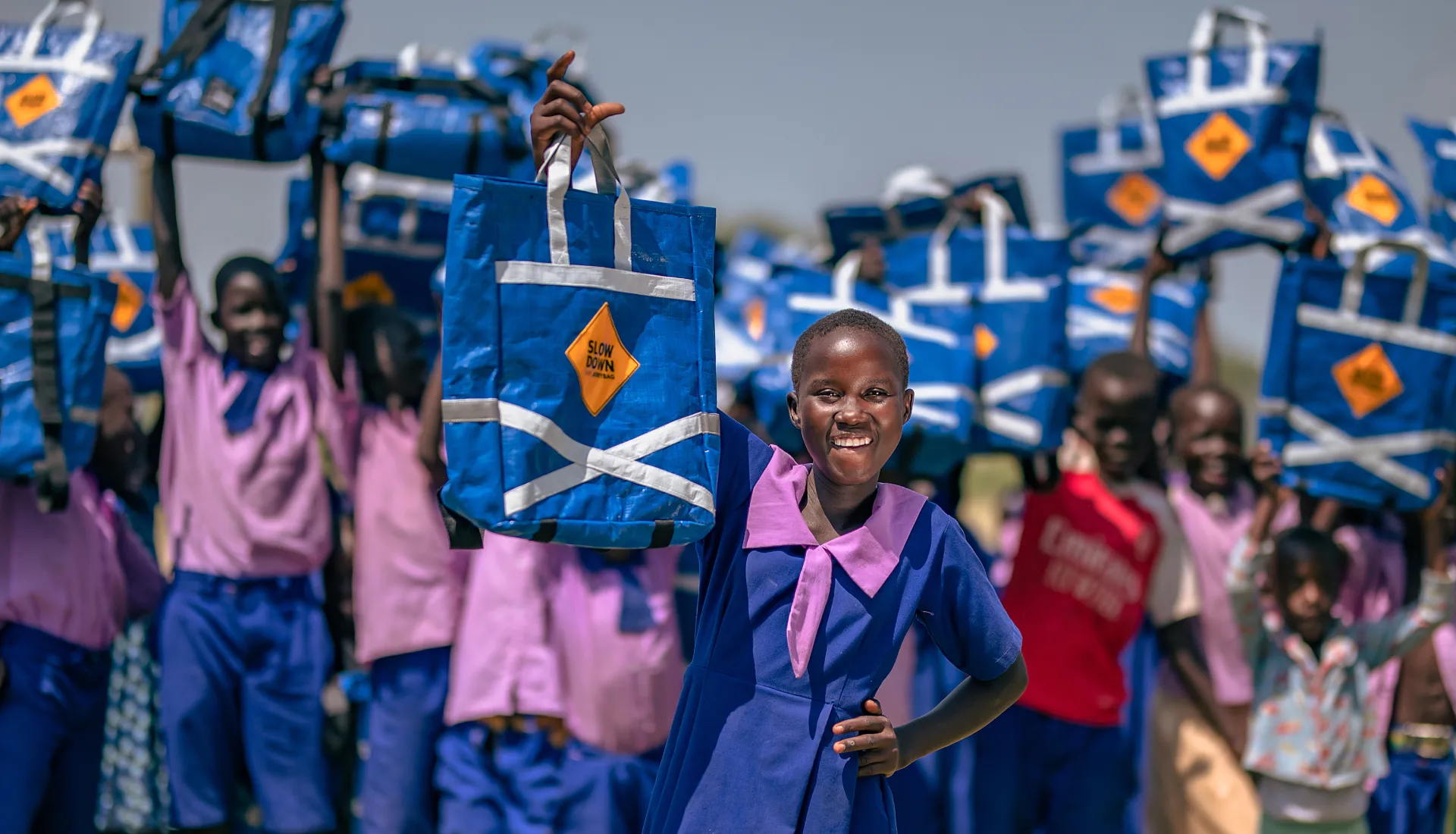
The jerrybags were given to children aged 6 to 8 in four schools within Palorinya Refugee Settlement.
Until recently, fetching water was one of the hardest parts of Samuel’s day.
“Carrying water on my head would hurt my neck. But now, I can carry it much more comfortably on my back. I also like that I can use the same bag to carry my books to school and fetch water when I get home.”
Like many children living in Palorinya Refugee Settlement in Obongi District, Samuel, in Primary 3, would walk long distances carrying a heavy jerrycan balanced on his head.
Every morning, before and after school, children, mostly in rural and urban rural settings walk between four and six kilometres to collect water for their families.
According to Steven Olum, the project officer ChildFund, access to safe water remains a major challenge in the settlement.
“Every day, many children, some as young as six years old, carry 10 to 20-litre jerrycans weighing up to 10 kilograms, a burden that places significant strain on their bodies,” Steven explains.
The consequences of water collection, he adds, extend far beyond the journey itself.
“Instead of spending more time in classrooms, completing homework or playing with friends, many children spend two to three hours every day collecting water,” he says adding that this practice eventually leads to absenteeism, fatigue, poor concentration and reduced learning outcomes.
To respond to this challenge, ChildFund, through its Partners Jerrybag, Sustainable Design Centre and ChorogUsan for Children introduced an innovative solution dubbed “jerrybags,” coined from “Jerrycan” bags.
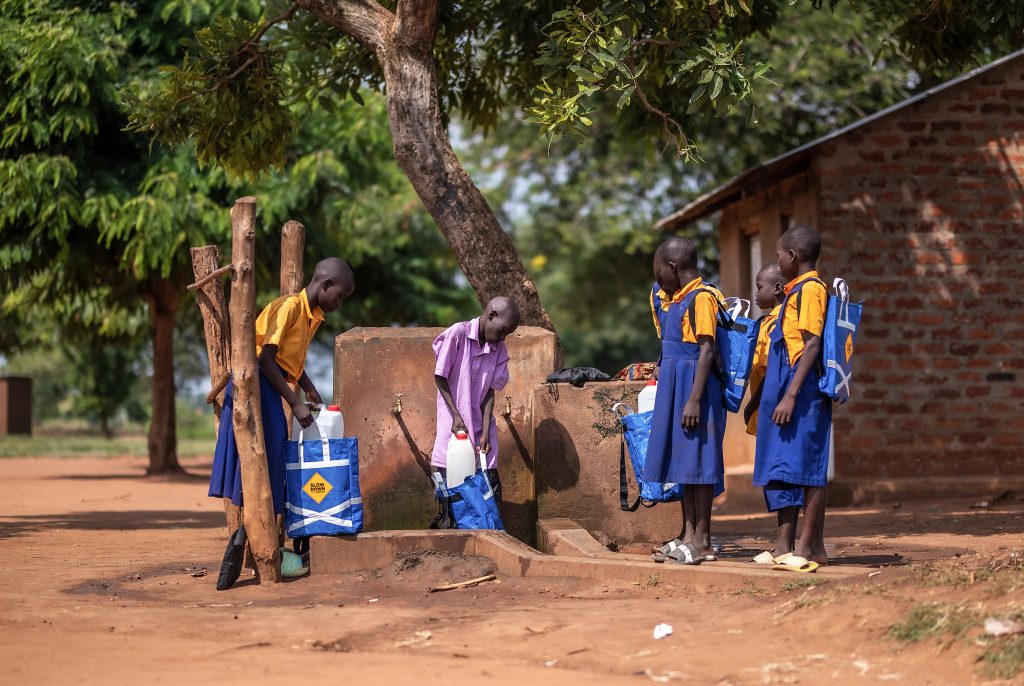
Unlike traditional methods of carrying water, Jerrybags are specially designed backpacks that safely hold jerrycans, distribute weight evenly across a child’s body and reduce pressure on the head, neck and spine.
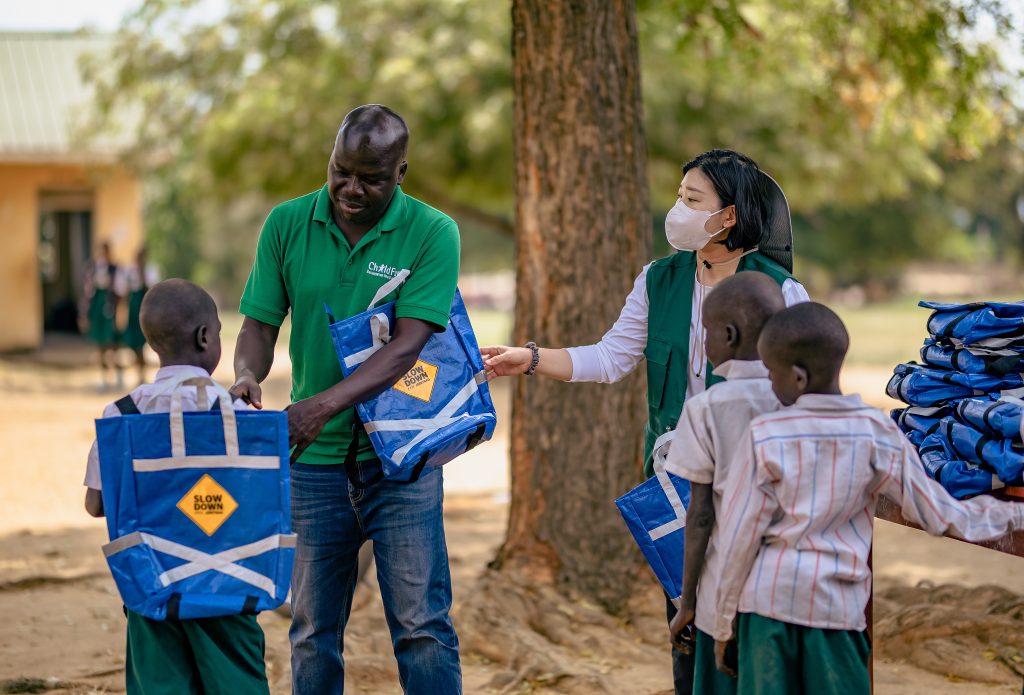
A total of 2,083 Jerrybags were distributed to Primary One to Primary Three learners aged between 6 and 8 years in four schools within Palorinya Refugee Settlement, including: Itula Primary School, Luru Primary School, Morobi Primary School and Our Child Primary School.
The distribution was guided by the Obongi District Education Officer and targeted learners who face the greatest challenges balancing household responsibilities with education.
Beyond the physical burden, children also face safety risks as they travel along long, bushy settlement roads where poor visibility increases the risk of road accidents.
However, Steven explains that the backpack also includes an important road safety feature, a reflective tag with the message ‘Slow Down that reminds motorists to reduce their speed and watch out for children as they cross the road.
“I am very happy to receive this backpack,” says Lillian, a Primary Two learner. “It will help me carry my books to school every day and fetch water for my family after classes.”
Her classmate Hakim agrees.
“This backpack will make it easier for me to carry my books to school and bring water home without getting tired,” he says.
Teachers say the innovation is already making a noticeable difference.
Monica Onduro, the headteacher at Morobi Primary School, says the innovation gives children a convenient way to carry their books to school while also helping them transport water safely back home.


Related Resources

New ‘jerrybags’ ease water burden for refugee schoolchildren in Northern Uganda
Before the school bell rings, many children in Palorinya Refugee Settlement have already walked several...

Harnessing technology to expand access to SRH information for youth
Over 20,000 young people across Uganda will now have easier access to accurate, confidential and...

Advancing inclusive green livelihoods for youth with disabilities in Kampala
Before this project, Ruth Nakato only thought of farming as something for people with big...