

From a mango tree shade to the halls of justice
April 23, 2025
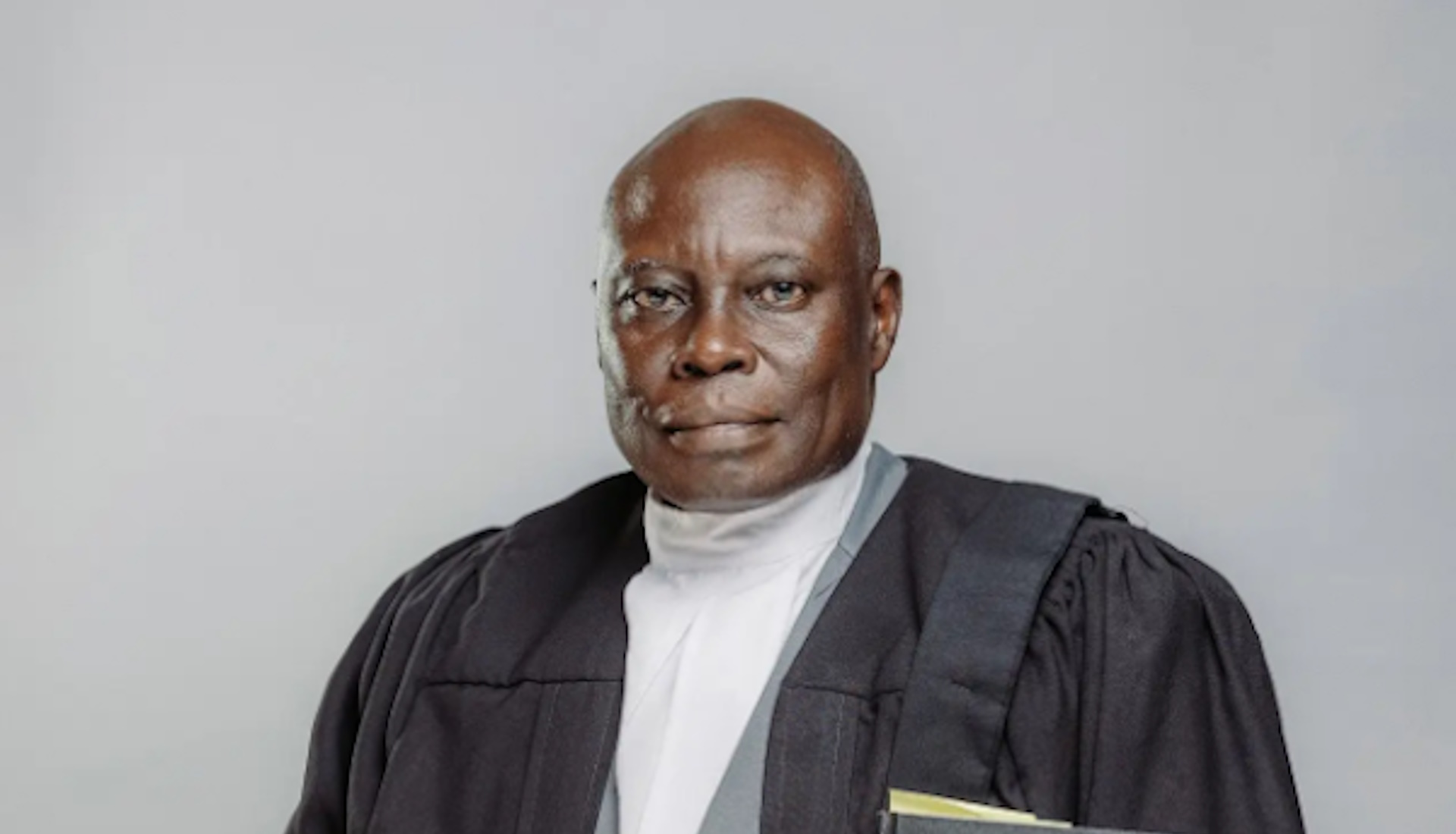
John carries the book of law, a symbol of his duty and conviction
By Cecilia Okoth
It was exactly 11:00 a.m. on a Wednesday when I set out to meet John Boniface Kulu Idambi, one of ChildFund’s alumni. He was sponsored by the organization from primary school all the way through university. His office is perched on the 9th floor of the towering National Social Security Fund building located right in the heart of Uganda’s capital, Kampala.
I arrived at 11:40 a.m., well ahead of our scheduled meeting at noon, carrying my camera and laptop bag. But before I could proceed, security personnel at the checkpoint flagged my camera, saying devices are not allowed in the building for safety reasons. I quickly rang John, who graciously intervened and coordinated my clearance. Fifteen minutes later, I was on my way up.
A quick glimpse into his office shows stacks of legal files, a shelf lined with law books and framed photographs capturing key milestones in his legal career. The window behind his desk frames an impressive aerial view of Kampala city, a fitting backdrop for a man who’s risen from a mango tree shade to become Uganda’s Assistant Director of Public Prosecutions.
But who exactly is John Boniface Kulu Idambi? I was about to find out.
Humble Beginnings
Born 49 years ago in Goligoli village, in Kabweri Sub- County, Kibuku District, John is the eldest of eight children. He began his education at Kachabali Primary School, where his father also served as a teacher. Life in the village was not easy.
“I used to wake up every morning at 6 a.m. to dig and fetch water from distant streams before getting ready for school,” he recalls. “Our meals at home were mostly millet bread or potatoes and even those weren’t guaranteed. Sometimes we only had tea to fill our bellies.”
The journey to school, he recalls, was a trek of 7 kilometres. Their school, a typical rural setting, lacked any classroom block. Instead, they sought shelter from tree shades in the compound.
“We studied under a mango tree, using bricks for chairs. However, if it rained or attempted to do so at any point of the day, that would mark the end of our school day,” he remembers.
“Then one day, foreign visitors came to our school. They rang the bell and we all gathered for assembly. That is when I first heard the name Joseph Rainer.”
Joseph had travelled from the United States of America to visit the birthplace of his wife, Juliet. He later passed away in 2007. During his visit, Joseph got concerned about the children’s learning conditions.
He had travelled with a team that took John and other children’s photographs, saying they would send them to America. “Some parents were suspicious, they thought the ‘Bazungu’ (whites) had come to sell us. But my father was an informed man and understood what it meant,” John recalls
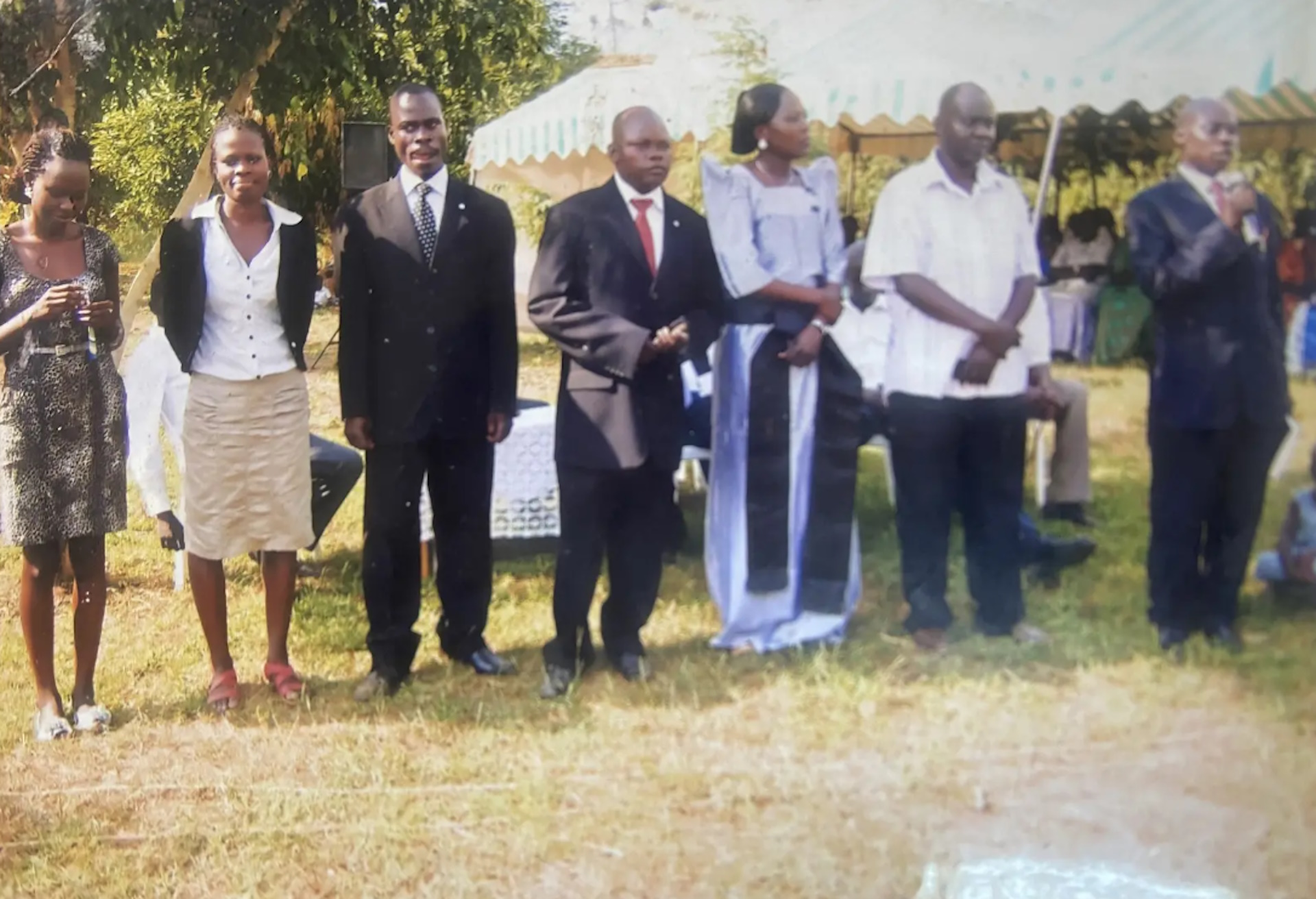 John on the microphone. Looking on are his siblings.
Doors open
The visit marked a turning point. Support soon began to flow, mostly focused on education and healthcare. “They built us classrooms, gave us scholastic materials, free school uniforms and we even started taking porridge and eating lunch at school and they even bought us a school truck that motivated other children to join school. We had a dispensary stocked with drugs that we could easily access when we got sick,” John shares.
John was enrolled in 1982, while in Primary Three under the Nagwere Family Helper Project, an early ChildFund initiative. Soon after, sponsorship arrived. “Our family was lucky; I got a sponsor and my number was 581.” ChildFund, then called Christin Children’s Fund, took on two of John’s siblings and life changed drastically.
After completing Primary Seven with a Division Two, John joined Bugwere High School for his O-Level studies and later Bukedi College Kachonga for A-Level. His sponsorship continued through this period. “We used to take our academic reports to the administrator and I was always among the top 10 students. Out of 130 candidates who sat for senior four, only six passed in Division One and I was among them.”
A set back
Despite his ambition, John’s journey wasn’t without setbacks. “I always struggled with my health, which affected my A-Level performance.” He missed the cut-off for university admission and, with a strict father who believed in discipline and persistence, decided to repeat Senior Five as a private student at Nkoma Secondary School in Mbale, this time, choosing not to rely on the organization’s support.
He carefully selected his subject combination: History, Economics, Literature and Divinity that would sail him through to his dream of becoming a lawyer. Unfortunately, he missed the cutoff for the School of Law by just two points and was instead offered a spot in Education, which he declined. Consequently, he lost out on government sponsorship.
In 1993, Makerere University introduced private sponsorship for the first time. John applied, was admitted to the Bachelor of Laws program, and was overjoyed until he discovered that tuition fees had to be paid in US dollars. He managed to study for one year but was forced to drop out when he could not afford to sit for exams.
Feeling devastated, John made a bold decision. He wrote to the organization that had once helped him. Traveling from his village to Kampala, he bought a sheet of paper and a pen at the post office and poured his heart out in a letter addressed to the National Director of Christian Children’s Fund, detailing his desire to pursue law. A month later, in March, he followed up and was directed to Susan Wang, the then chairperson.
During that period, he stayed with his uncle in Nabbingo, anxiously waiting for a response. “I was at a crossroads and asked God to guide me,” he recalls. One Sunday after church, his aunt returned with exciting news. An announcement had been made on the radio for him to report to the ChildFund office for a scholarship.
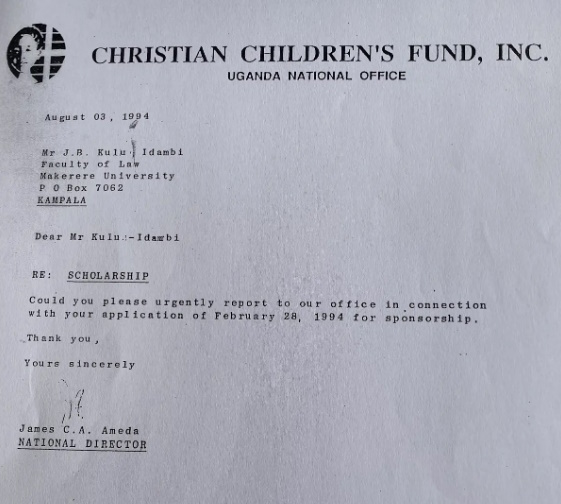 The letter that changed his life.
Still in disbelief, John showed up early the next morning at the organization’s headquarters and met the then National Director, James Ameda. “They only needed a letter proving I had enrolled but dropped out due to financial constraints,” he says.
In October 1994, he rejoined Makerere University’s School of Law, alongside two other students who were also sponsored by the organization. At the time, private students were required to study for four years instead of the usual three, based on the assumption that they were academically weaker. “But we proved them wrong. Many of us excelled,” John says. This discriminatory policy was later abolished.
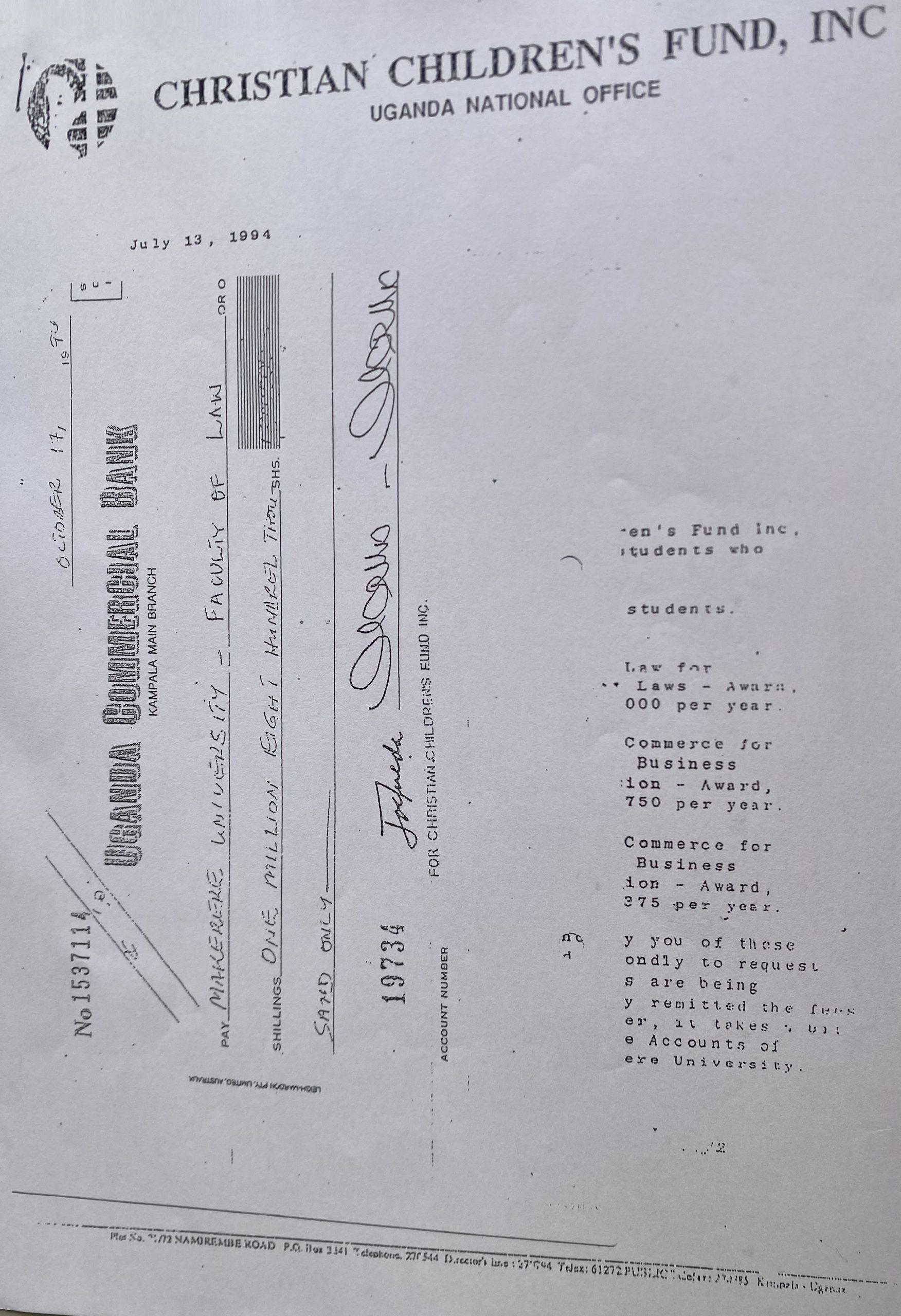
he shares his first cheque from Christian Children’s Fund (Now ChildFund Uganda)
Fortunately, State House stepped in to sponsor his fourth year and his subsequent training at the Law Development Centre.
Climbing the ranks in justice
After completing the bar course, John began his career at Nampandu and Company Advocates, located at Uganda Bookshop, where he worked for two years. He also served as a legal officer with Green Boat, a parking company attached to Kampala City Council, before applying to join government in 2003.
That same year, he became a state attorney, handling criminal cases on behalf of the government. He rose steadily through the ranks, from State Attorney to Senior State Attorney, Principal State Attorney, Senior Principal State Attorney, Chief State Attorney and eventually to his current position as Assistant Director of Public Prosecutions.
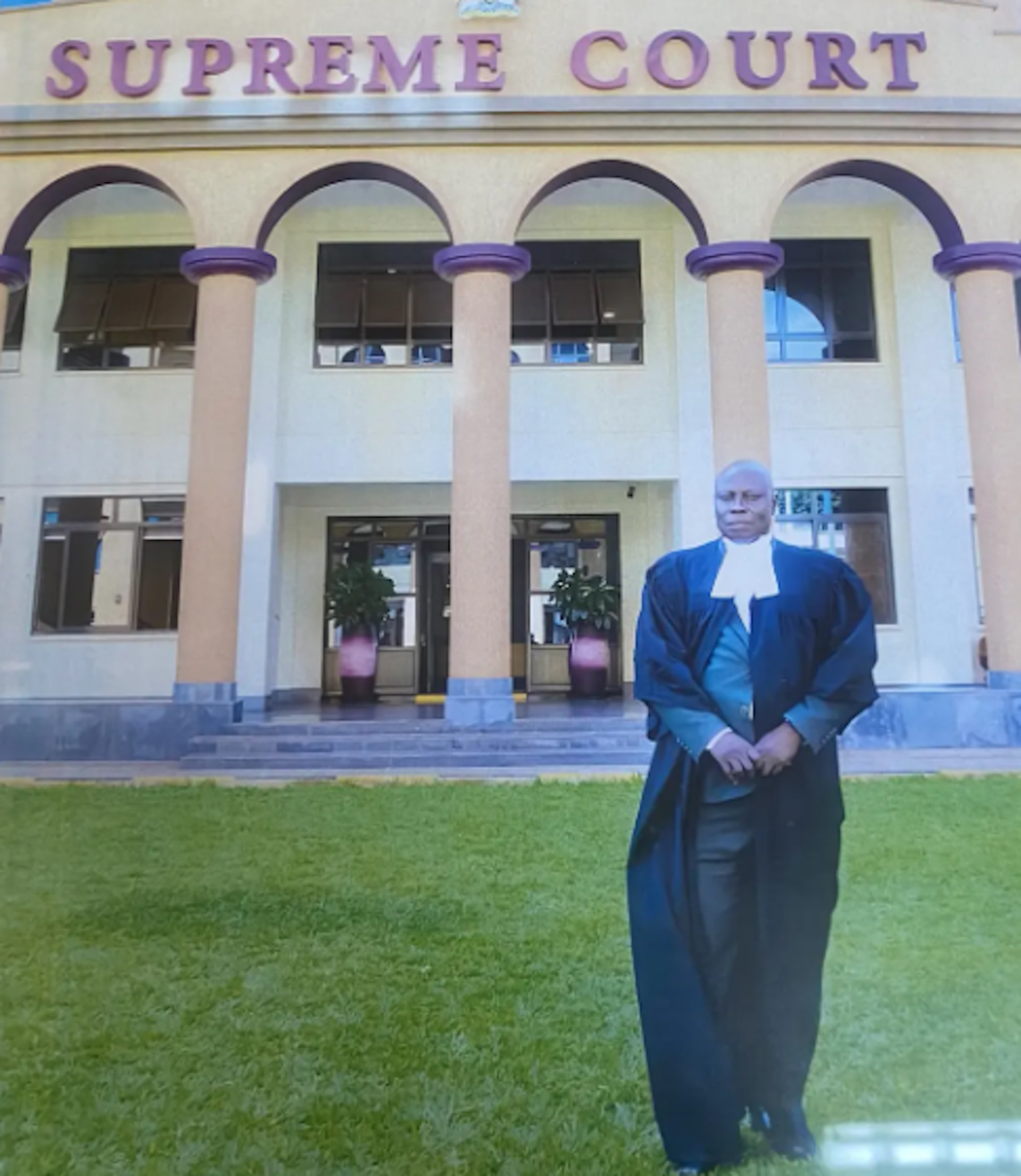 portrait of John at Uganda’s Supreme court.
John handles a wide range of cases including aggravated defilement, robbery, murder, fraud, treason and cybercrime. “One of our key responsibilities is to review police files and ensure there’s enough evidence before we prosecute,” he says. “We have to protect the innocent.”
One challenge he often encounters is witness absence, which can lead to cases collapsing. “It’s heartbreaking to see a criminal walk free because there’s no witness to testify,” he says. “And as much as we defend victims, criminals also have rights. Sometimes, during trials, defence lawyers ask inappropriate questions. A rape victim might be asked, ‘Didn’t you enjoy it?’ Those are tough moments, but we now object and ensure the victim is protected.”
He adds that the justice system has made progress in handling sensitive cases. “We now use methods like trial in camera and provide psychosocial support to help victims speak freely.”
One case that stands out in his career happened while he was stationed in Fort Portal. A man, after a domestic dispute, set fire to his wife’s home. She and their daughter sustained major burns and the woman later died. The daughter testified that her father had previously tried to kill them. When the case went to trial, the file mysteriously disappeared. “I travelled from Fort Portal to Kampala and eventually found it. I wanted to ensure justice was served.” The man was convicted and sentenced to 40 years. “I feel fulfilled when I help remove dangerous elements from society.”
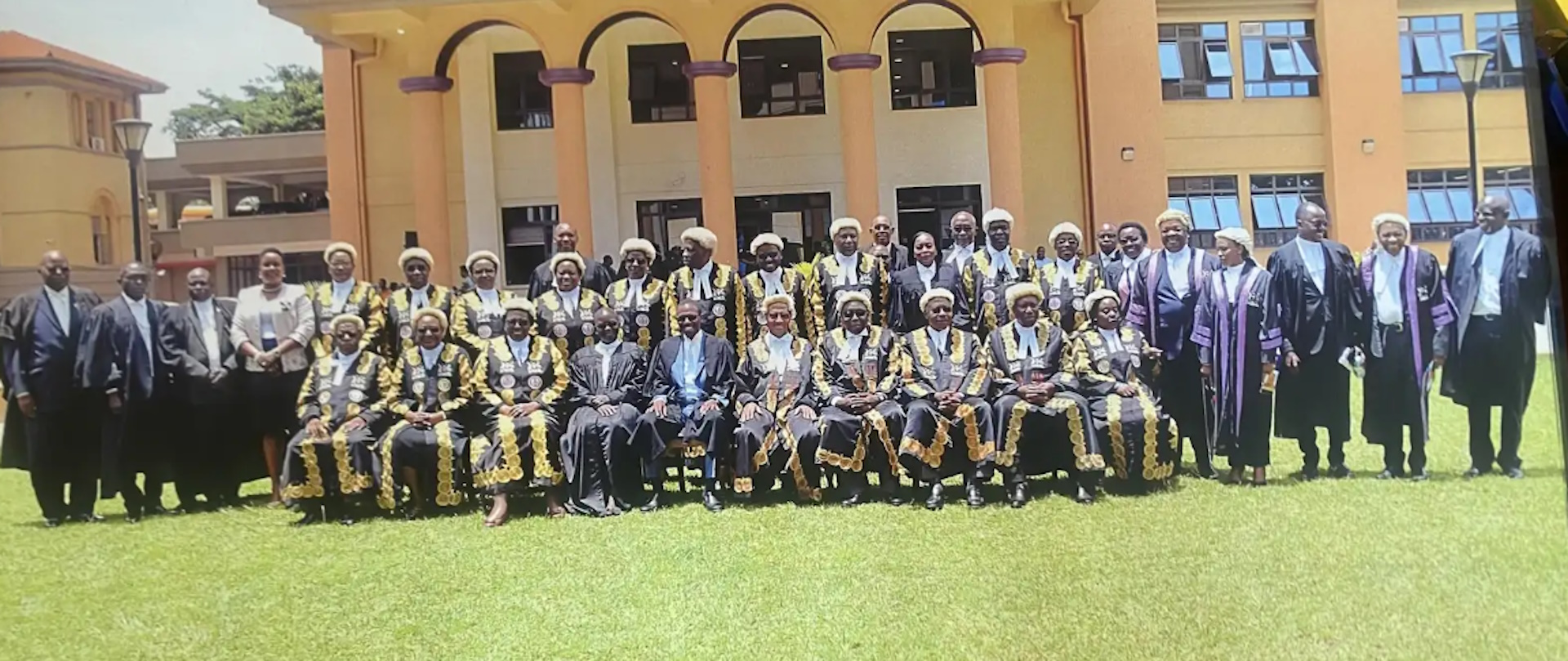 John third left with members of the judiciary.
John acknowledges the emotional toll of his work. “We sometimes handle horrific cases, like children being brutally killed. The attached police images can be disturbing.” To cope, he and his colleagues receive psychosocial support and attend retreats to debrief and heal.
Giving back
He remains committed to giving back. John regularly visits his former school to share his story and inspire students. He has also donated scholastic materials. “I encourage sponsors to keep supporting children in need. Without them, we would have remained stuck in the village. I am who I am because of the little they gave,” John who is currently married with three children, adds.
John dreams of finding his former sponsor someday. “If I had the chance, I would travel to the U.S. to meet them and visit the office where those life-changing funds came from.”
To the children currently under sponsorship, he has one message: “Work hard, read hard and do not ever doubt yourself. Once you have your qualifications, the jobs will come.”
Since 2009, John has also served on the Board of Directors for ChildFund Uganda, continuing to impact the organization that once changed his life.
Thanks to the support they received, one of his sponsored siblings also became a lawyer, while the other found a career in Uganda’s Ministry of Foreign Affairs. Today, the household boasts three lawyers, two social workers, a journalist, and a statistician.
SHARE:


Related Resources
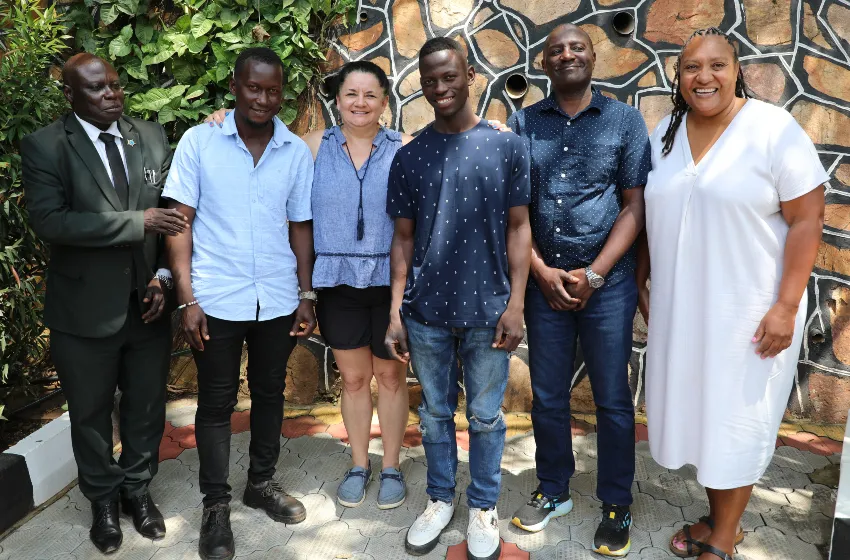
How one family changed the lives of three generations
When Joseph Rainer, an American national, began sponsoring a child in Uganda several decades ago,...
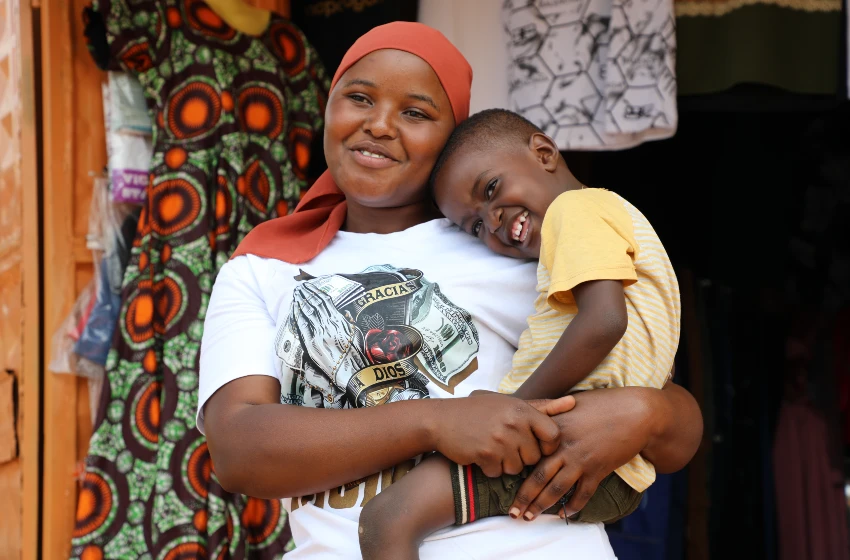
Fauzia has reclaimed her future after teenage pregnancy
Twenty two-year-old Fauzia sits behind her sewing machine at a trading centre in Busia District....
Turning childhood dreams into a teaching career
Every morning, seven-year-old Judith Akumu would tie her dress, grab her books and dash out...