Select Program
Child Protection
Education
Emergency Response
Youth Development
Health & Nutrition
Food Security
Climate Action
Child Sponsorship
Early Childhood Development
Localization
Environmental Sustainability
Select Type
Capacity Statement
Case Study
Manual, Toolkit or Guide
Policy Brief
Project Brief
Report
Research
Select Year
2026
2025
2024
2023
2022
2021
2020
2018
Select County
All Districts
Busia
Obongi
Amuria
Dokolo
Kaberamaido
Kapelebyong
Katakwi
Kole
Kwania
Lira
Serere
Soroti
Agago
Gulu
Kitgum

2022

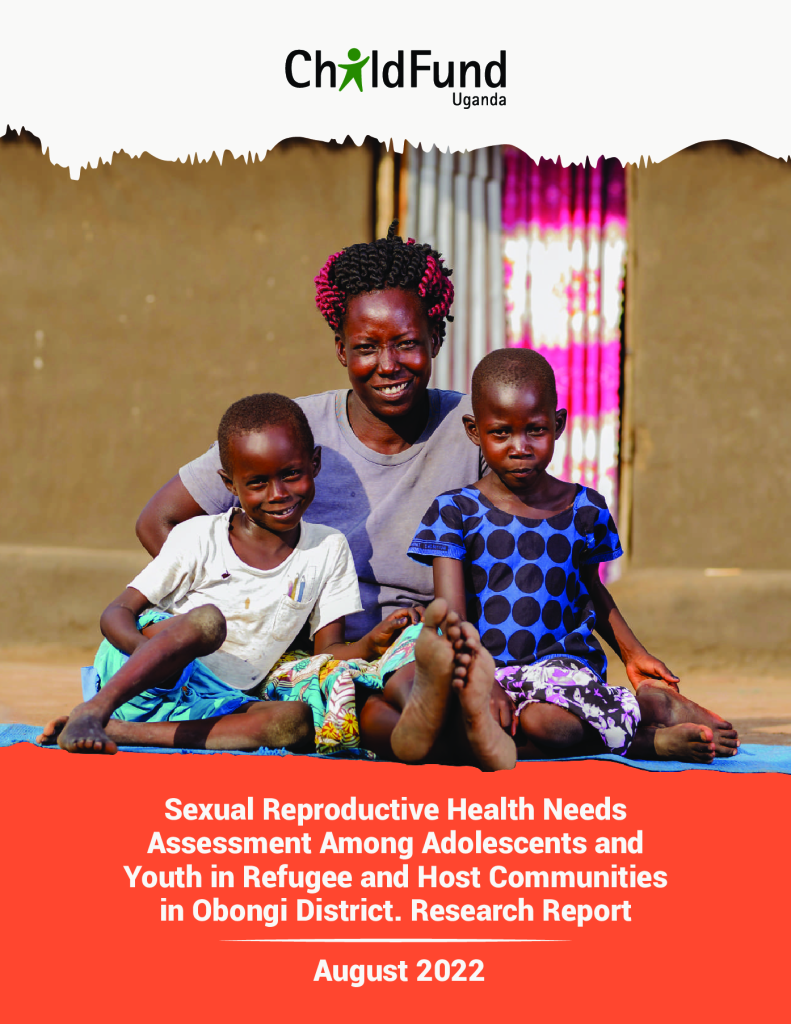
The study focused on assessing reproductive health and gender-based violence knowledge, attitudes and practices among adolescent girls and boys (ages 13-19) and youths (ages 20-24) in Palorinya Refugee Settlement and host communities in Obongi district, West Nile, Uganda. The assessment revealed that most participants were adolescent females under 15, with limited reproductive health knowledge, high early marriage and pregnancy rates, widespread misconceptions, low contraceptive use, and significant prevalence and underreporting of sexual and gender-based violence

2020

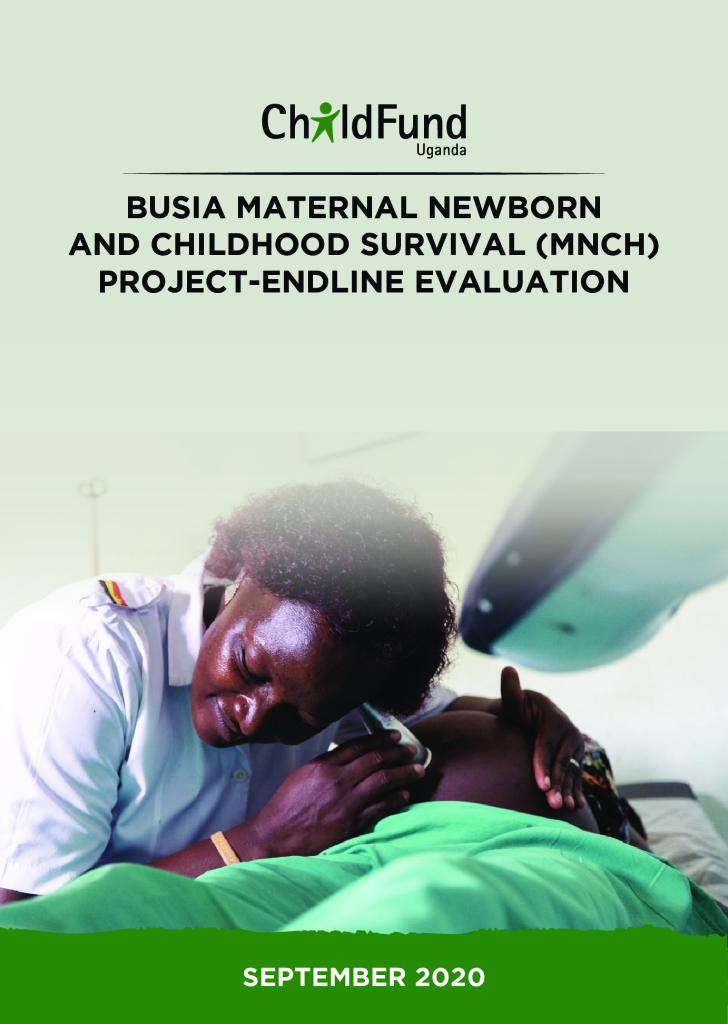
Between September 2017 and August 2020, ChildFund Uganda implemented a maternal, newborn and child health project in Busia District to improve health outcomes for pregnant and postpartum mothers and children under two. An endline evaluation confirmed significant improvements across nearly all project indicators, except for immunization coverage, which dropped, likely due to data source inconsistencies. Overall, the project achieved its intended health impact in the target communities.

2022

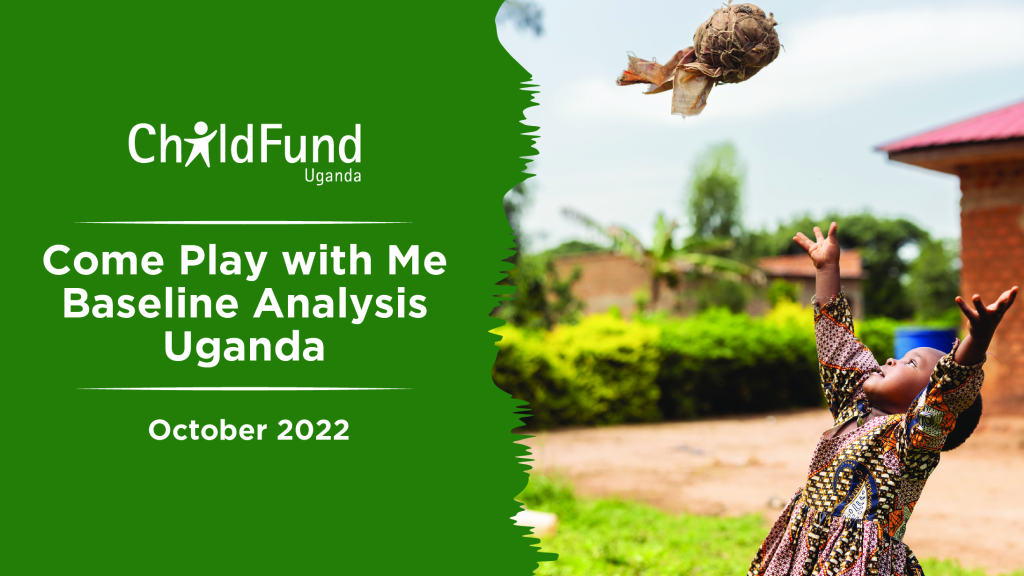
This baseline analysis for the Come Play With Me project provided a foundational understanding of the current state of early childhood development in selected communities, focusing on children’s access to safe play, nurturing care and responsive parenting. Conducted to inform project design and implementation, the study captured insights into caregiver knowledge and practices, community perceptions of play-based learning and the availability of child-friendly spaces.

2021

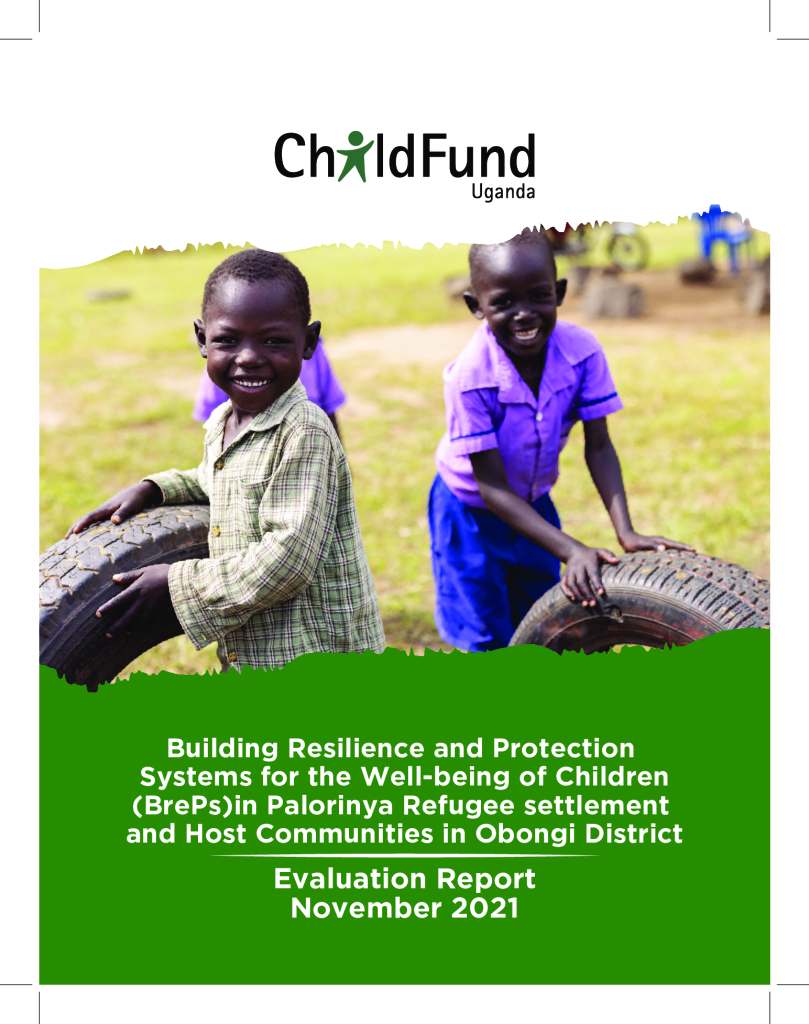
This report summarized the external evaluation of the BRePS project (March 2019–December 2021) implemented by ChildFund in Palorinya refugee settlement, which significantly strengthened child protection systems, raising children’s wellbeing scores from 36% to 81%. Key achievements include enhanced child protection systems (from 78.6% to 99%), improved Sexual and Gender-Based Violence response mechanisms (from 64% to 88%), and a reduction in children needing psychosocial support (from 59% to 49%).

2020

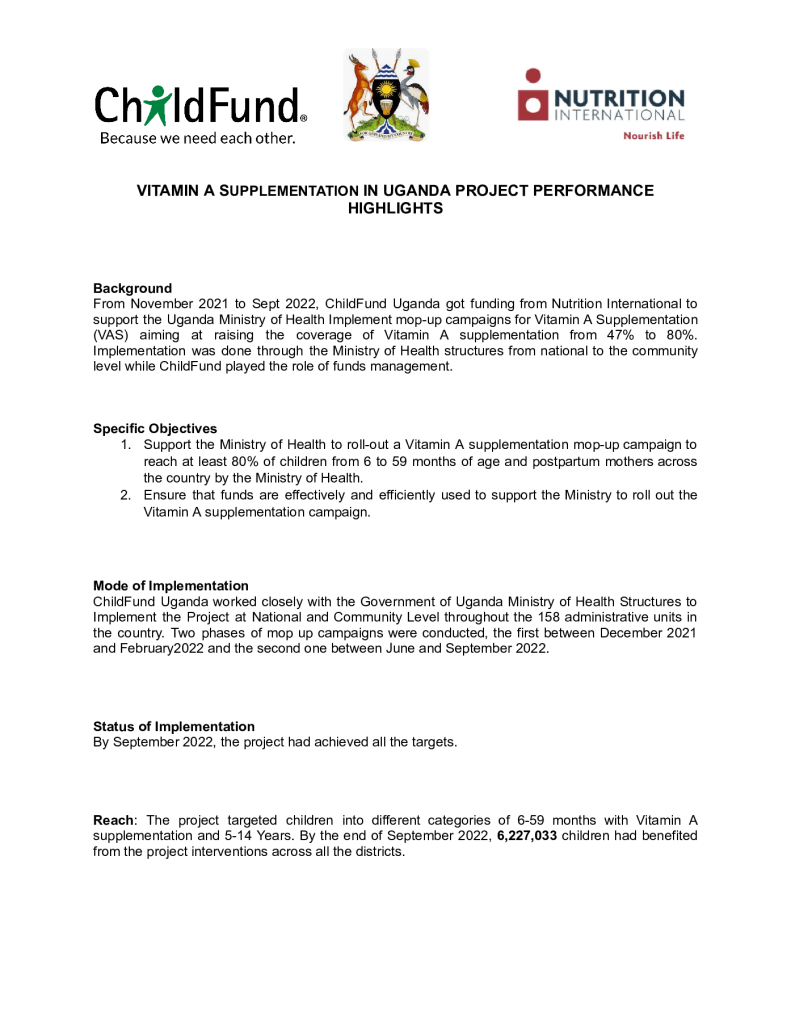
This brief highlights the performance of ChildFund’s nationwide Vitamin A Supplementation project implemented in partnership with the Ministry of Health. With funding from Nutrition International, the campaign reached over 6.2 million children aged 6–59 months through two national mop-up phases. ChildFund managed funds while MoH led planning and delivery through national and district health structures.

2022

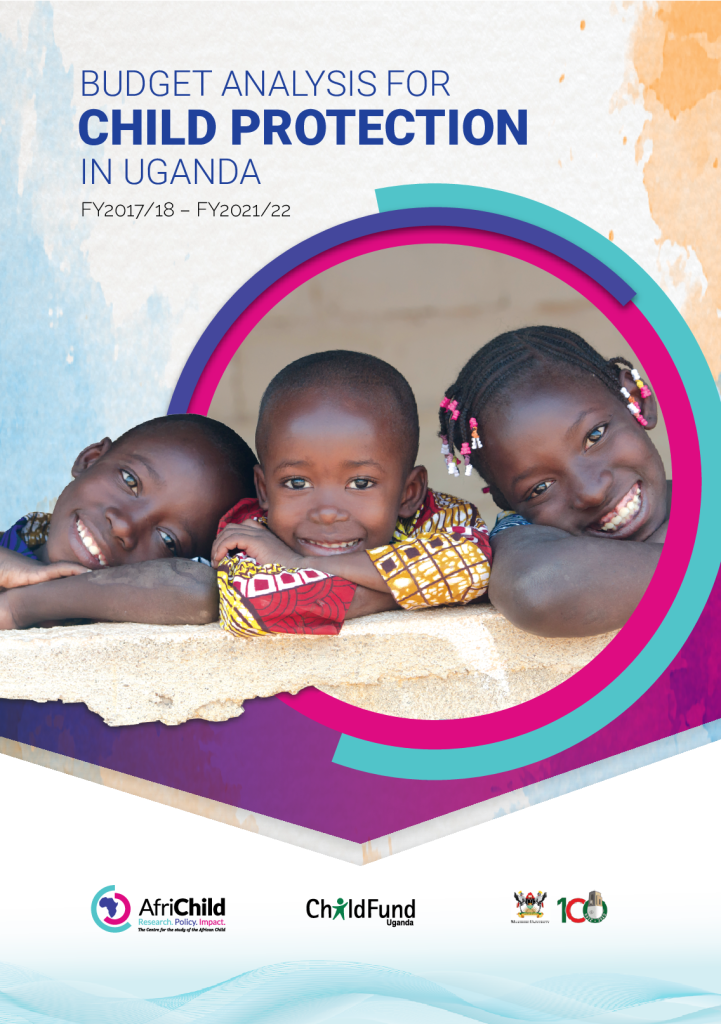
This publication presents an analysis of government budget allocations for child protection in Uganda over the past five financial years. Despite being included in key national plans, funding for child protection has remained low and inconsistent. The study highlights challenges such as fluctuating budgets, limited local funding, absence of costed plans and weak influence of child protection priorities in the budgeting process, factors that continue to hinder effective service delivery and long-term impact.

2023

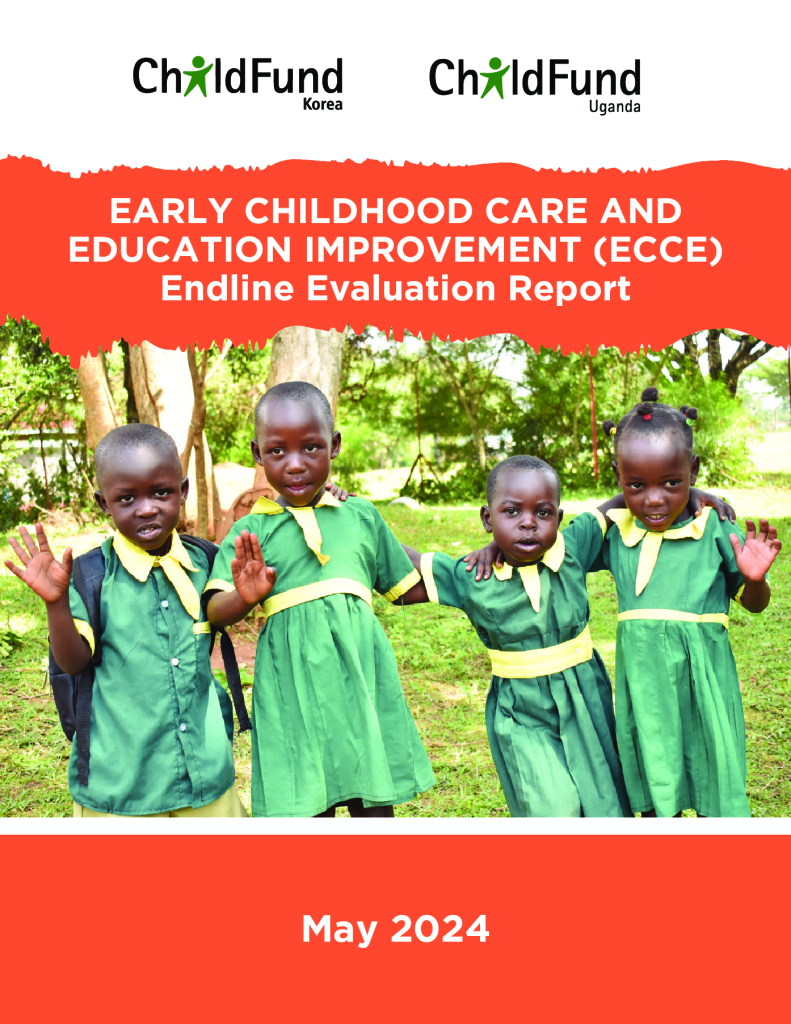
The Early Childhood Care and Education Improvement Project was a three-year initiative implemented by ChildFund Uganda in partnership with ChildFund Korea, aimed at supporting the growth and development of children aged 0–8 in six sub-counties of Busia District. The end-of-project evaluation assessed progress towards project outcomes, documented key lessons and captured community impact. Using a mixed-methods approach, the evaluation engaged 351 respondents including caregivers, ECD staff and school administrators, revealing significant participation from female caregivers and average household sizes of six, with most respondents aged between 31 and 60.

2023

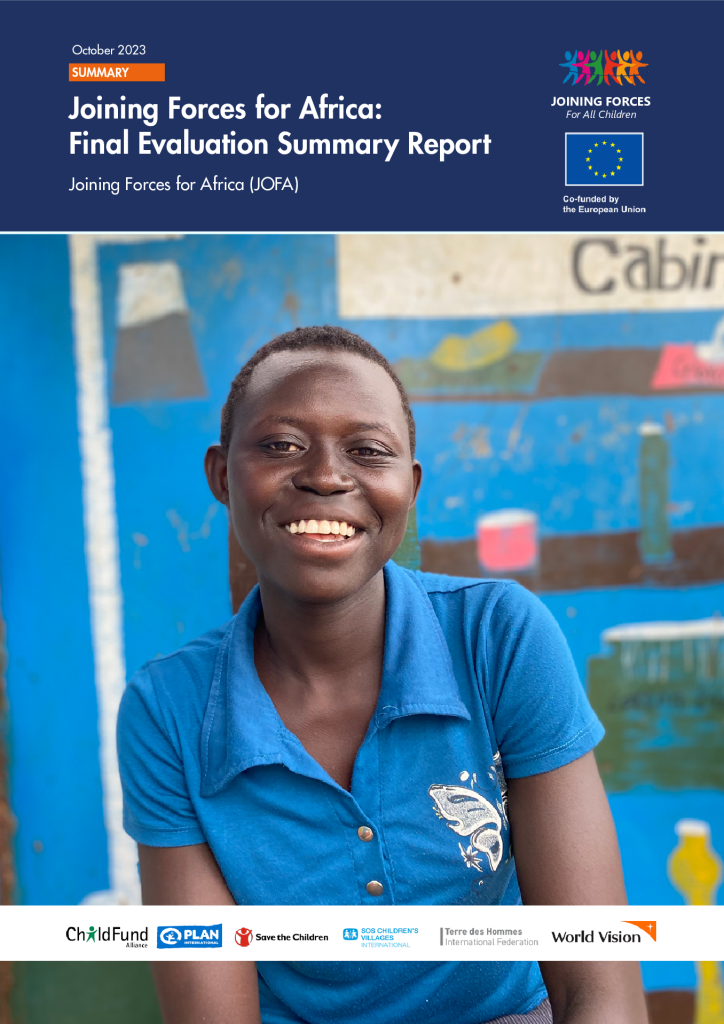
Grounded in the urgent need to protect vulnerable children during times of crisis, the Joining Forces for Africa (JOFA) project targeted high-risk countries with pre-existing child protection concerns and a strong presence of JOFA members. Countries adapted evidence-based interventions to their local contexts, based on needs assessments and stakeholder consultations. While the project was widely seen as relevant, gaps remained, particularly in addressing economic vulnerability and the specific needs of children with disabilities.