

The power of play in early grade learning: Uganda celebrates its first-ever National Play Day
April 30, 2024
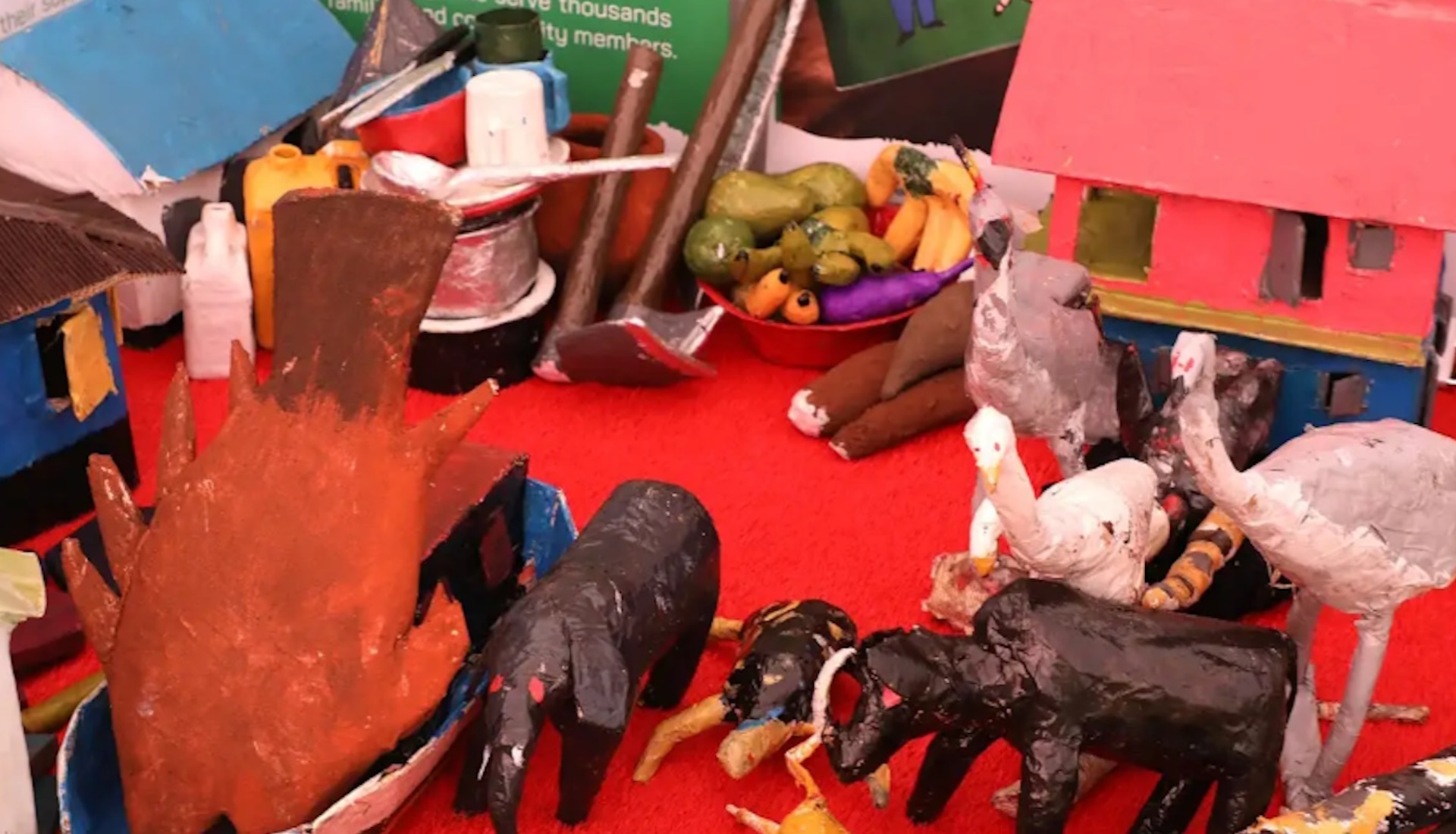
A display of locally made play materials that were exhibited during the National Play day.
Did you know that play is not a luxury but a right? For millions of children, play isn’t just fun and games; it is a vital foundation for learning, creativity and emotional well-being.
On April 30, 2024, Uganda celebrated its first-ever National Play Day, an event that underscored play as a critical element in children’s holistic development and lifelong learning.
Held at the Kololo Independence Grounds in Kampala, the event was launched by the First Lady and Minister of Education and Sports, Janet Kataaha Museveni, who championed the importance of play for Uganda’s youngest citizens.
“Children need to be children,” Janet told over 600 attendees, including government officials, educators, caregivers and development partners. “Government recognizes the value of play in shaping a child’s mind, body and future.”
The celebration was spearheaded by the Ministry of Education with support from UNICEF, The LEGO Foundation, Education Cannot Wait, Plan International, ChildFund Uganda, and other civil society organizations.
Our Contribution
ChildFund Uganda in partnership with the Jinja Area Federation of Communities, joined the event to showcase its community-based approach to Early Childhood Development (ECD) through play.
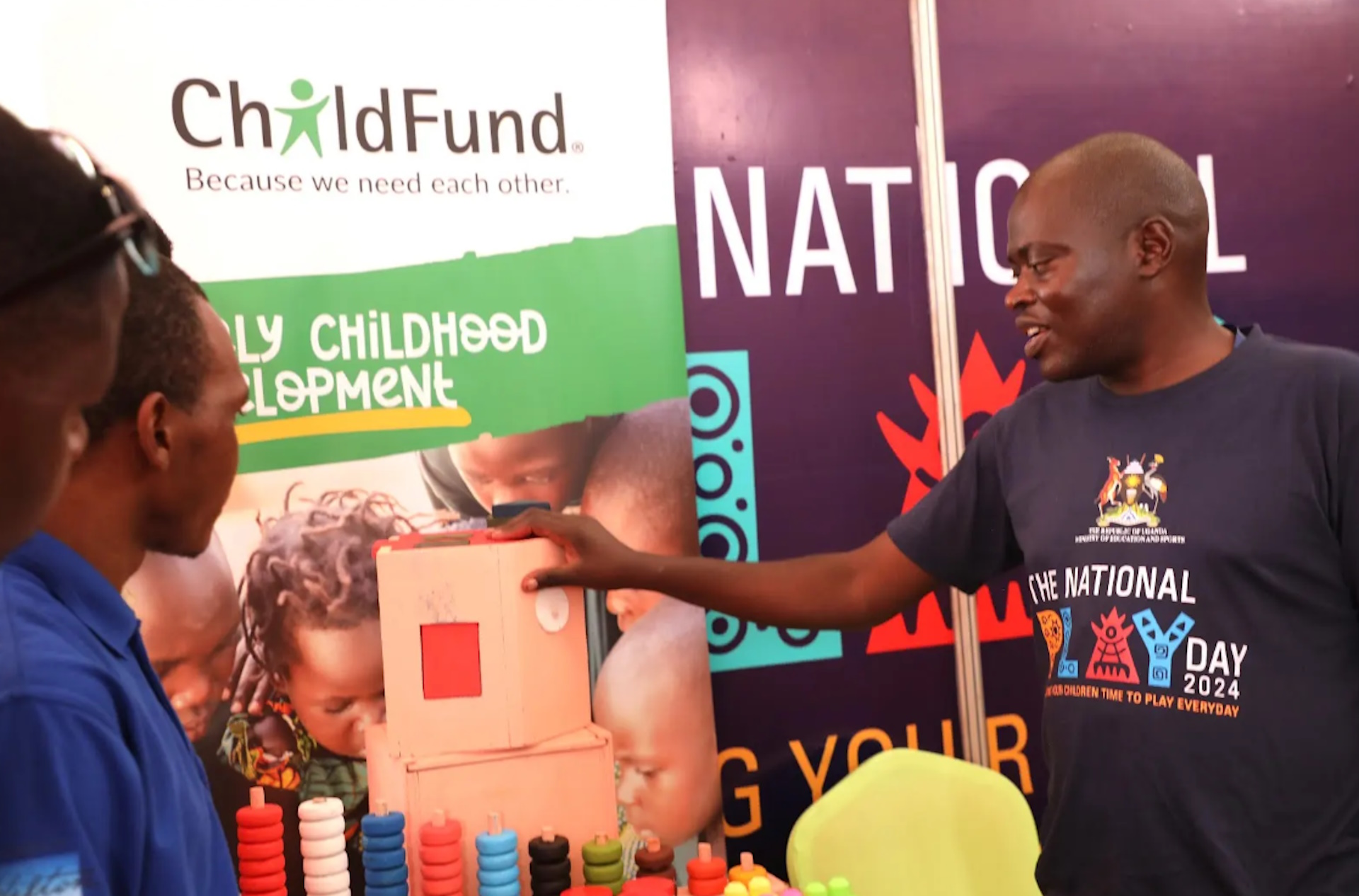
Richard showcases some of the play materials to some people who visited the ChildFund stall.
The organization spotlighted its “Come Play With Me” initiative, an innovative, year-long campaign funded by The LEGO Foundation aimed at strengthening playful parenting and child development for children aged 0 to 8.
“Through radio, EduTabs, megaphones and face-to-face activities, we brought play into homes and communities especially in hard-to-reach areas,” explained Cecilia Okoth, the senior communications officer ChildFund. “This multi-modal approach helped parents understand the developmental power of play,” she added.
As part of the initiative, ChildFund distributed indoor play and learning kits to 3,600 households and trained 4,382 caregivers to create their own play materials using local resources like banana fiber. Parents reported that these tools enhanced their children’s growth across cognitive, emotional and social domains.
Thematic Learning in Action
During the Play Day event, attendees explored 11 thematic learning hubs, which highlighted key concepts such as how children learn through play, inclusive and community-based play strategies and integrating play into daily routines.
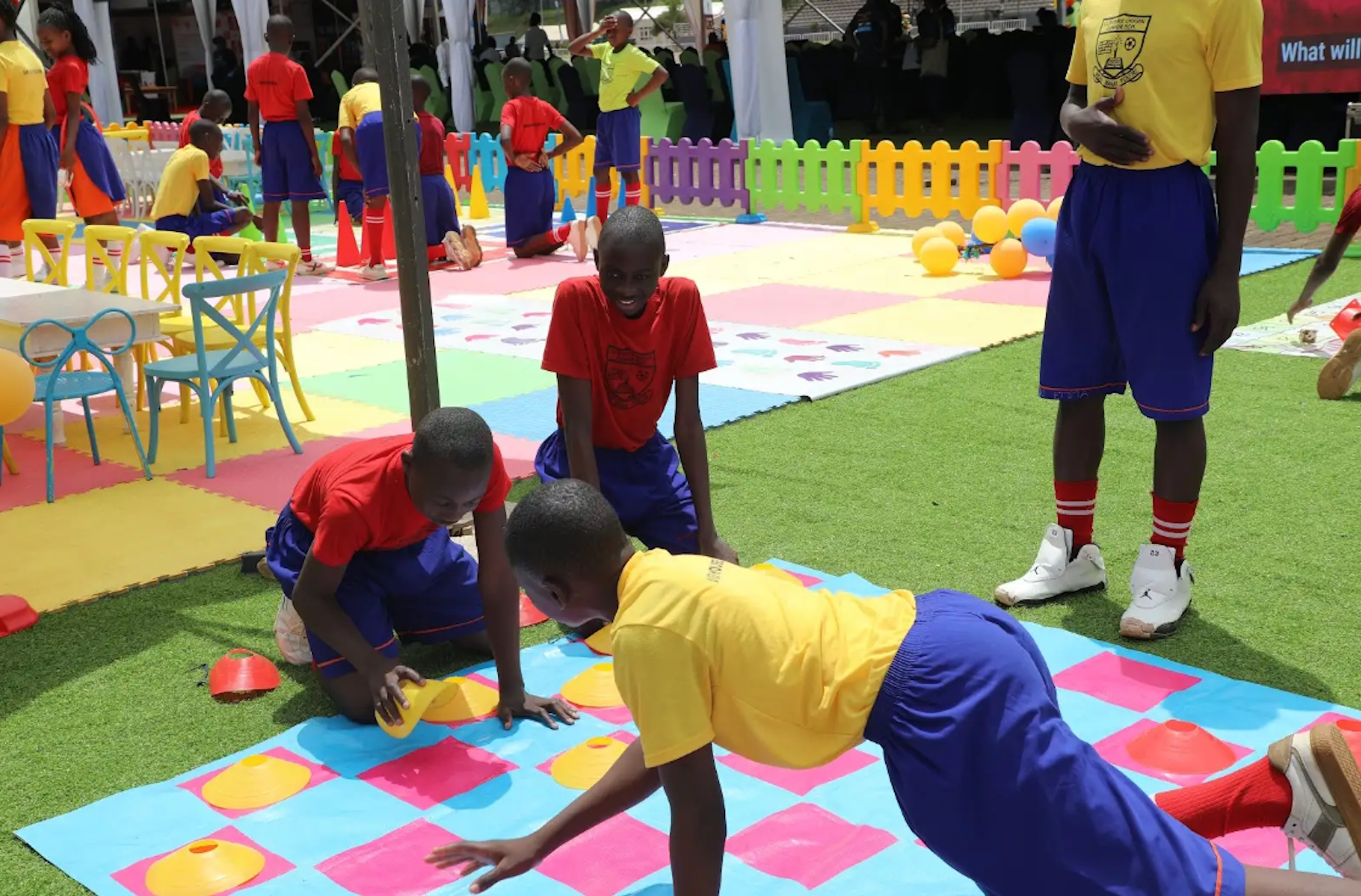 Children engaged in outdoor games at the event.
Interactive sessions emphasized parent and community involvement, the health benefits of play, and the importance of play spaces that are safe, inclusive and accessible for all age groups.
Policy Commitments
The First Lady’s remarks were echoed by the Ministry of Education’s Permanent Secretary, who pledged continued investment in play-based learning through curriculum revision and teacher training.
In a significant policy step, the ministry also announced that the National Curriculum Development Centre is leading the creation of National Guidelines for Learning Through Play.
“This is not a one-day affair,” emphasized Ketty Lamaro, the Permanent Secretary. “We are laying the foundation for a future where every Ugandan child learns, grows and thrives through play.”
Richard Gamusi, a program officer at the Jinja Area Federation of Communities said, “Play-based learning isn’t just fun. It equips children with the creativity, resilience and critical thinking they need for the future.
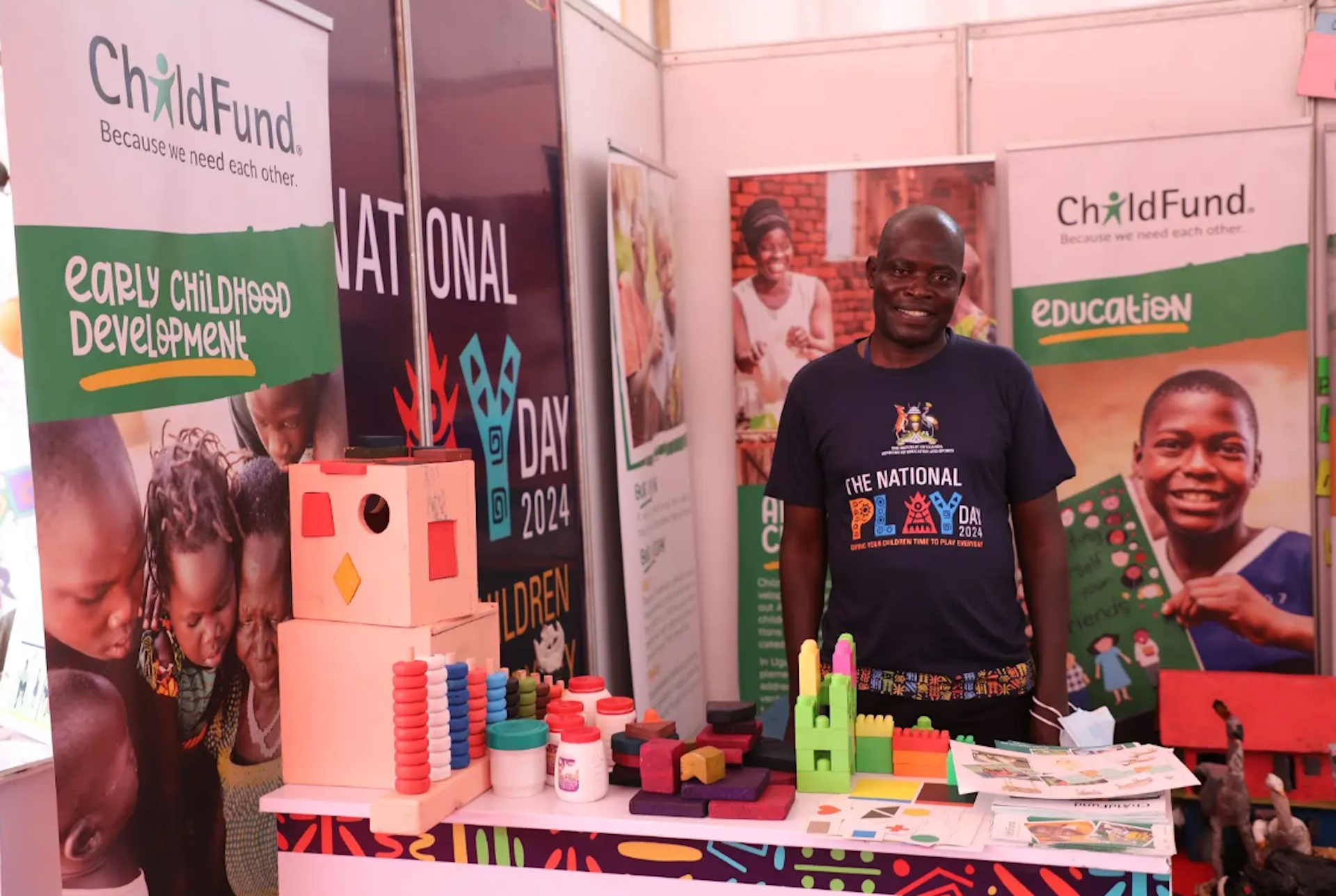 Richard sets up ChildFund play stall for exhibition.
The event outlined action calls for all key players in the learning ecosystem:
- Government: Prioritize funding, policies and training that embeds play in the national education framework.
- Parents and Caregivers: Embrace play in daily routines, provide safe spaces and participate in their children’s playful experiences.
- Educators: Integrate play into school schedules and design classrooms conducive to hands-on, exploratory learning.


Related Resources

A backpack innovation supporting children carry less and learn more
Until recently, fetching water was one of the hardest parts of Samuel's day.

New ‘jerrybags’ ease water burden for refugee schoolchildren in Northern Uganda
Before the school bell rings, many children in Palorinya Refugee Settlement have already walked several...

Harnessing technology to expand access to SRH information for youth
Over 20,000 young people across Uganda will now have easier access to accurate, confidential and...