

Changing mindsets: How play has transformed parenting in rural Uganda
July 14, 2023

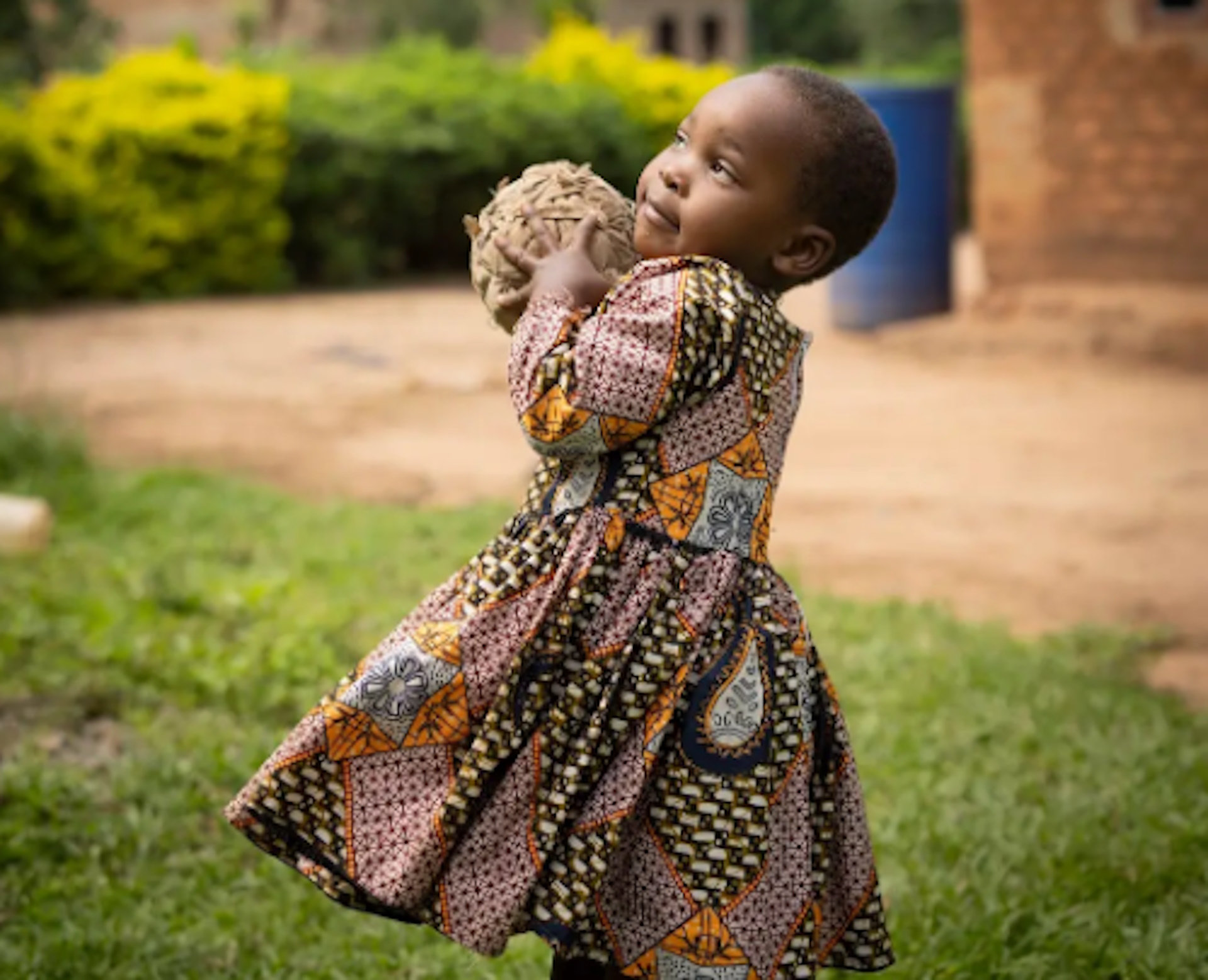
Angel (3) plays with a homemade ball outside the family's home.
In many rural Ugandan communities, play has long been viewed as a distraction from more pressing household responsibilities. For parents and caregivers, the priority is often fetching water, tending to crops, or preparing meals. However, through ChildFund’s Come Play with Me project, supported by the LEGO Foundation, families have since embraced play as an essential part of their children’s development and well-being.
Jackyline, 25, and her husband Bernard, 35, are among the many caregivers whose perceptions of play have changed. As subsistence farmers in rural Uganda, they initially discouraged their children—Steward, Marvin and Racheal aged 10, 7 and 3 respectively from playing, believing it to be a waste of time.
“We used to stop them from playing around the house,” Jackyline admits. “Now, we encourage it. The children are around a lot more and we spend more time together as a family.”
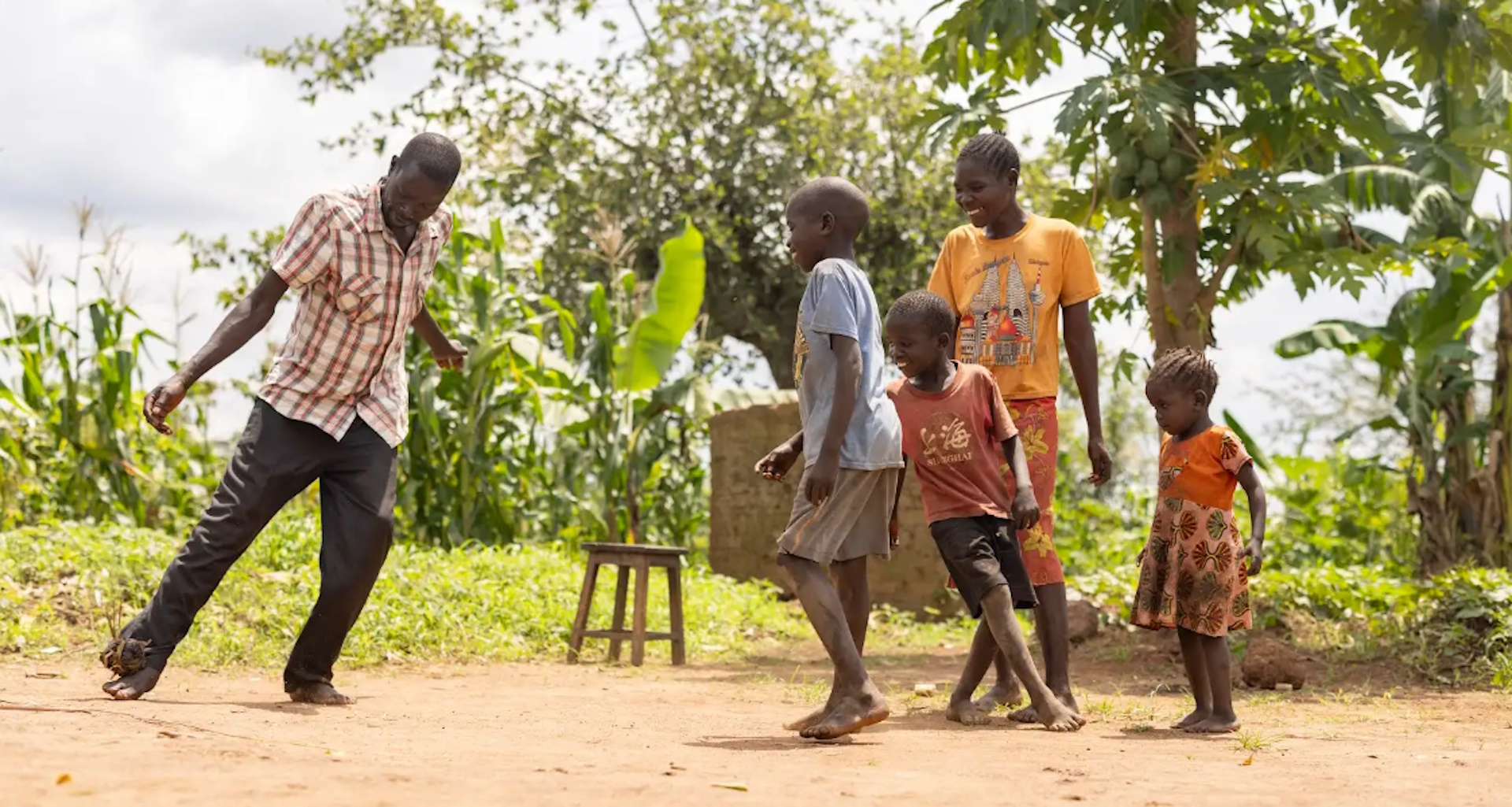 Bernard, wife and children engage in a popular soccer game within their compound.
Transforming Play into Learning
The Come Play with Me project emphasizes playful parenting, where caregivers not only allow but actively participate in play with their children. Parents are taught to make toys from locally available materials, such as balls and jump ropes woven from banana fibers and corn stalks.
The introduction of educational tablets during the COVID-19 pandemic further enhanced learning at home. These tablets contain interactive games, riddles and lessons on language, maths, nutrition, sanitation and hygiene.
“In the tablet, there are riddles and puzzles that help them with language and games that teach math,” Jackyline explains. “They have done better in school since we’ve had it.”
Multiple Learning Modalities
Implemented in four countries, Uganda inclusive, the Come Play with Me project used three different approaches to engage caregivers and children:
- Remote learning: Families received messages via radio and megaphones.
- In-person interactions: Facilitators conducted direct training sessions on playful parenting and toy-making.
- Hybrid approach: A combination of radio programs, tablets, and in-person sessions provided caregivers with comprehensive support.
A total of 900 caregivers received Android tablets loaded with children’s learning materials, while another 900 were provided with solar-powered radios pre-loaded with educational content.
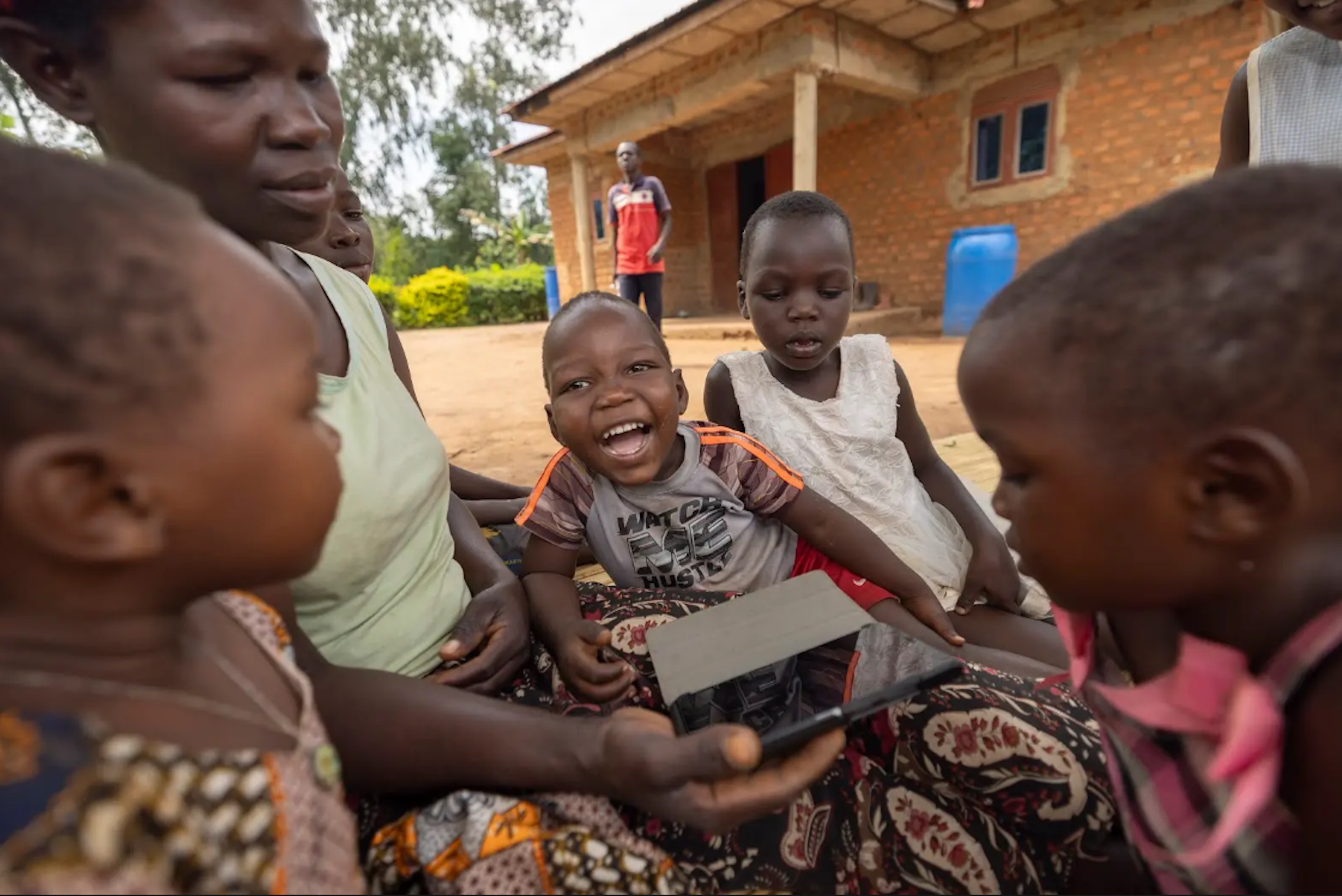 Milly, demonstrates how to use a tablet to her children.
Ultimately, the project reached 5,700 caregivers (4,716 women and 984 men) and 9,902 children (5,306 girls and 4,596 boys).
Impacting Families and Communities
A Knowledge, Attitudes and Practices (KAP) survey conducted before and after the project’s implementation showed remarkable progress:
Caregivers who agreed that children start learning before birth increased from 66% to 89%.
Those who recognized that children learn through play rose from 52% to 89%.
Caregivers acknowledging their role as their children’s most important teacher grew from 90% to 95%.
With this shift in mindset, playful parenting is becoming a norm. “Now, I make time to play with my children and I see how much they enjoy it,” Bernard shares. “I have learned that playing is not just for fun but also helps them grow.”
Impact on Families
Milly (37), a mother of six, shares, “This project has created teamwork among the children because they love playing together. They have developed love among themselves. Playing with them also brings them closer to us (their parents).”
She also notes the personal benefits adding that “My health has improved because I’ve been more active in playing with the children. Playing makes them healthy too.”
Milly recalls how play was once discouraged in her childhood. “When I was a child, parents saw play as a waste of time, but now I see that play is instrumental in a child’s growth.”
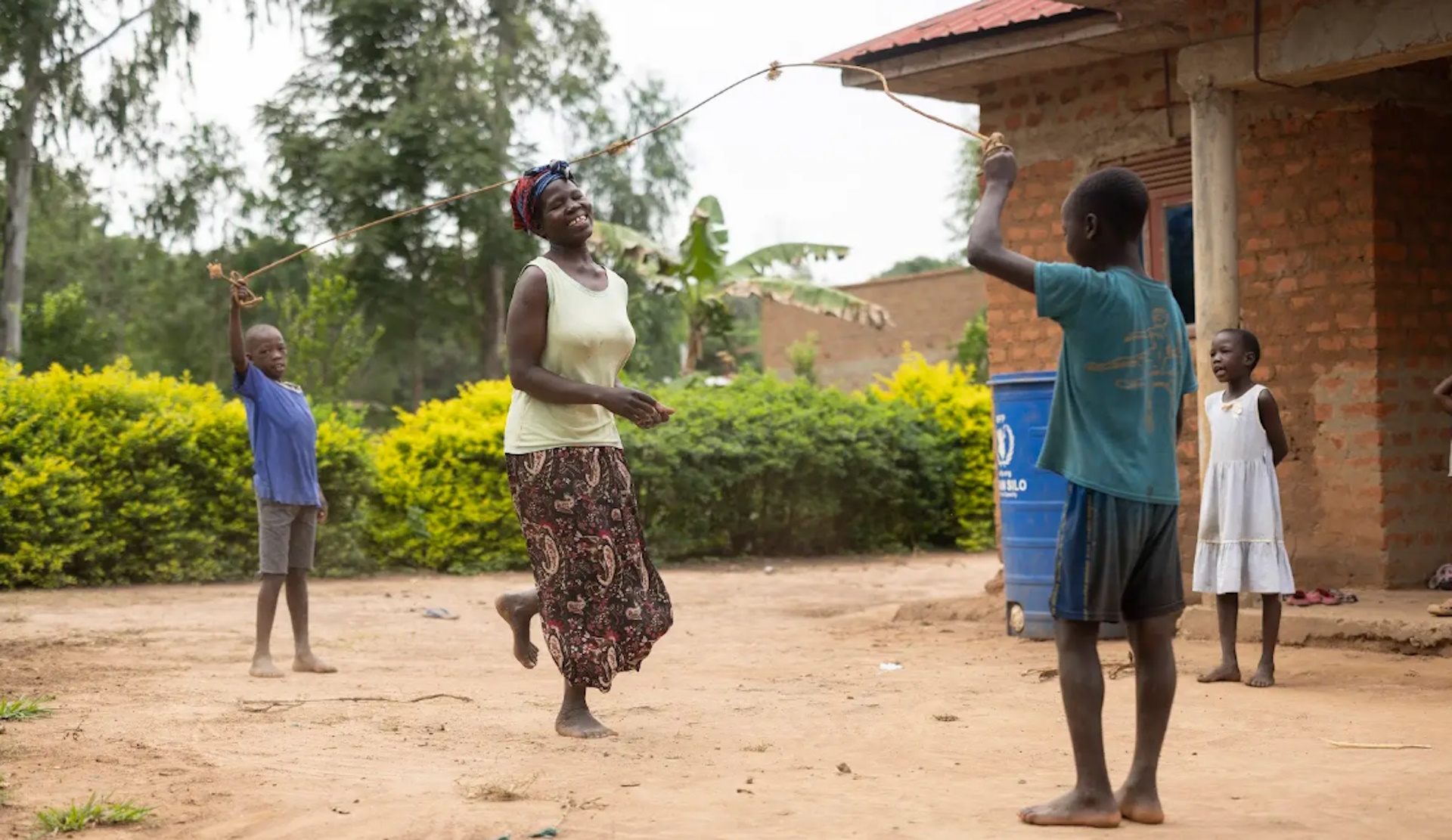 Milly skips the rope with some of her children.
Like many parents, Milly appreciates the educational value of the tablets provided by the project. “There’s a lot of things they learn (with the tablet). It helps them improve on reading, math and language.”
Beyond educational benefits, caregivers also reported stronger family bonds and reduced domestic violence. With a focus on social-emotional learning (SEL), parents learned how play fosters better relationships between parents and children and even among siblings.
The project also supported COVID-19 awareness, improving hygiene practices and vaccine literacy among families. “At first, I only knew about handwashing and wearing masks,” says one caregiver. “But now, I understand the importance of vaccines and other preventive measures.”
Sustaining the Gains
Collaboration with national and local stakeholders played a vital role in the project’s success. The National Curriculum Development Centre contributed reading materials, while district governments provided oversight and ensured community ownership of the interventions.
With playful parenting taking root, families in rural Uganda are not only reshaping their approach to childhood development but also strengthening relationships within their homes. What was once seen as a waste of time is now recognized as the foundation for learning, growth and a brighter future for Uganda’s children.


Related Resources

A backpack innovation supporting children carry less and learn more
Until recently, fetching water was one of the hardest parts of Samuel's day.

New ‘jerrybags’ ease water burden for refugee schoolchildren in Northern Uganda
Before the school bell rings, many children in Palorinya Refugee Settlement have already walked several...

Harnessing technology to expand access to SRH information for youth
Over 20,000 young people across Uganda will now have easier access to accurate, confidential and...