

New classrooms, livelihood opportunities give families in Palorinya a fresh start
March 12, 2026
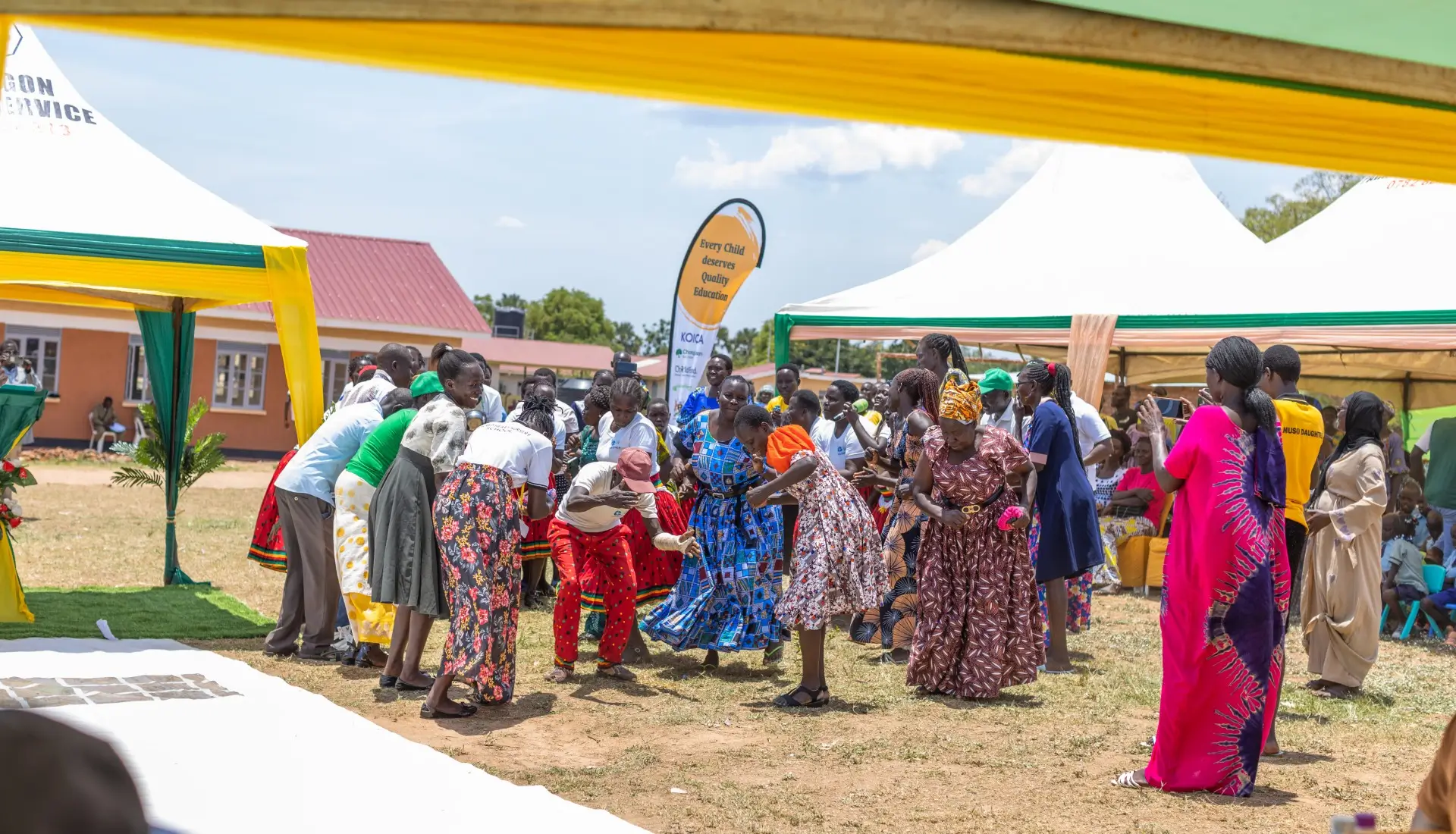
Members of the community engage in a traditional Kuku dance in appreciation of developments made for them.
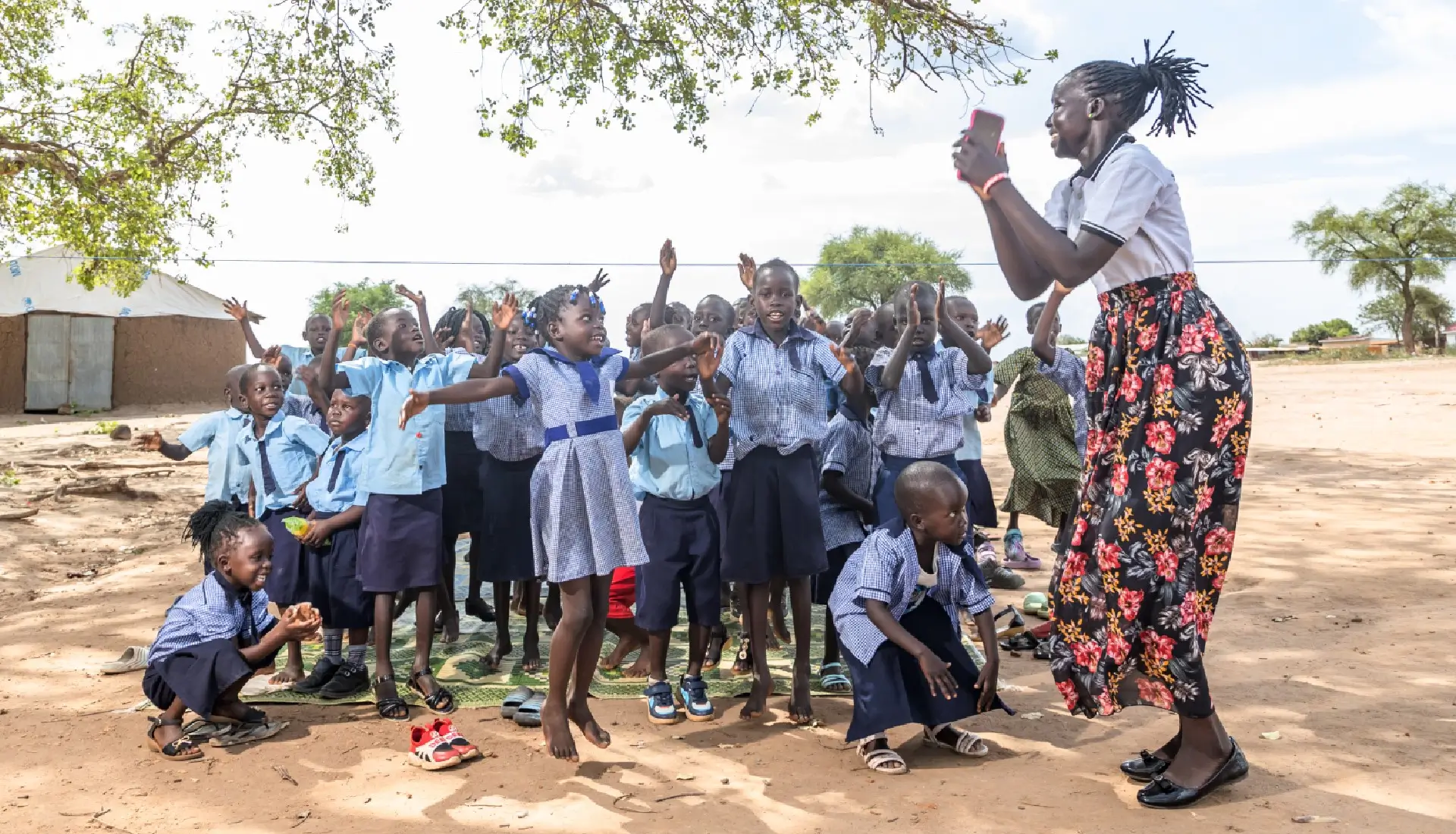
Under the shed of a big tree with scanty leaves, a makeshift classroom takes shape in Palorinya Refugee Settlement.
Teacher Berna starts with a song designed to assess whether the learners can spell the alphabet, after which the lesson begins.
The tree doubles as a school block, hosting three classes at once. Beneath its branches, learners in baby, middle and top class gather each day, hoping to learn despite the limitations of their environment. The children sit together on a mat.
This arrangement has been the reality for a long time. However, learning under a tree comes with many challenges.
During the rainy season, classes are often disrupted or cancelled altogether as the children have nowhere to shelter from the downpour. On hot days, the heat and dust make it difficult for learners to concentrate.
Without desks or proper learning spaces, children struggle to write comfortably or follow lessons attentively. The noise from surrounding activities further distracts them, making meaningful learning even harder.
The lack of proper sanitation facilities also compounds the challenge, particularly for young children who need safe and clean toilets while at school.
This however will no longer be the case.
A turning point
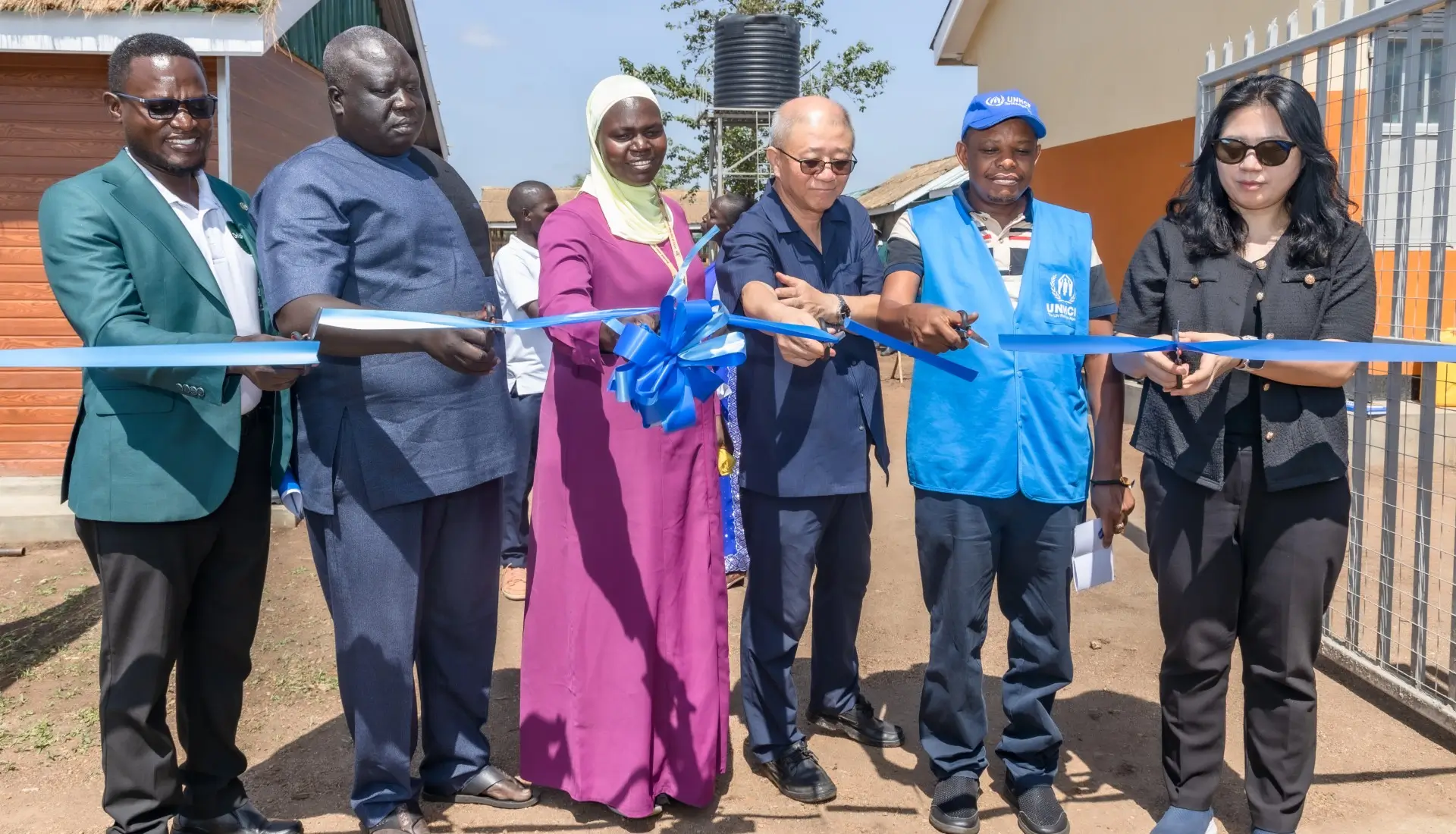
ChildFund, ChorogUsan for Children and Good Farmers, through the Integrated Livelihood, Education and Protection (ILEAP) Project, with funding from Korea International Cooperation Agency (KOICA) officially commissioned newly constructed classrooms and a Central Farm at Palorinya Refugee Settlement in Obongi District. The project is part of KOICA’s humanitarian partnership program.
The one-day commissioning event included visits to Salvation ECD Centre, Central Farm and Sacred Heart ECD Centre, showcasing the newly developed facilities to stakeholders and community members.
Margaret Meling, the headteacher of the Sacred Heart ECD centre could hardly hide her joy during the commissioning ceremony.
“We are going to increase the number of learners. It is truly a great job that ChildFund has done for us refugees and the host community,” she said.
Palorinya Refugee Settlement, re-established in December 2016 following the influx of refugees fleeing conflict in South Sudan, currently hosts over 142,000 refugees, with children making up 53% of the population.
The settlement faces significant challenges in early childhood education, including a caregiver-to-learner ratio of 1:87 and overcrowded classrooms at 1:230, far exceeding the national standard of 1:25.
Livelihood and food security challenges are also critical, as most households earn between sh90,000 and sh200,000 per month and have limited access to arable land or irrigation.
Integrated solutions
To address these challenges, the ILEAP project implemented a range of integrated education and livelihood interventions. Key achievements include:
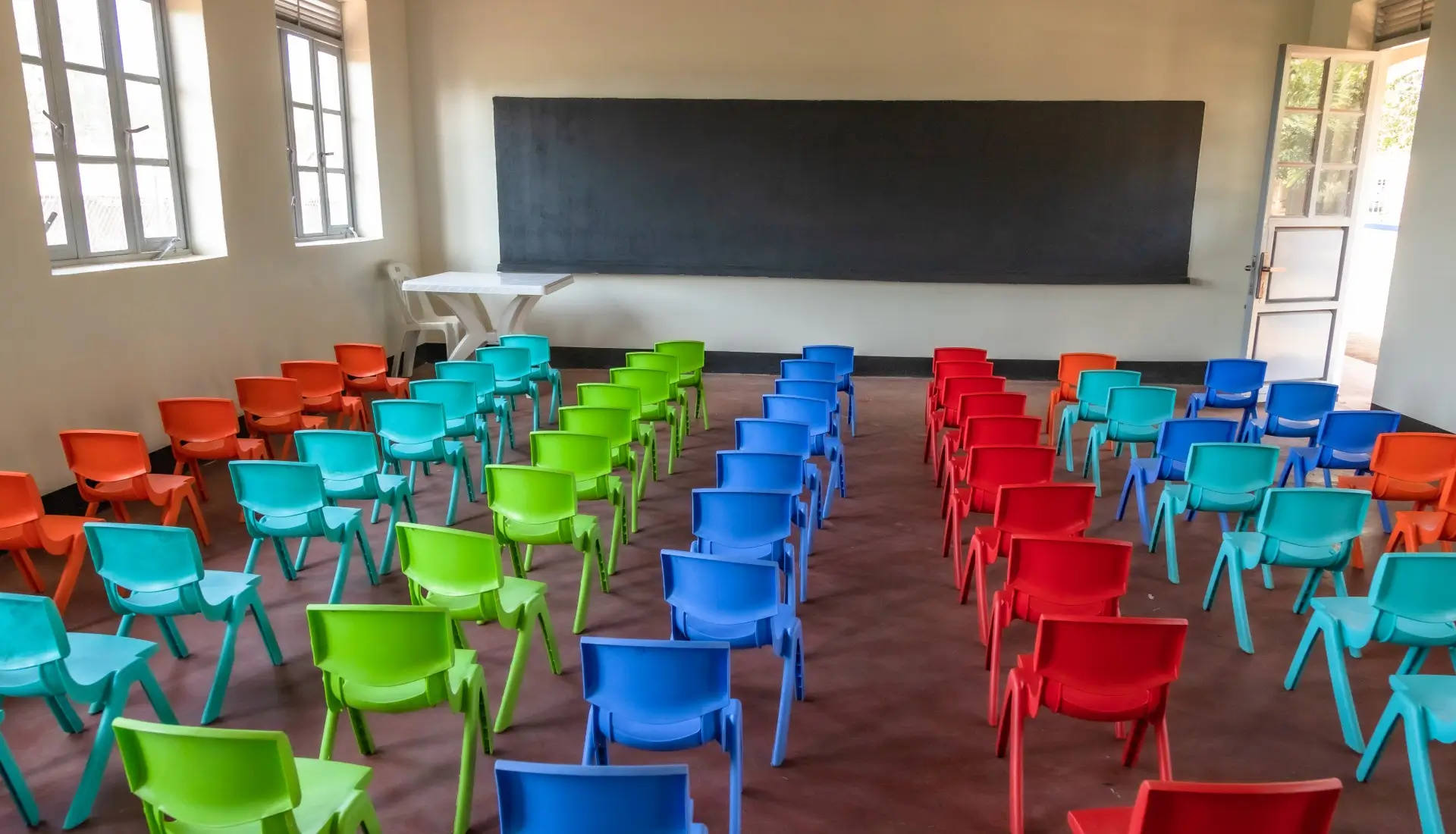
- Construction of a three-classroom block with an office and a five-stance latrine at Sacred Heart ECD Centre. This will benefit 579 children, 286 of whom are girls.
- The two-classroom block at Salvation ECD Centre will enable 253 children who were previously sitting under a tree to study in a conducive environment.
- The renovated classrooms at Salvation and Sinai ECD Centres, are expected to benefit at least 400+ children in the next 3 years.
- On the other hand, the establishment of a modern central farm at Morobi North for poultry and goat rearing will provide practical training, improved access to productive assets and enhanced nutrition for both refugee and host communities. This will support at least 175 farmer group members and other people in the settlement.
Speaking at the event, Titus Tumusiime, the ChildFund Country Director said the facilities represent opportunities for growth, resilience and sustainable development.
“The classrooms will improve the quality of early childhood education, giving children a strong foundation for learning and development. The central farm, on the other hand, will serve as a hands-on learning environment, equipping children and families with practical skills in agriculture, livestock rearing and nutrition,” Titus said.
He added, “By linking education with livelihood opportunities, these interventions support families to become self-reliant, build resilience and break cycles of poverty, while fostering a sense of hope and opportunity for the future.”
Ahn Jihee, the KOICA Country Director, said that beyond infrastructure, the ILEAP project represents a shared commitment to supporting communities, protecting children, and promoting peaceful coexistence between refugees and host communities.
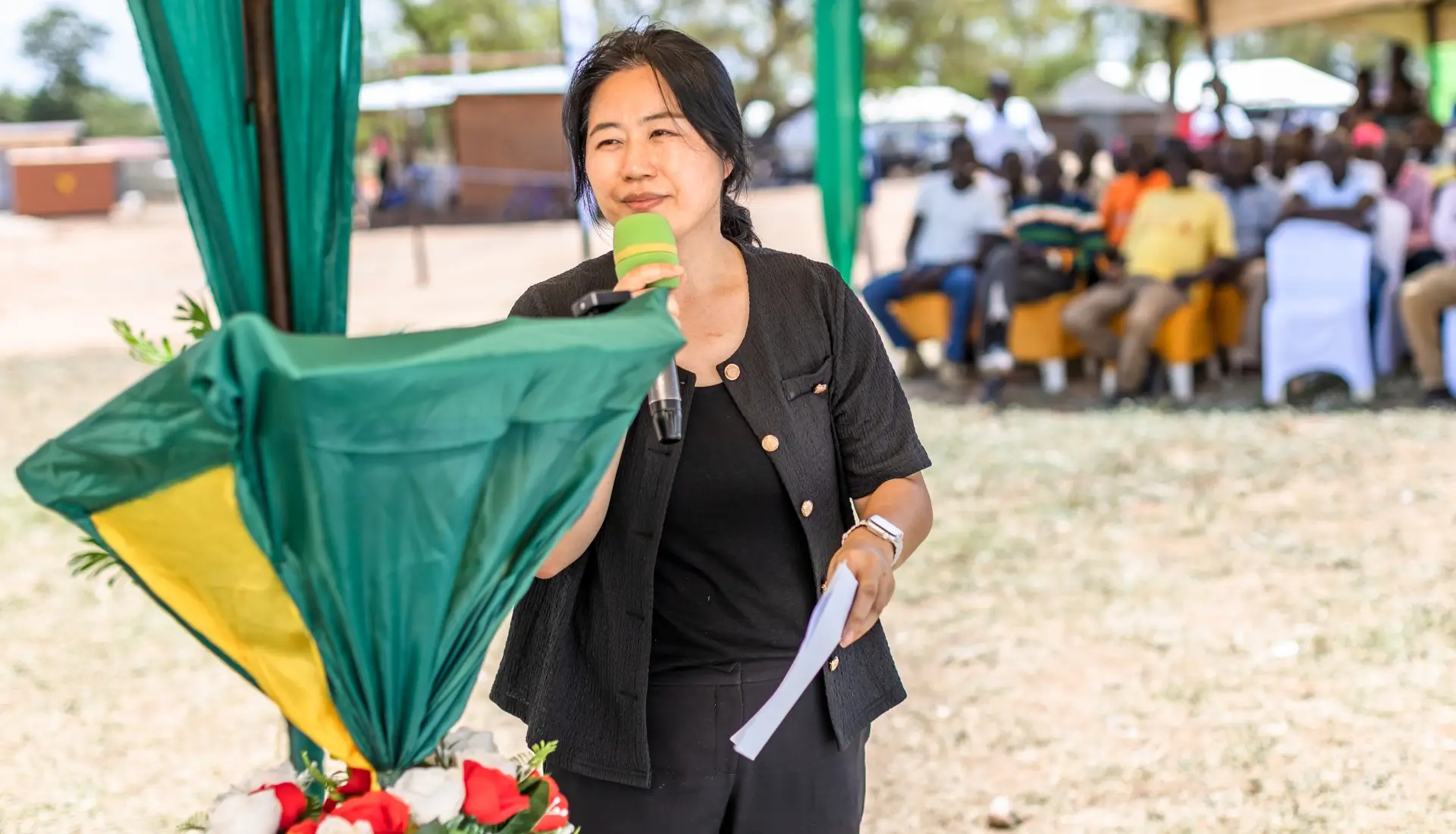
“Korea’s own development experience reminds us that even in the most difficult circumstances, communities can rebuild and move forward together. After the devastation of the Korean war, Korea was once one of the poorest countries in the world. Through perseverance, cooperation and a strong sense of community, the Korean people worked together to rebuild their nation and create opportunities for future generations,” Ahn stated.
She said the above experience continues to shape Korea’s development cooperation today, adding that “we believe that sustainable development is built not only through infrastructure and resources, but also through solidarity, mutual support and the determination of communities to grow together.
Background
For the past two decades, ChildFund has concentrated its emergency response efforts on supporting education, early learning, and the overall wellbeing of children and families on the move. Uganda hosts over 1.5 million refugees, placing immense pressure on essential services such as child protection and education.
In response, our work focuses on refugees fleeing conflict in the Democratic Republic of Congo and South Sudan, with major interventions in Palorinya Refugee Settlement Camp in the West Nile region. In 2024 alone, ChildFund reached over 500,000 people, including more than 200,000 children, with immediate and long-term recovery programs designed to help children stay safe, learn and thrive despite adversity.
In addition, ChildFund responds to emergencies caused by flash floods in Eastern and North-Eastern Uganda, providing displaced families with basic needs for survival, including shelter, food, clean water, and hygiene kits.


Related Resources

A backpack innovation supporting children carry less and learn more
Until recently, fetching water was one of the hardest parts of Samuel's day.

New ‘jerrybags’ ease water burden for refugee schoolchildren in Northern Uganda
Before the school bell rings, many children in Palorinya Refugee Settlement have already walked several...

Harnessing technology to expand access to SRH information for youth
Over 20,000 young people across Uganda will now have easier access to accurate, confidential and...