

Advancing inclusive green livelihoods for youth with disabilities in Kampala
May 25, 2026
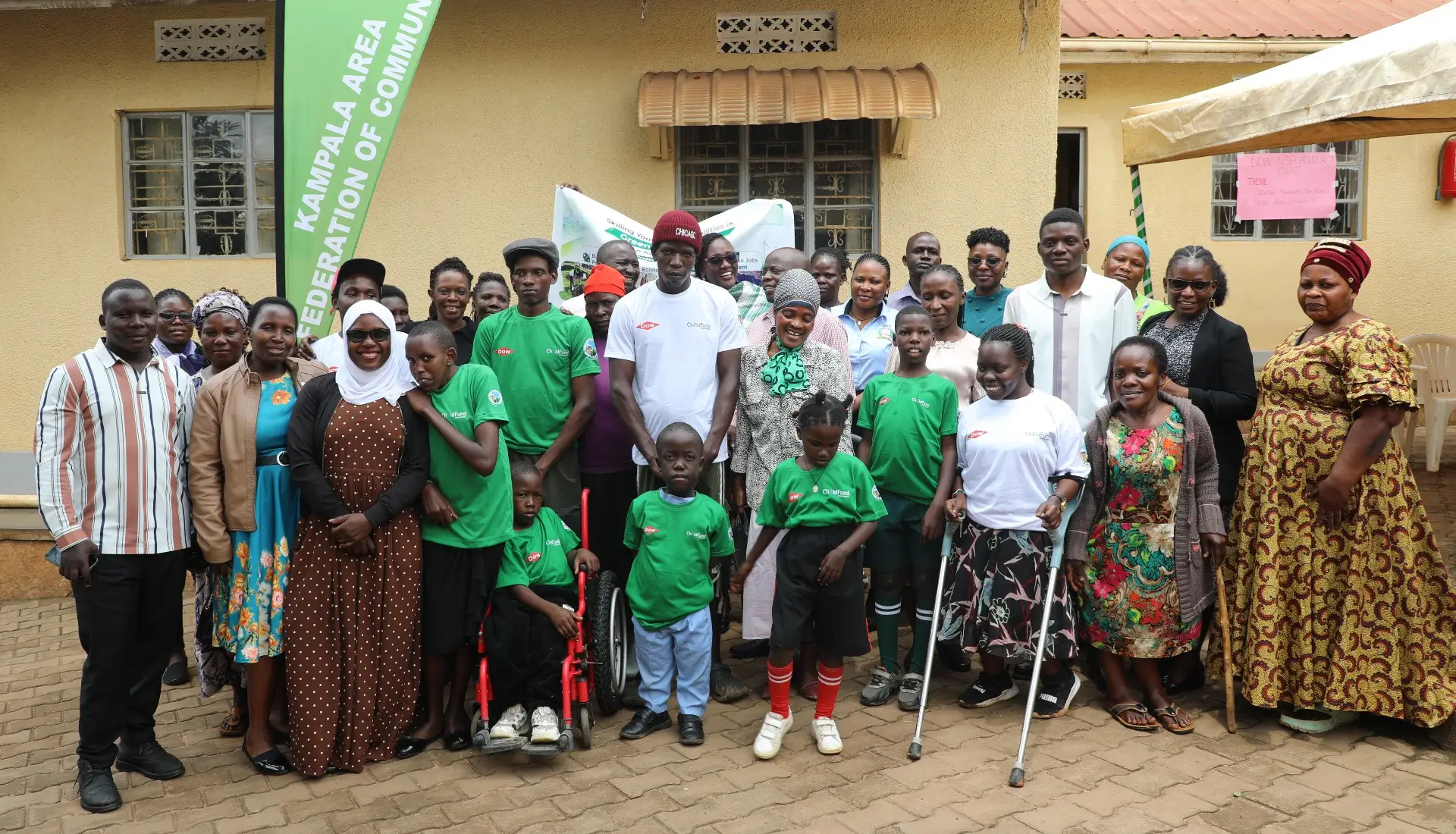
Participants share light moment during one of the advocacy meetings
Before this project, Ruth Nakato only thought of farming as something for people with big gardens and a lot of money. That perception has since changed. Nakato has embraced the use of plastic containers to grow a variety of vegetables outside her home.
“Now I can grow food, earn income and even teach others what I have learned,” she says.
For the past six months, an initiative dubbed Skilling Youths with Disabilities in Green Value Chains in Kampala City has been running across the three divisions of Kampala City.
The project, funded by Dow Chemicals ltd and implemented by ChildFund together with its local partner-Kampala Area Federation of Communities (KAFOC), targeted youth in Nakawa, Makindye and Rubaga divisions, with a focus on improving household incomes while addressing persistent stigma and exclusion.
The overall goal was to empower youth with disabilities through green value chains and entrepreneurship.
The participants, including youth with disabilities and their caregivers, embraced innovative backyard farming methods that are not only improving household nutrition but also creating sustainable sources of income.
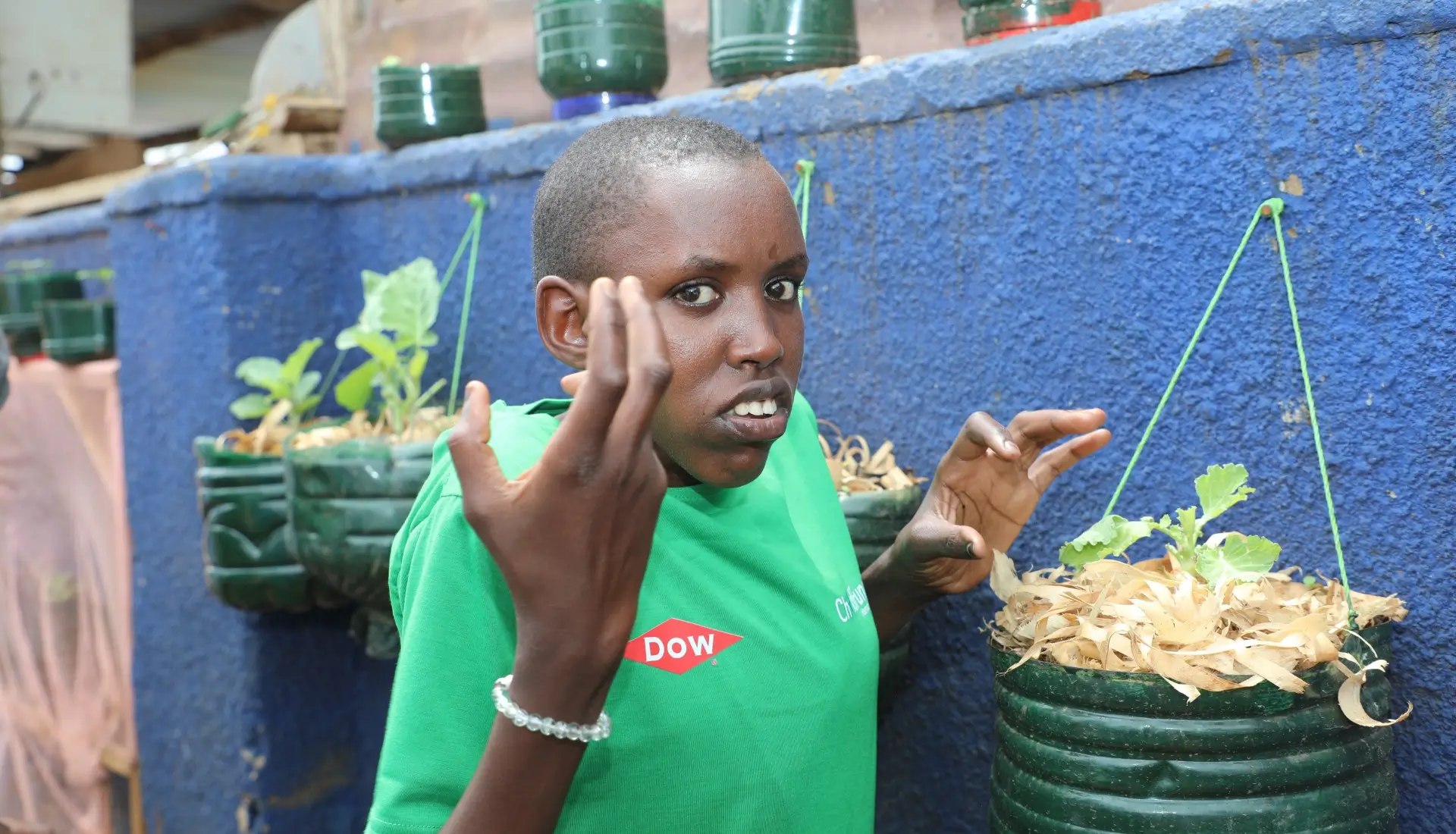
Using simple, locally available materials, project participants learnt urban farming techniques such as bottle gardening, kitchen gardening and organic pest control methods using garlic, neem leaves, soap and chili.
“I learnt that disability does not mean inability,” said Kiiza Kabonge, the Councillor for Persons with Disabilities in Nakawa Division. “PWDs can do what everyone else can do. It starts with changing mindsets and creating opportunities.”
The initiative also equipped participants with entrepreneurial and financial management skills through the Street Business School model.
Participants received practical training in business planning, record keeping, marketing and resource management before receiving seed capital to strengthen small enterprises such as poultry, retail shops and grocery businesses linked to the agricultural component.
Gilbert Musanaba, the Makindye Division Agribusiness Officer, says the project has given families practical tools to improve livelihoods and food security.
“The skills gained through backyard farming and agribusiness training will continue benefiting households long after the project has ended,” he noted.
Beyond economic support, the project amplified advocacy for the rights and inclusion of persons with disabilities. Community outreach activities and radio talk shows challenged stigma and encouraged equal opportunities for children and youth with disabilities.
Majid Muwonge, the Nakawa Community Development Officer, praised the initiative for focusing on a group that is often left behind.
“Persons with disabilities are frequently overlooked, yet this project deliberately uplifted them and gave them visibility,” he said, urging continued investment in inclusive community programmes.
Designed to align with Uganda’s National Development Plan III and the revised National Policy on Persons with Disabilities (2023), the Skilling Youths with Disabilities in Green Value Chains project sought to tackle unemployment among youth with disabilities while promoting climate-smart and environmentally sustainable livelihoods.
According to Lydia Nabunya, the Program Manager of Kampala Area Federation of Communities, the project goes beyond food security and income generation.
“We want youth with disabilities to become active contributors to Uganda’s green economy,” she said, adding that the overall goal was to address the economic needs of urban-based youth with disabilities while replicating best practices in climate sustainability through green jobs for youth.
Jenner Kanalo, ChildFund Uganda’s senior specialist youth development says the initiative complements the efforts that ChildFund advances towards a sustainable environment.
These include Climate Smart Agriculture, afforestation, farmer managed natural resource regeneration, energy saving technologies, advancing youth skilling for non-timber forest products, horticulture and water for production.
The project was also implemented in collaboration with Kampala City Division technical partners in TVET, production and environmental conservation.
For over four decades, ChildFund has been working in Uganda to improve the lives of vulnerable children and youth by ensuring they grow up safe, healthy, educated and skilled. Operating in 35 districts across Uganda country, the organisation partners with local communities and over 200 grassroots organisations to deliver sustainable programmes that support children and young people from birth to adulthood.


Related Resources

A backpack innovation supporting children carry less and learn more
Until recently, fetching water was one of the hardest parts of Samuel's day.

New ‘jerrybags’ ease water burden for refugee schoolchildren in Northern Uganda
Before the school bell rings, many children in Palorinya Refugee Settlement have already walked several...

Harnessing technology to expand access to SRH information for youth
Over 20,000 young people across Uganda will now have easier access to accurate, confidential and...