

ChildFund partners with the ministry of education to roll out education for protection and wellbeing program
April 28, 2023
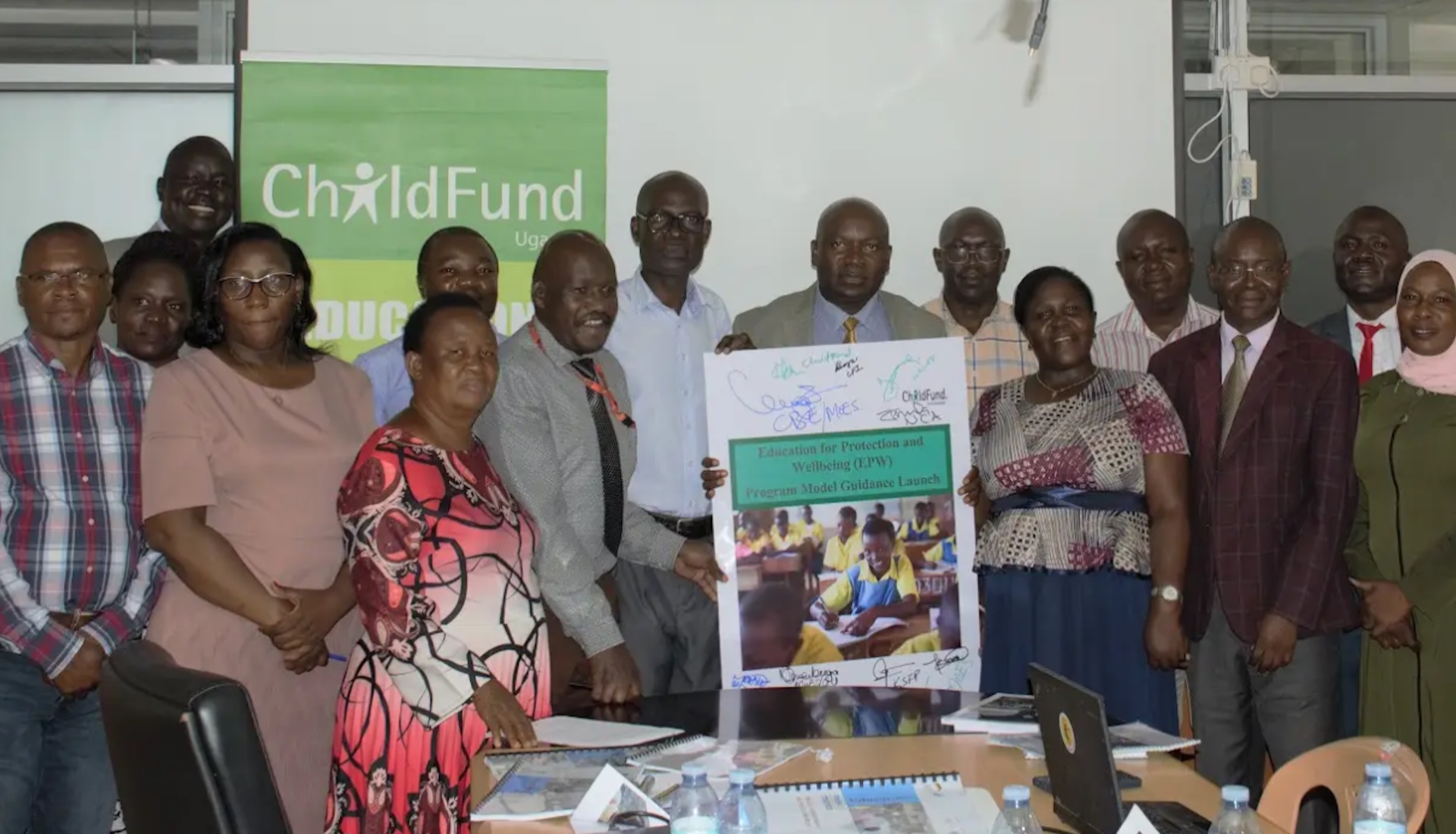
ChildFund and Ministry of Education and Sports officials shortly after signing the dummy to mark the launch of the Education for Protection and Wellbeing Program to to eliminate violence against children in educational institutions and at home.
Violence against children remains one of the most serious and pervasive human rights violations of our time. Whether it occurs in homes, schools, communities, or online, its impact is devastating, undermining a child’s physical, emotional and psychological development and often leaving scars that last a lifetime.
Beyond the immediate suffering, violence against children perpetuates cycles of poverty, inequality and social instability, ultimately weakening communities and nations. Despite global commitments to end violence against children, millions still face abuse, neglect, exploitation and harmful practices daily.
It is against this background that ChildFund in April, 28, 2023 unveiled its new Education for Protection and Wellbeing (EPW) program model aimed at equipping children, educators and caregivers with tools to prevent, mitigate and respond to violence against children.
The program, launched at the Ministry of Education and Sports headquarters by Dr. Cleophus Mugenyi, Commissioner for Basic Education, was the result of fruitful deliberations between ChildFund and the Ministry of Education and Sports’ Gender Unit, reaffirming both parties’ commitment to child protection and positive learning outcomes.
Cleophus welcomed the model as a much-needed intervention aligned with national efforts to eliminate violence against children in educational institutions.
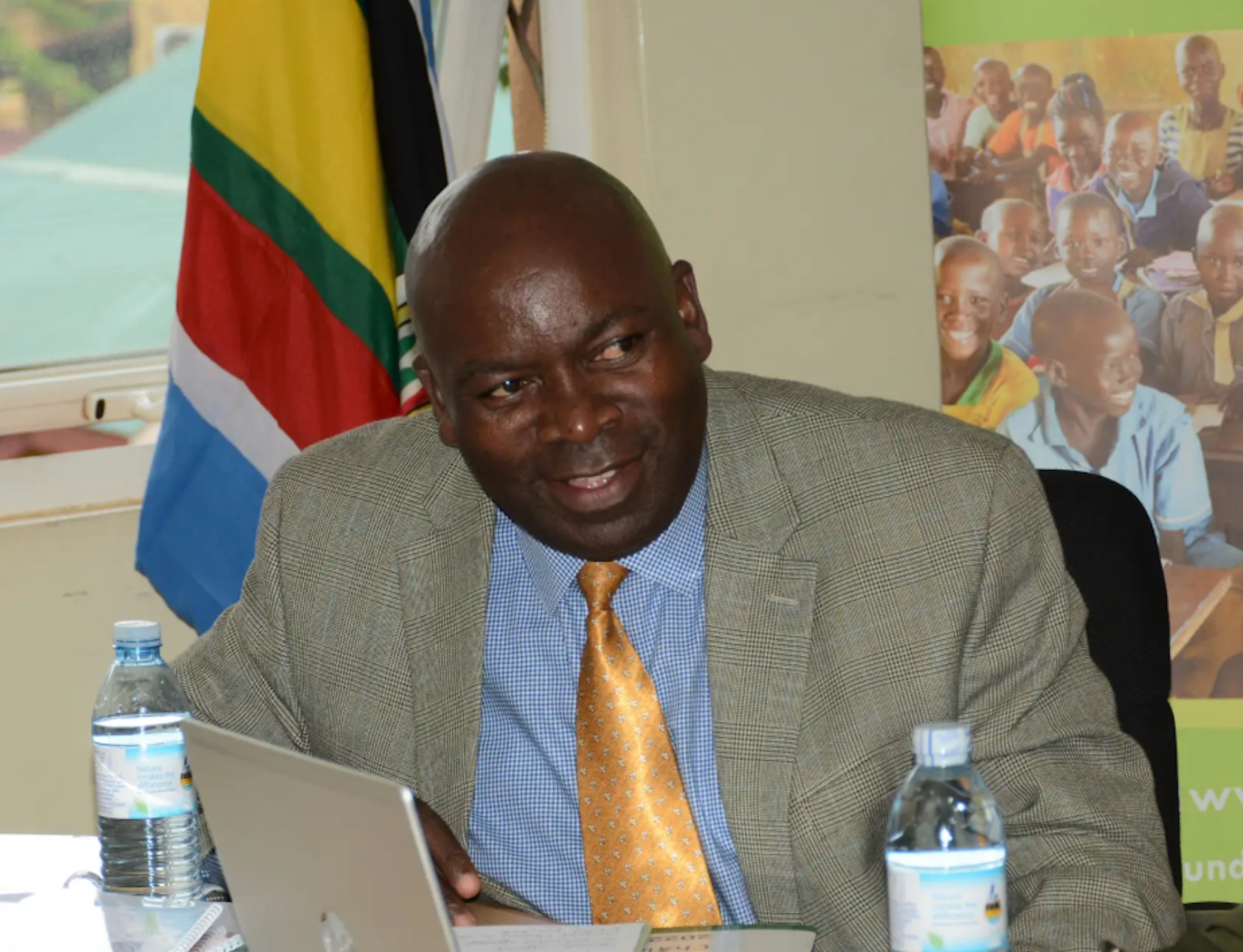 Cleophus speaking during the meeting.
“We shall support you during the roll out of the model and I will attend in person after the pilot to support the mobilisation of the model,” he said, adding, “Children learn best when they feel safe, supported and connected.”
The EPW program is being piloted in two schools in Mayuge District, Luubu Primary School and Bishop Hannington Primary School before it is scaled up to other parts of the country.
The model targets children aged 6 to 12, their caregivers and educators, with four interlinked components designed to create violence-free homes, schools and communities.
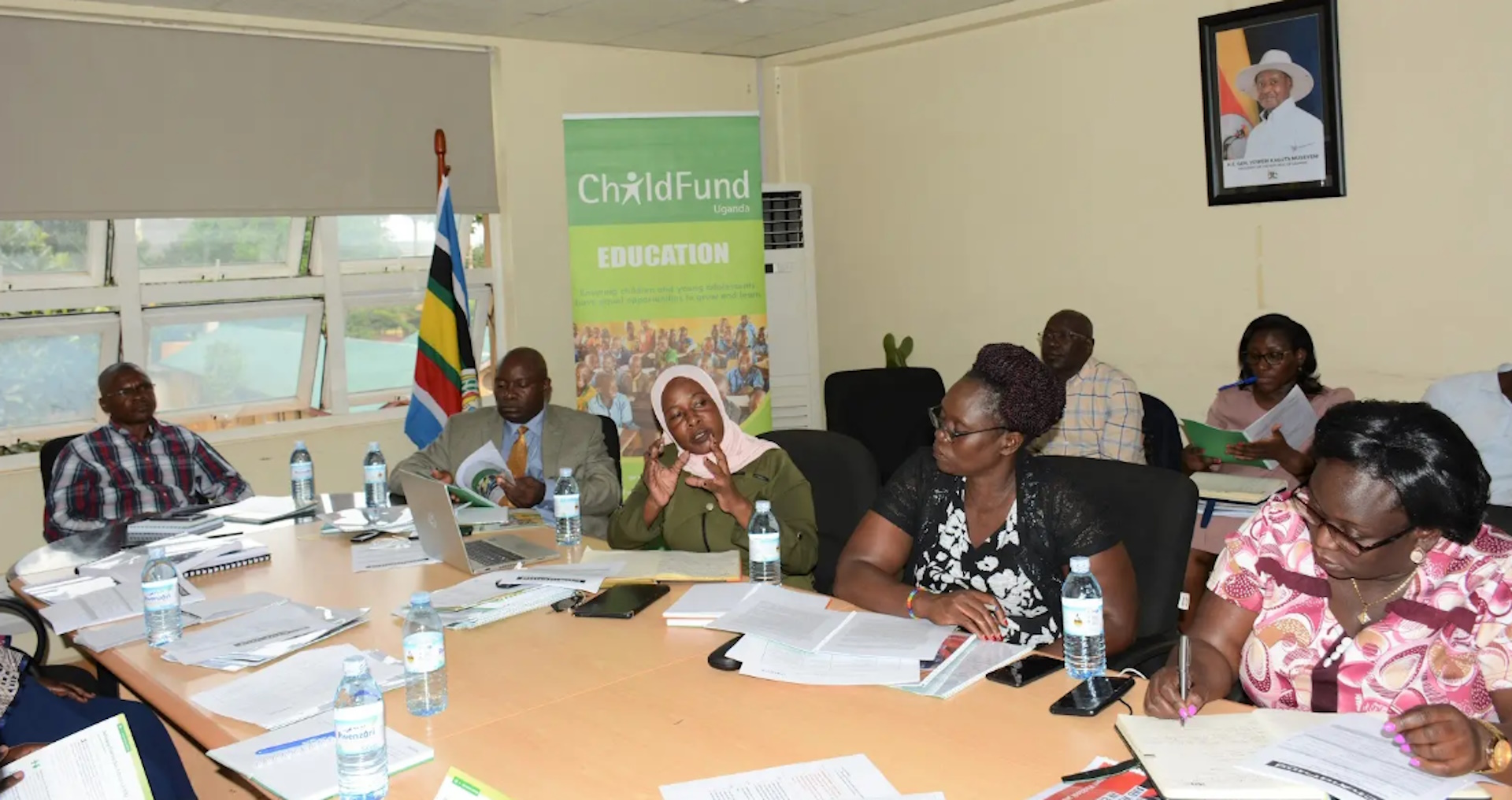
Ministry of Education officials and ChildFund staff team engaging during the meeting.
The pillars of the Education for Protection and Wellbeing Program are:
- Empowering Children (6–12 years): Children will receive training to help them recognize, prevent and respond to violence, improve their self-protection skills and reduce aggressive behaviour.
- Supporting Educators: Teachers will be equipped with cognitive-behavioural tools to foster safe and harmonious learning environments and to identify and address early signs of distress among learners.
- Engaging Caregivers: Parents and caregivers will be trained to understand how certain behaviours contribute to violence at home and in school and how to replace them with positive parenting practices.
- Strengthening School-Community Relations: The final component focuses on improving collaboration between schools and surrounding communities to identify and reduce risk factors that lead to violence against children.
“We believe in a whole-community approach. Violence against children is not confined to the classroom; it is rooted in homes and communities. That’s why this model involves every key player in a child’s life,” said Lukiya Kibone, the senior education specialist at ChildFund Uganda.
 Lukiya showing education ministry officials samples of the program model.
Lukiya added that the EPW program is also expected to promote social-emotional learning (SEL) in children, building their confidence, resilience and ability to build healthy relationships, support themselves and others from harm.
“When children are emotionally supported and protected, they show up to learn and they succeed,” she said.
SHARE:


Related Resources

A backpack innovation supporting children carry less and learn more
Until recently, fetching water was one of the hardest parts of Samuel's day.

New ‘jerrybags’ ease water burden for refugee schoolchildren in Northern Uganda
Before the school bell rings, many children in Palorinya Refugee Settlement have already walked several...

Harnessing technology to expand access to SRH information for youth
Over 20,000 young people across Uganda will now have easier access to accurate, confidential and...