

ChildFund’s Sh7.5bn ILEAP project to boost livelihoods, education and child protection in Palorinya
August 12, 2025
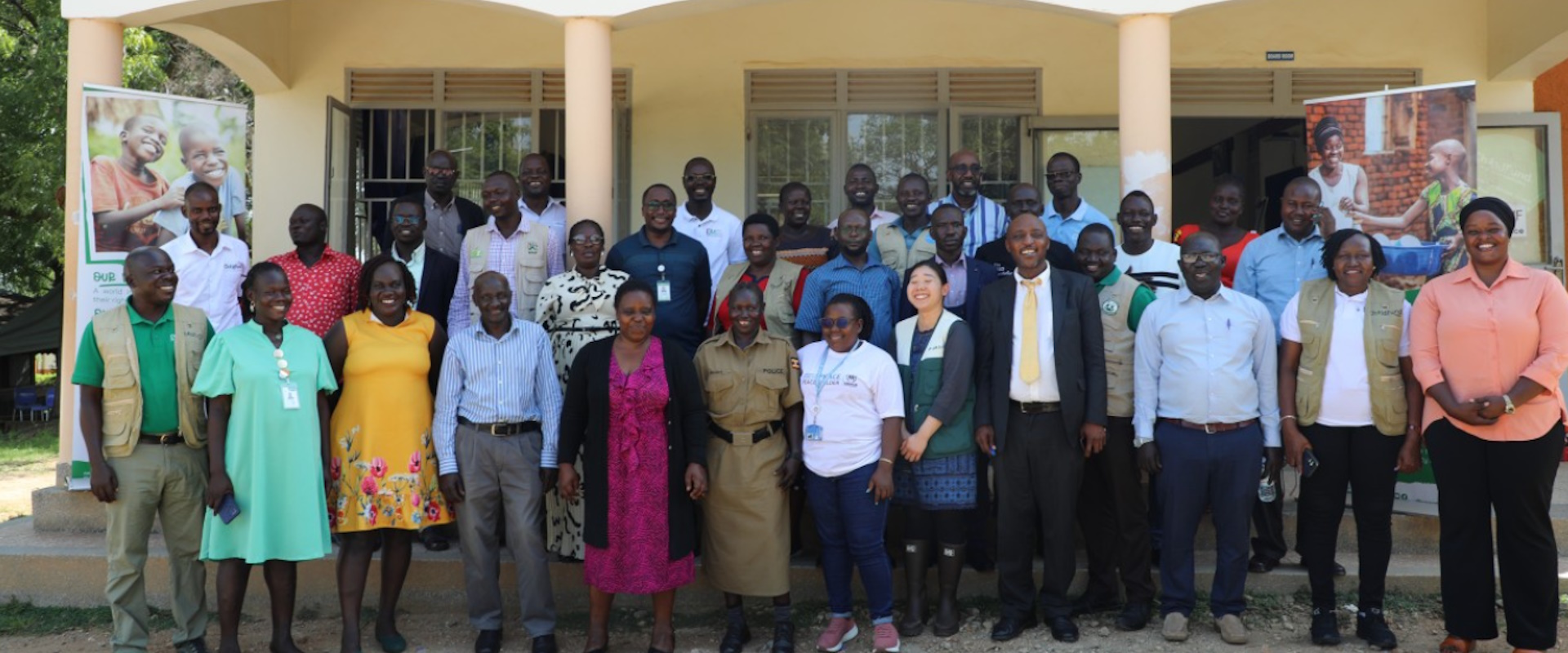
Samuel, (in yellow tie) alongside other key stakeholders share a photo after the inception meeting.
A Shs7.5 billion initiative dubbed the Integrated Livelihood, Education and Protection (ILEAP) project has been launched to transform the lives of refugees and host communities in Palorinya Refugee Settlement and surrounding areas over the next three years.
The project, implemented by ChildFund International, Good Farmers a Korean based NGO, with funding from Korea International Cooperation Agency (KOICA) in partnership with Obongi district authorities, the Office of the Prime Minister and humanitarian actors, will strengthen resilience through improved livelihoods, access to quality early learning and enhanced child protection services.
Resident District Commissioner for Obongi, Samuel Hashaka Mpimbaza, hailed the project as a game changer, describing it as a collective asset for both refugees and host communities.
“This is our project in the sense that we are going to draw lessons to impact lasting solutions and promote self-reliance. ChildFund has done a lot as far as the refugees and host communities are concerned, mainly in the area of the child and education. We have a lot to learn from ChildFund. The smartness in which they start a project, the way they involve stakeholders and how they follow every stage until completion,” Samuel said.
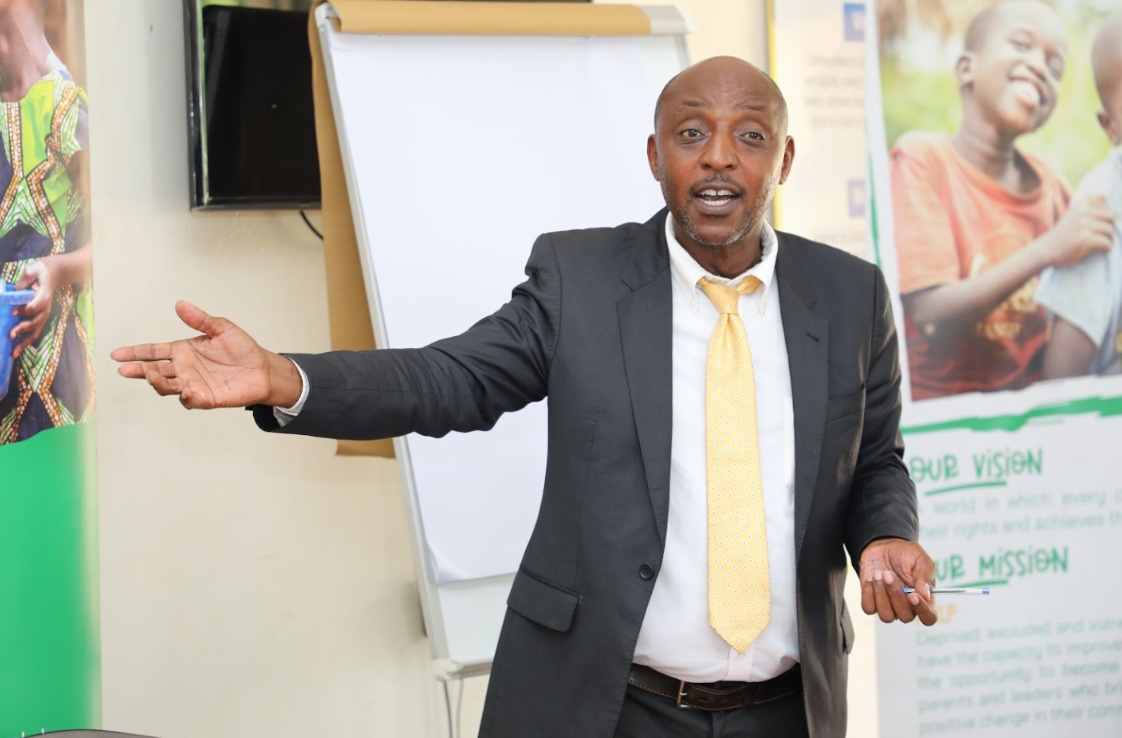 Samuel said the project will help aliviate poverty among participants and the community at large.
He made the above remarks during an inception meeting organised by ChildFund at the Palorinya Refugee Settlement this Tuesday, (August 12, 2025). The meeting drew various stakeholders including officials from the Obongi district local Government, the Office of The Prime Minister, UNHCR, refugee-led community-based organisations, Lutheran World Federation and the Uganda Police Force.
Samuel commended the organisation for its strong supervision and monitoring systems, noting that these are the backbone of successful implementation.
“One of the problems in this country is implementation and sometimes what is planned never gets done because there is no supervision. At times a project begins and everyone is waiting for commissioning day. That cannot work. ChildFund supervises and monitors its work and it is what you supervise and monitor that gets done.”
He expressed optimism that the Shs7.5 billion investment will deliver significant results for the community.
“I have big hope that we are going to see a major impact in terms of structures, education, livelihood and protection. I also hope we take advantage of the four-acre model the President has been preaching so that the community can benefit from these programmes meant to improve livelihoods and alleviate poverty. We expect a big bang in the fight against poverty to liberate our people from the poverty that has continued to enslave them,” Samuel observed.
About the project.
Giving a summary of the project, Lukiya Kibone, ChildFund Uganda’s Senior Specialist in charge of Education and ECD said the I-LEAP project will target 25,485 participants, increasing access to quality early learning and school readiness for children aged 3–8 years.
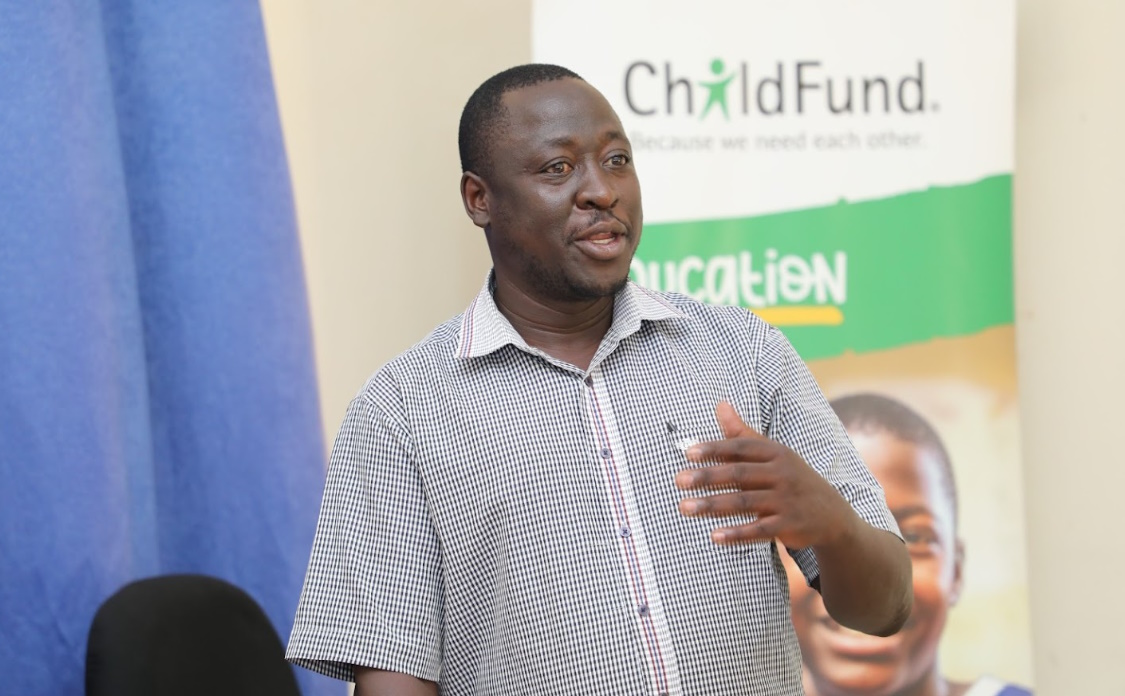
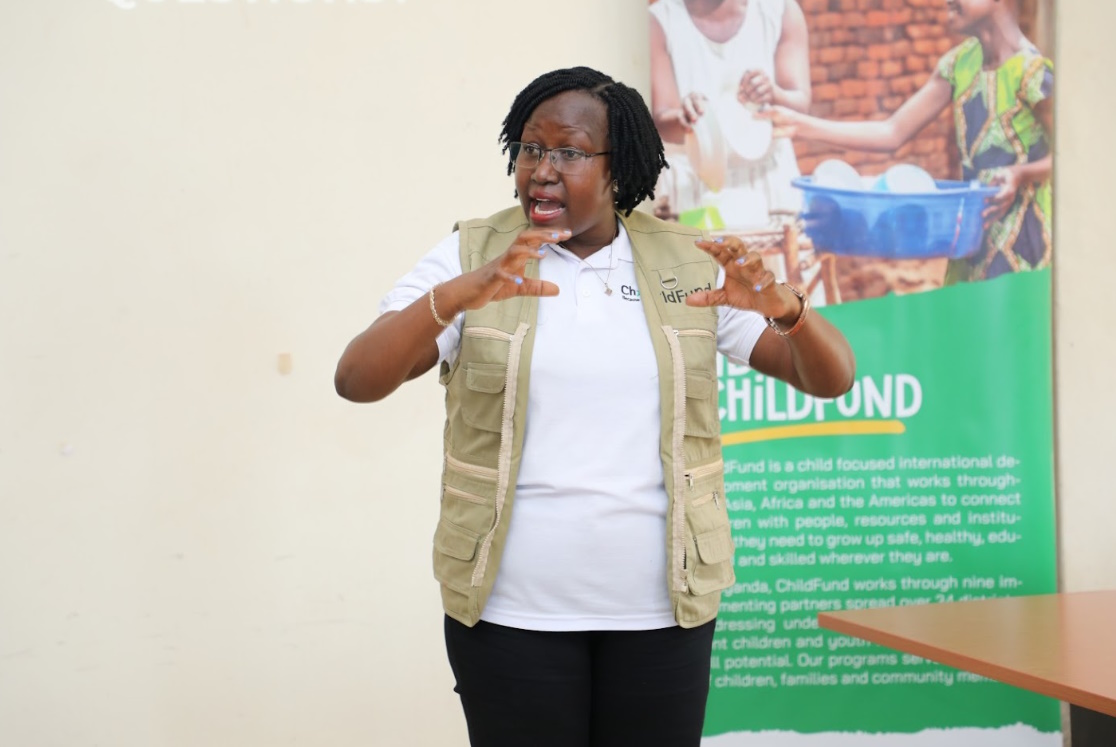 Lukiya shares excerpts of the project overview.
The project, she added will also strengthen the socio-economic capacity of vulnerable households and enhance access to services for the prevention and response to child protection concerns, violence and conflict.
In early learning, Kibone said ChildFund will construct, renovate, fence and equip ECD centres with age-appropriate play and learning materials, support feeding programmes, provide incentives to ECD teachers and train them in effective teaching practices, psychological first aid, psychosocial support and social-emotional learning.
Community Management Committees and Refugee Welfare Committees will also be trained in ECD management and awareness creation.
Presenting on the livelihood component, So Yeon Kim, the Compliance Advisor said the project will establish poultry and goat farming facilities, create agricultural farms to produce food for poultry feeds, form and train farmer groups in livestock and crop production and supply layer chickens and goats to generate income through egg, milk and meat sales.
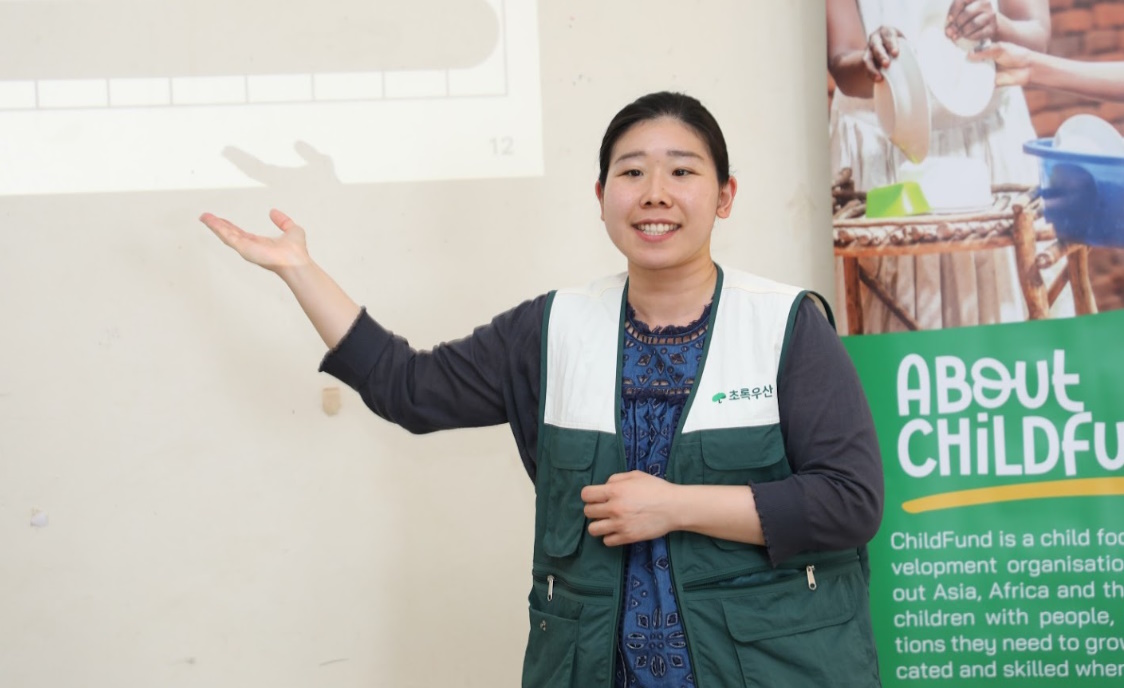 So Yeon shares insights during the meeting
The other component of Child Protection seeks to strengthen community-based structures, train para-social workers and activists on prevention, response and referrals and roll out awareness campaigns on peaceful co-existence, child protection, violence prevention and peacebuilding.
Support amidst funding cuts
Julius Muwereza, who represented the Palorinya Refugee Settlement Commandant, commended ChildFund for maintaining its commitment despite global funding cuts.
 Julius representing the settlement commandant at the meeting.
“With over 141,000 refugees currently and more arriving at the reception centres, services are still needed and dire. Amidst budget cuts and global changes, we are happy we have partners who have not abandoned us,” Julius stated.
Other leaders, including LC III Chairperson for Itula Sub-County, Siraj Kararakarara pledged to support in interpreting community dynamics and mobilising stakeholders for the project’s success. District representatives described the initiative as transformative, with a trickle-down effect for both refugees and host communities.
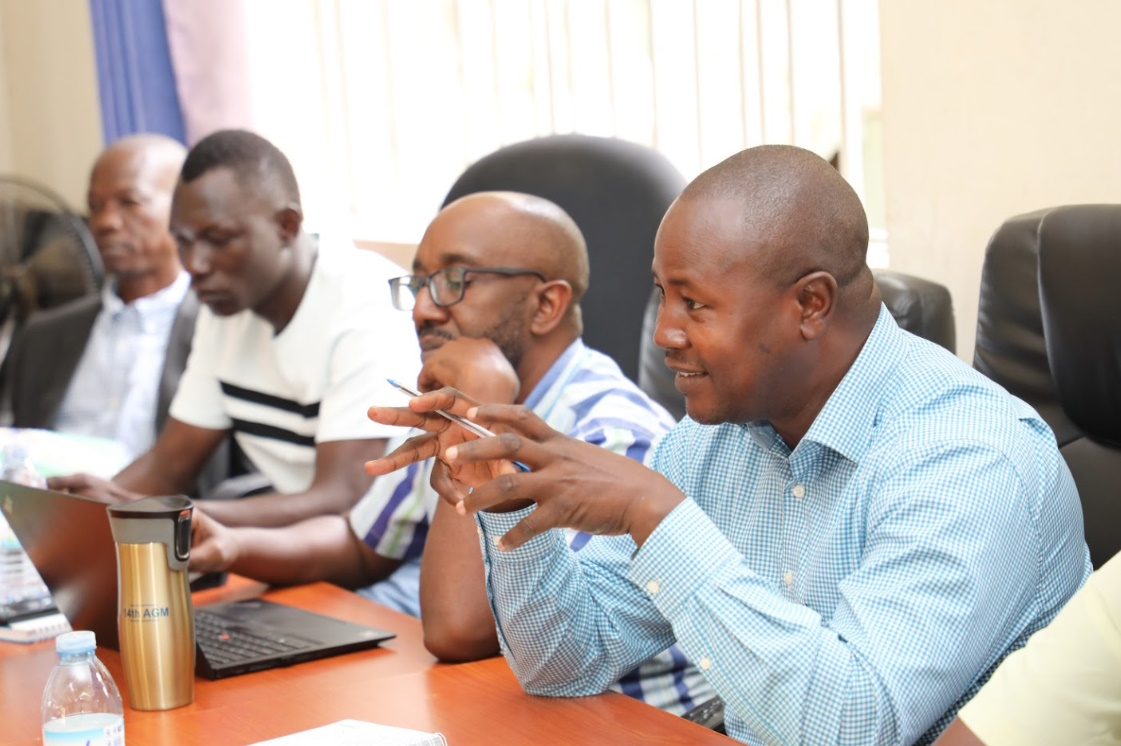 (From Right to Left) Job Tabu, Deputy Chief Administrative Officer, Matthew Ongwen, Assistant Protection Officer UNHCR, Siraj Kararakarara, the Itula Sub County LCIII Chairperson and Felix Idraku Abraham, the Obongi District Education Officer
Uganda hosts over 1.7 million refugees. Our response in humanitarian work has majorly focused on supporting education, early learning and psychosocial well-being, particularly for children on the move from the Democratic Republic of Congo and South Sudan in Palorinya Refugee Settlement in Obongi District.
Our child-friendly spaces, now transitioned into early learning centers, have enabled children recover from trauma through play therapy, improved their physical, socio-emotional learning and structured education. These centers support their psychomotor, cognitive and emotional development, while fostering socialization and self-protection skills, among others.


Related Resources

A backpack innovation supporting children carry less and learn more
Until recently, fetching water was one of the hardest parts of Samuel's day.

New ‘jerrybags’ ease water burden for refugee schoolchildren in Northern Uganda
Before the school bell rings, many children in Palorinya Refugee Settlement have already walked several...

Harnessing technology to expand access to SRH information for youth
Over 20,000 young people across Uganda will now have easier access to accurate, confidential and...