

Creating safe spaces for children in Palorinya refugee settlement
January 4, 2024
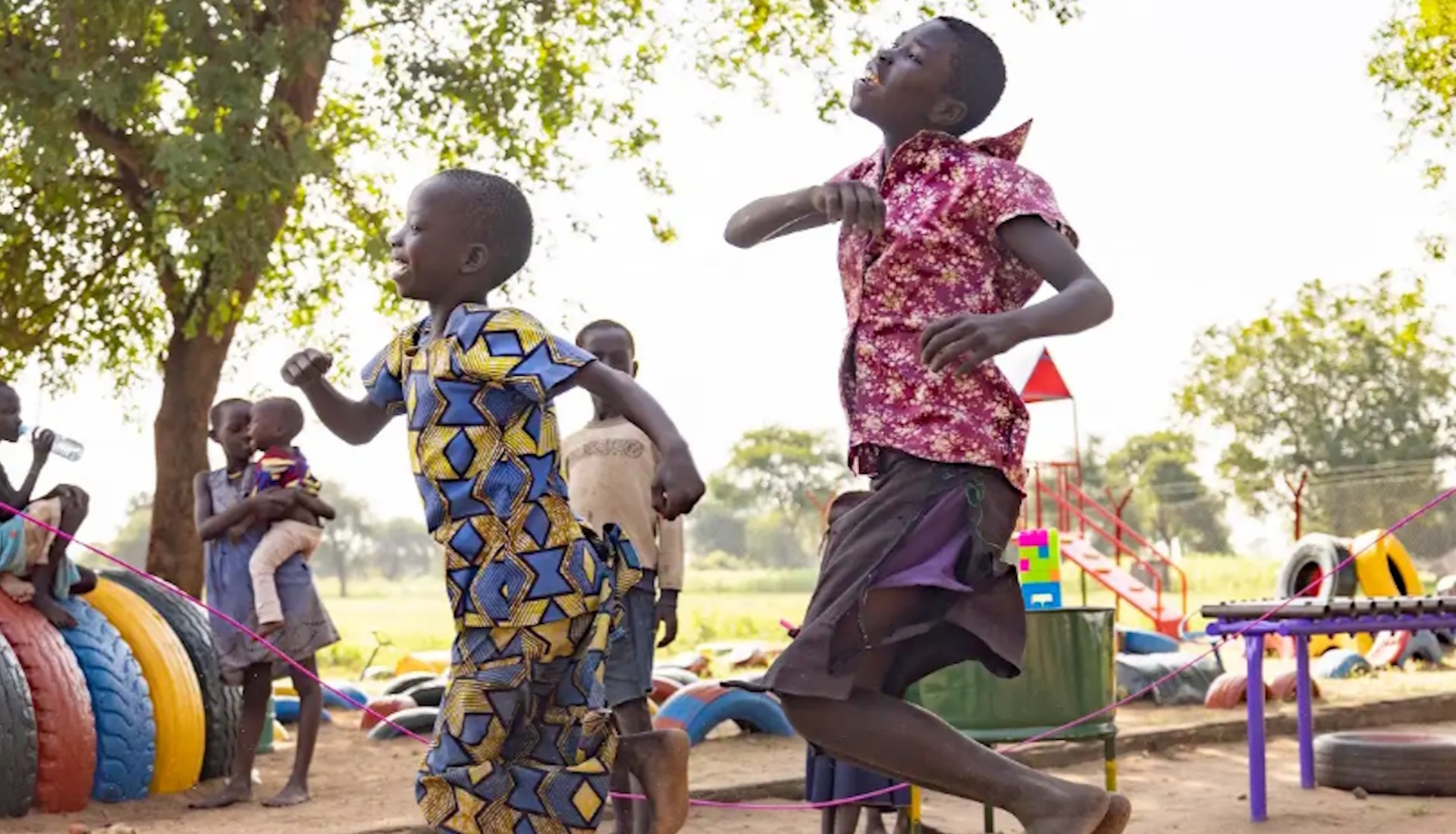
Children playing at a ChildFund-supported child friendly space in Palorinya Refugee Settlement in Northern Uganda.
When a crisis strikes, children often suffer in silence. But in Uganda’s Palorinya Refugee Settlement, a bold initiative is turning vulnerability into resilience, proving that even in displacement, children can find safety, support and the space to dream again.
Uganda remains Africa’s largest refugee-hosting nation, sheltering over 1.5 million refugees from countries like South Sudan, the Democratic Republic of Congo, Somalia, Rwanda, Burundi, and Sudan.
In 2023 alone, nearly 100,000 refugees and asylum seekers arrived, adding to a total of over 245,000 new arrivals since 2022, according to the UNHCR. This continued influx, combined with a natural population growth rate of 3 percent, has overwhelmed existing services in host districts, particularly health care, education and water and sanitation.
“Crises like these hit children and women the hardest,” says Jacqueline Nakiwala, the Project Manager for the Building Resilience and Protection Systems for the Well-being of Children (BREPs) project, implemented by ChildFund Uganda with support from ChildFund Korea and funding from KOICA.
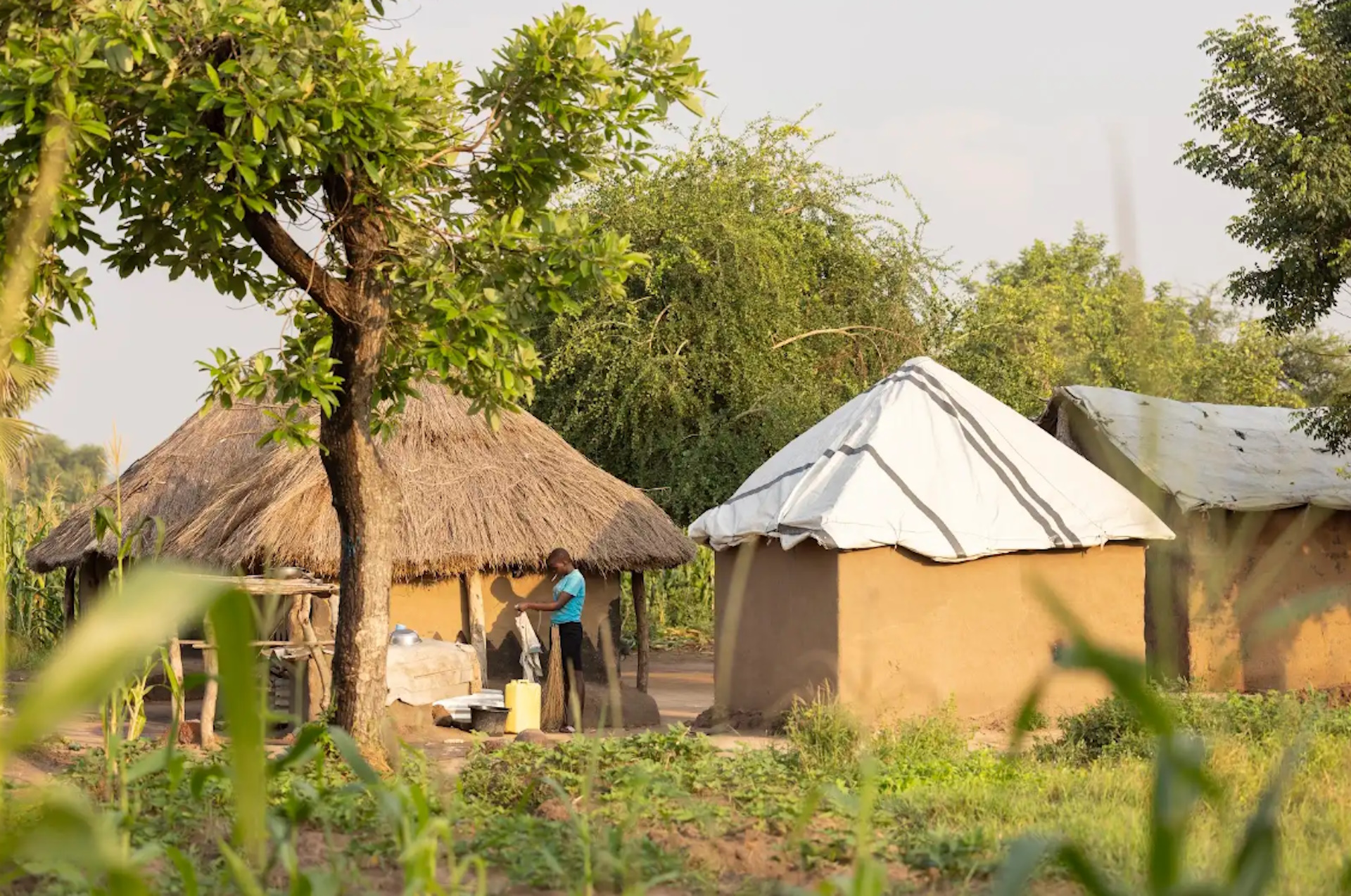 A sample of housing within the settlement.
Community-Driven Protection
Launched in Palorinya Refugee Settlement in Obongi District, West Nile sub-region, the BREPs project aimed to strengthen child protection systems in both the refugee settlement and host communities. The project’s core focus was to build robust, community-based mechanisms to prevent and respond to child protection risks.
“We trained 221 community members on case identification, referral systems and how to mitigate child protection risks, including how to respond to and prevent sexual exploitation and abuse,” Nakiwala explains. “This wasn’t just a one-off training. These community members are now at the forefront of identifying and addressing cases that threaten children’s well-being.”
In total, the initiative reached 11,589 community members with life-changing messages on child protection and the prevention of violence against women and girls.
Supporting the Most Vulnerable
At the heart of the project’s success lies a deep focus on vulnerable children. Ambrose Denume, BREPs Project Officer, recounts how 150 children in Zone 3 East and West saw their lives transformed.
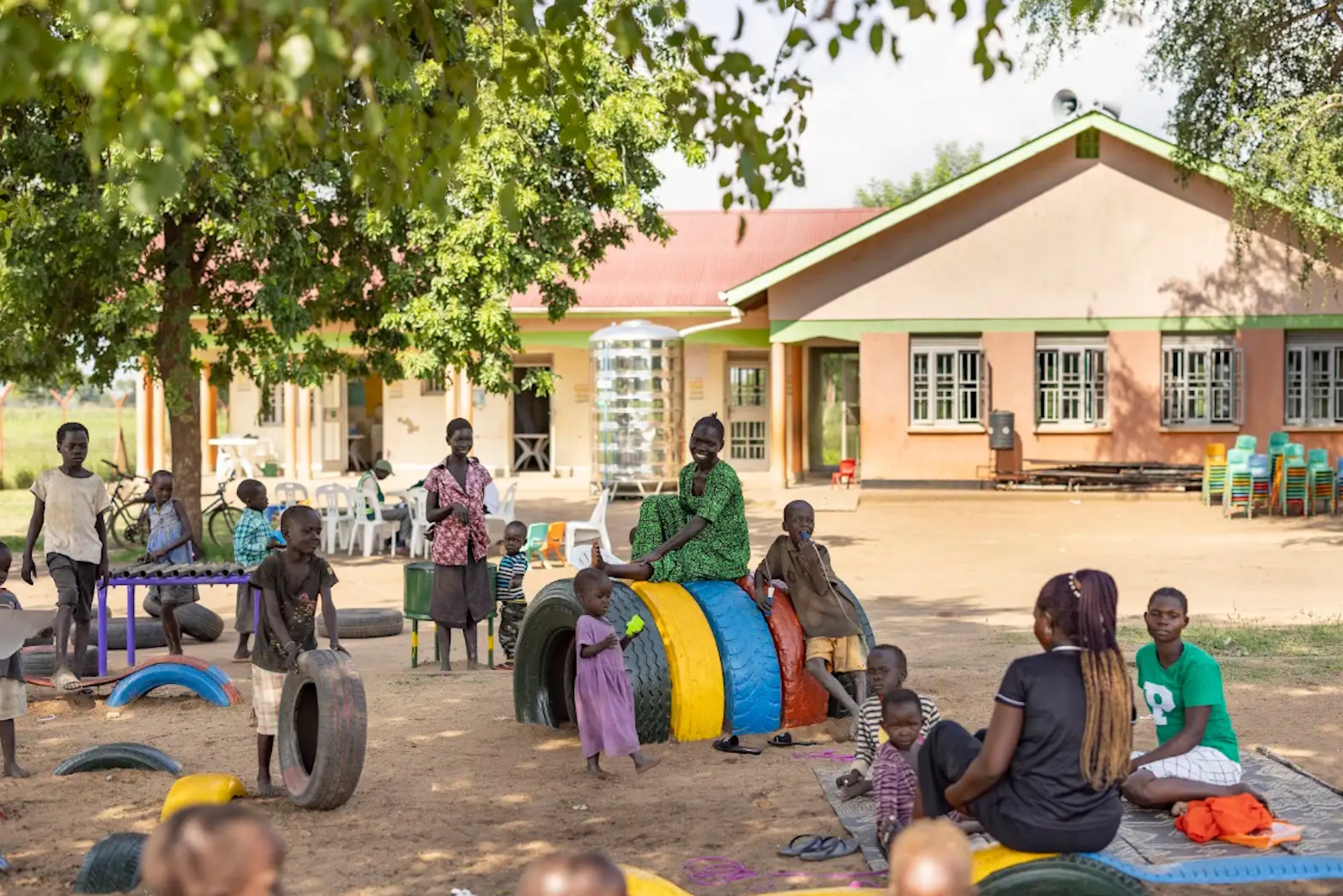 Child-friendly spaces at the refugee settlement.
“These were children who had nothing. Through coordinated community efforts, we provided them with essential supplies like mattresses, bedsheets and soap,” Denume says. “The identification process was thorough and inclusive, volunteers from Child-Friendly Spaces (CFSs) and local child protection structures played a central role.”
Child-Friendly Spaces have emerged as a cornerstone of psychosocial support and protection in refugee communities. BREPs trained 30 facilitators and three Centre Management Committee chairpersons to run these spaces effectively.
“Every day, between 563 to 788 children attend these spaces to learn, play and just be kids again,” Denume adds. “It’s not just about structured learning, it’s about creating safe environments where children can heal and grow.”
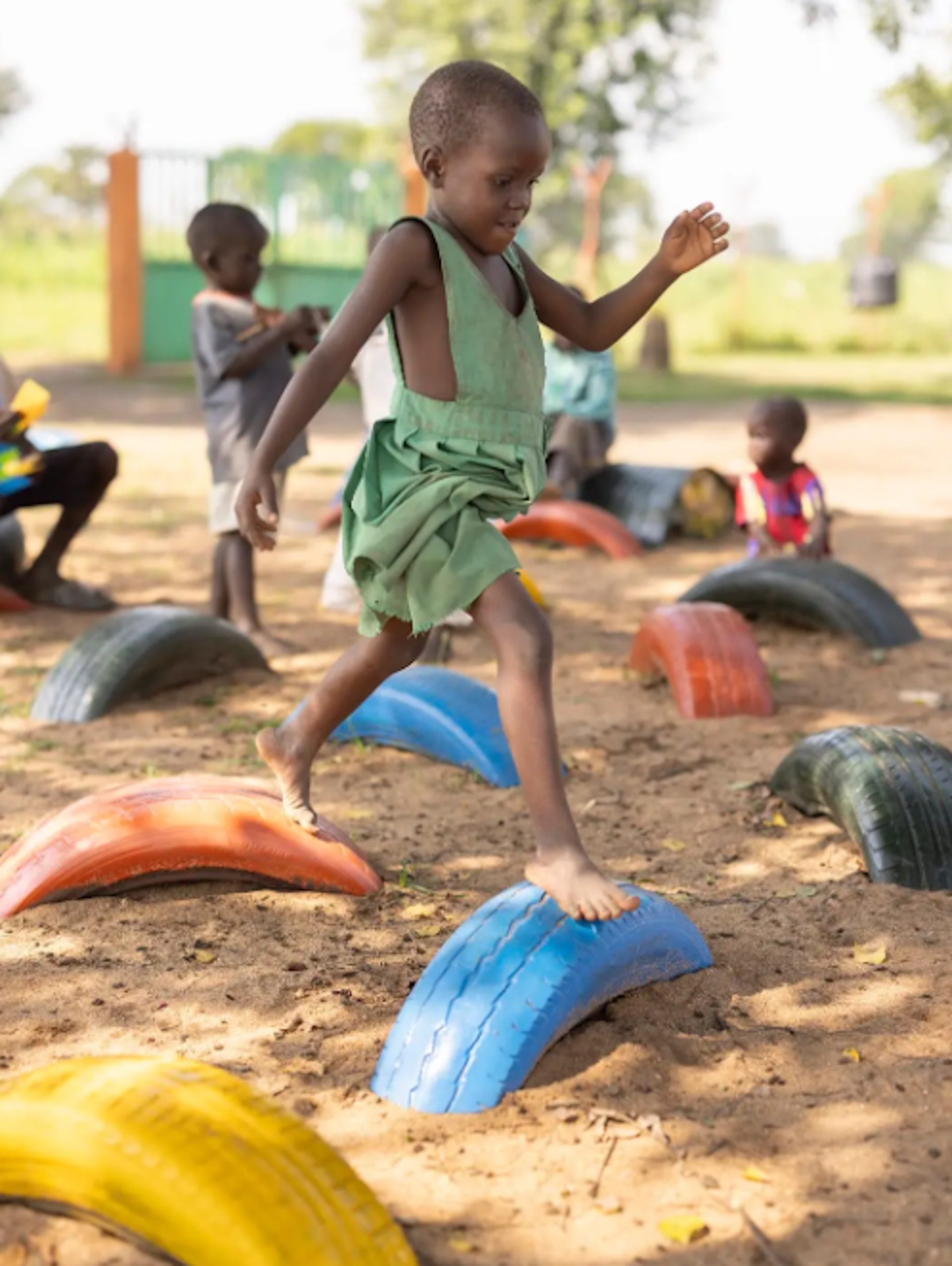 Sharon (7) plays with her friends on the playground at one of three ChildFund-supported child-friendly spaces in the Palorinya Refugee Settlement.
Recognizing the pivotal role parents and caregivers play in a child’s life, BREPs also facilitated six parenting sessions across all three CFSs, attended by 512 participants.
“These sessions helped parents understand child development better and gave them tools to support their children emotionally and physically,” says Denume.
A Foundation for the Future
Through community training, the provision of basic necessities, child-focused psychosocial activities and empowering parents, the BREPs project is planting seeds of strength.
“We may not be able to control the conflict that brings people here,” Nakiwala said, “but we can work together to build systems that protect children, offer them hope and create environments where they can dream again.”
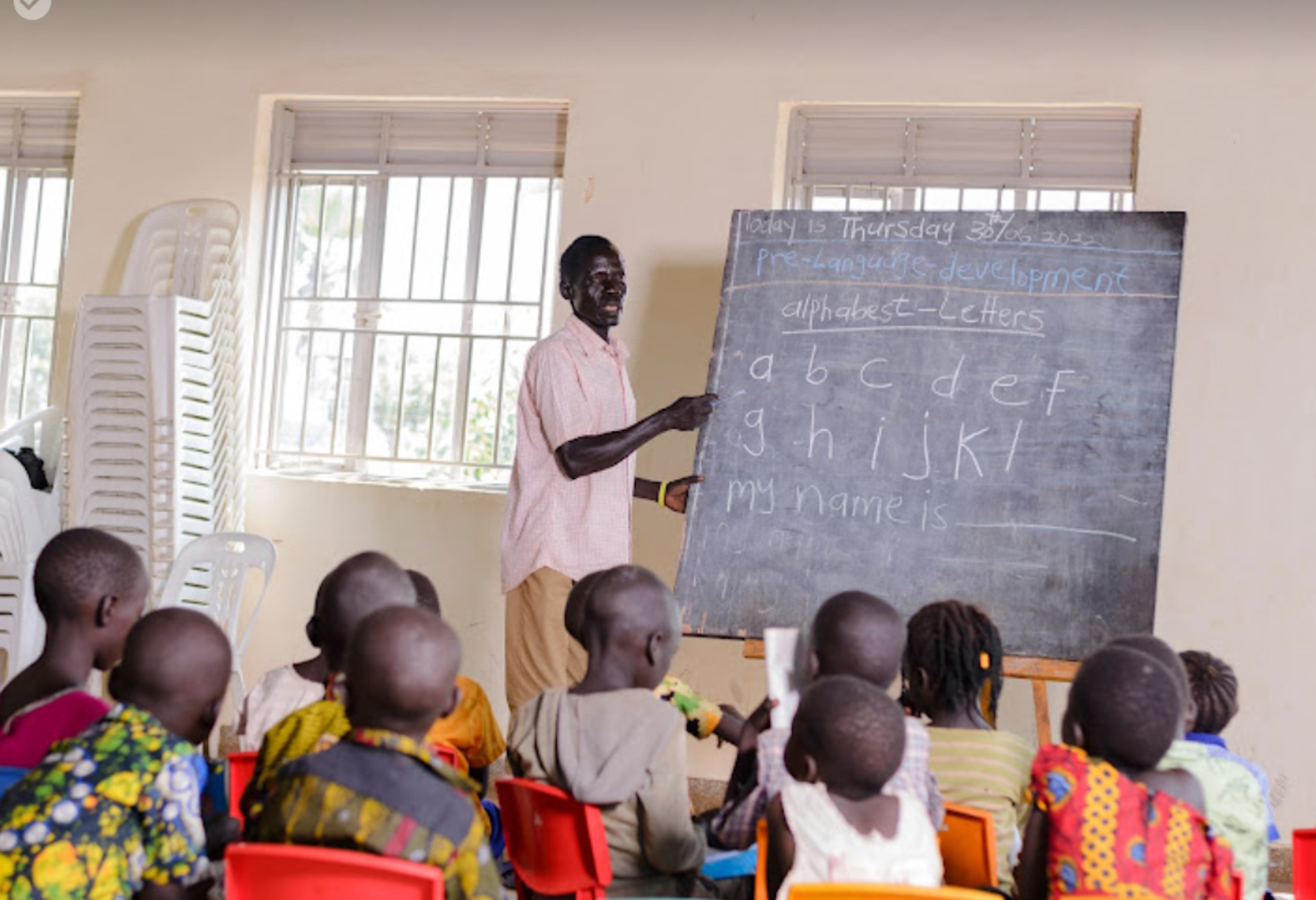 John, a volunteer teacher, helps children learn the alphabet in one of the supported child-friendly spaces.


Related Resources

A backpack innovation supporting children carry less and learn more
Until recently, fetching water was one of the hardest parts of Samuel's day.

New ‘jerrybags’ ease water burden for refugee schoolchildren in Northern Uganda
Before the school bell rings, many children in Palorinya Refugee Settlement have already walked several...

Harnessing technology to expand access to SRH information for youth
Over 20,000 young people across Uganda will now have easier access to accurate, confidential and...