

How Helen used play to bond with her grandchildren
July 14, 2023
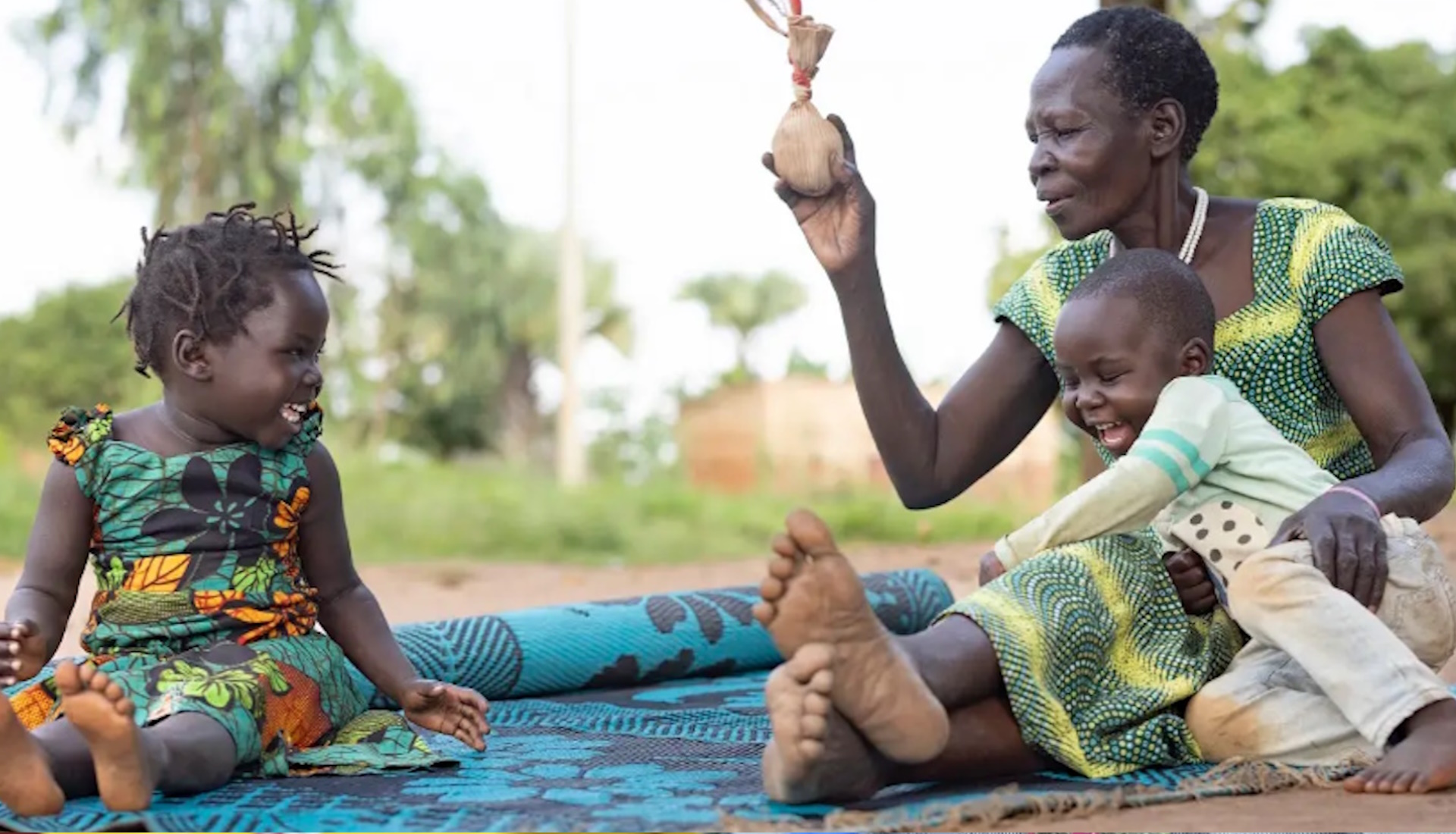
Helen passes a hand made balls to her grandchildren.
I remember a time when my grandchildren were afraid of me. As the family head, I run my household with strict discipline, believing that children should focus on school and chores rather than play. My grandchildren used to fear me because I was harsh on them. When I was growing up, there was a lot of hostility in the household. Children were beaten for doing wrong and husbands would beat their wives.
The testimony above is from Helen, a 69 year old from Gulu district.
Fast forward, today, the atmosphere in Helen’s home is different. Laughter fills the air as she plays games with her grandchildren outside their house. Since joining the Come Play with Me project in early 2022, Helen has changed completely, not just in how she sees play, but in how she approaches caregiving.
“These new teachings have brought happiness to us,” she says. “Parents and caregivers shouldn’t argue in front of children. Otherwise, they’ll just copy you.”
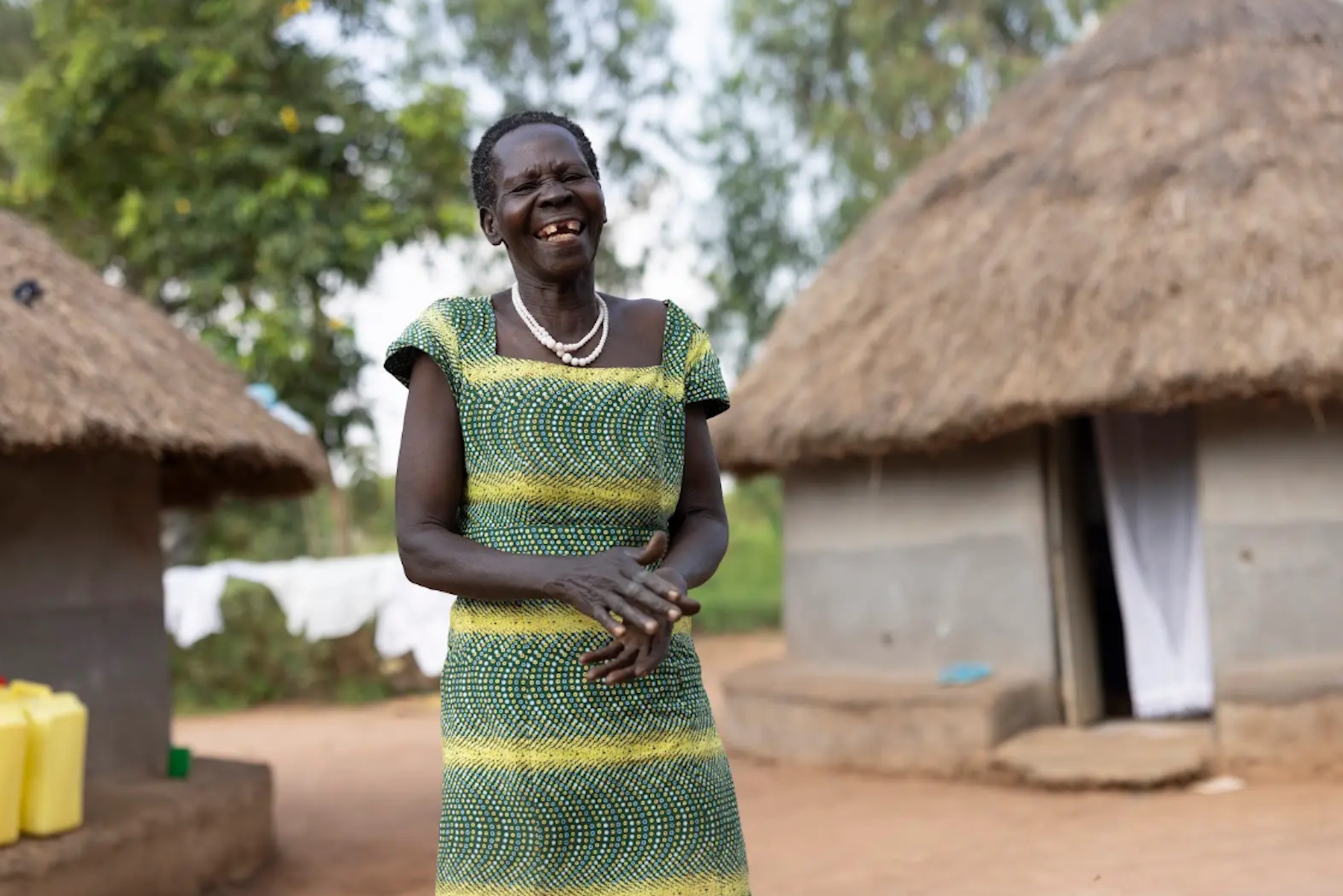 Helen outside one of her hats.
As the primary caregiver to her grandchildren who range in age from 18 months to 12 years, Helen has learned that play is not a distraction from responsibility but a crucial part of childhood development.
Through the project, she has embraced a more nurturing role, moving away from harsh discipline to what she calls “loving and mentoring.”
“If one of my grandchildren is doing something wrong, I don’t shout at them or beat them. I take them aside and talk to them in a low voice. It’s a better way,” Helen explains.
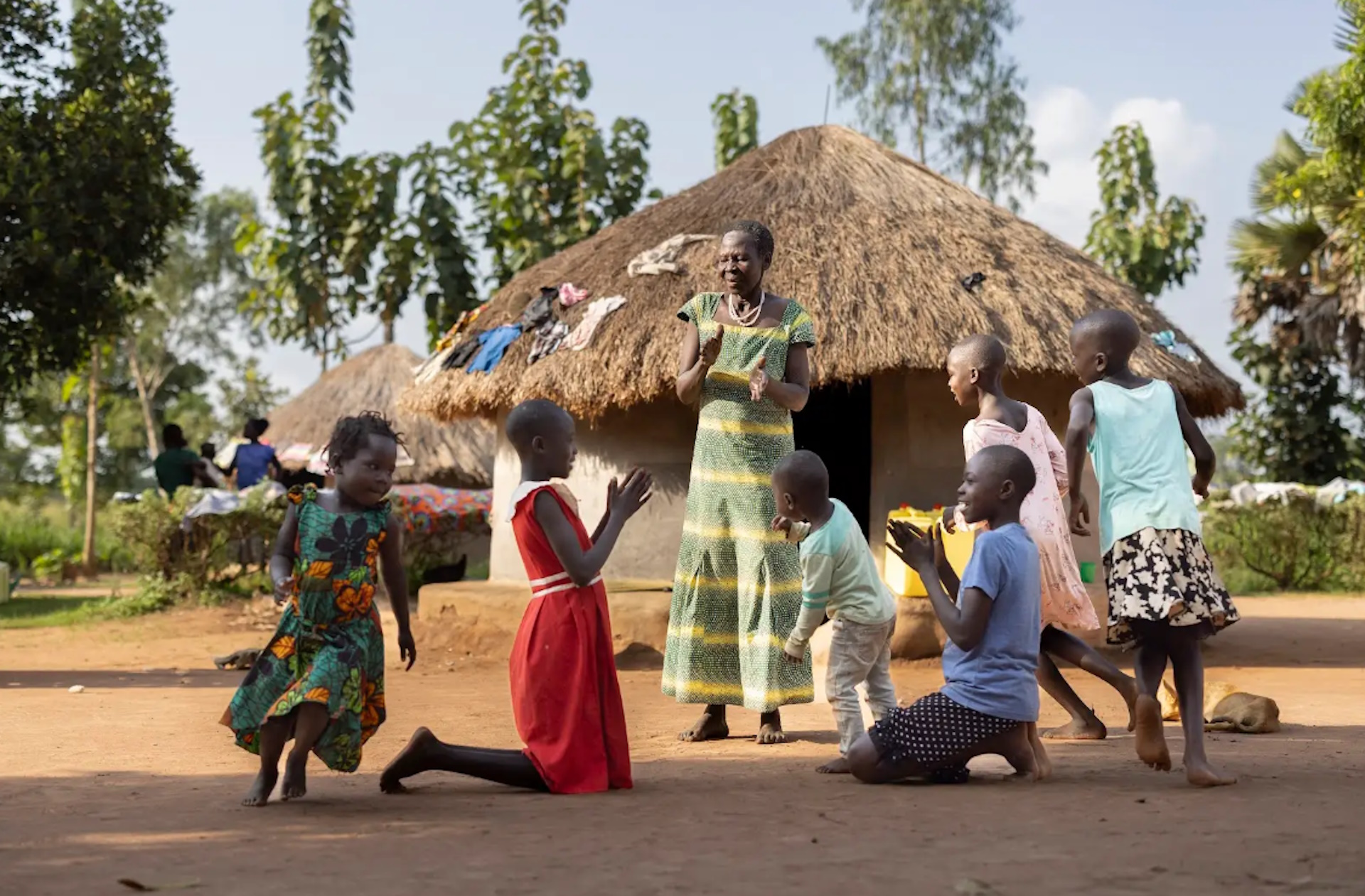 Here she engages in a merry go round game with the grandchildren.
“Now, the children open up and confide in me. If they have problems at school, or they aren’t feeling well, they tell me.” She recently had a conversation with her granddaughters about an issue at school, something she knows they wouldn’t have shared with her in the past.
The Come Play with Me project, supported by the LEGO Foundation, promotes playful parenting by encouraging caregivers to actively engage in play with their children.
Parents and guardians are taught to create toys using locally available materials, such as balls made from banana fibers and jump ropes woven from corn stalks. Through this process, caregivers like Helen have come to see play not as a waste of time, but as a vital part of a child’s growth.
“I’ve realized that playing is important for kids,” Helen says. “If I see one of my grandchildren playing, I let them play. I shouldn’t always make them do chores. Even if it’s dark outside, I let them play in the moonlight.”
The introduction of educational tablets further supported learning at home. These devices contain interactive games, riddles and lessons on language, maths, nutrition and hygiene. Helen has seen firsthand how they help children build new skills.
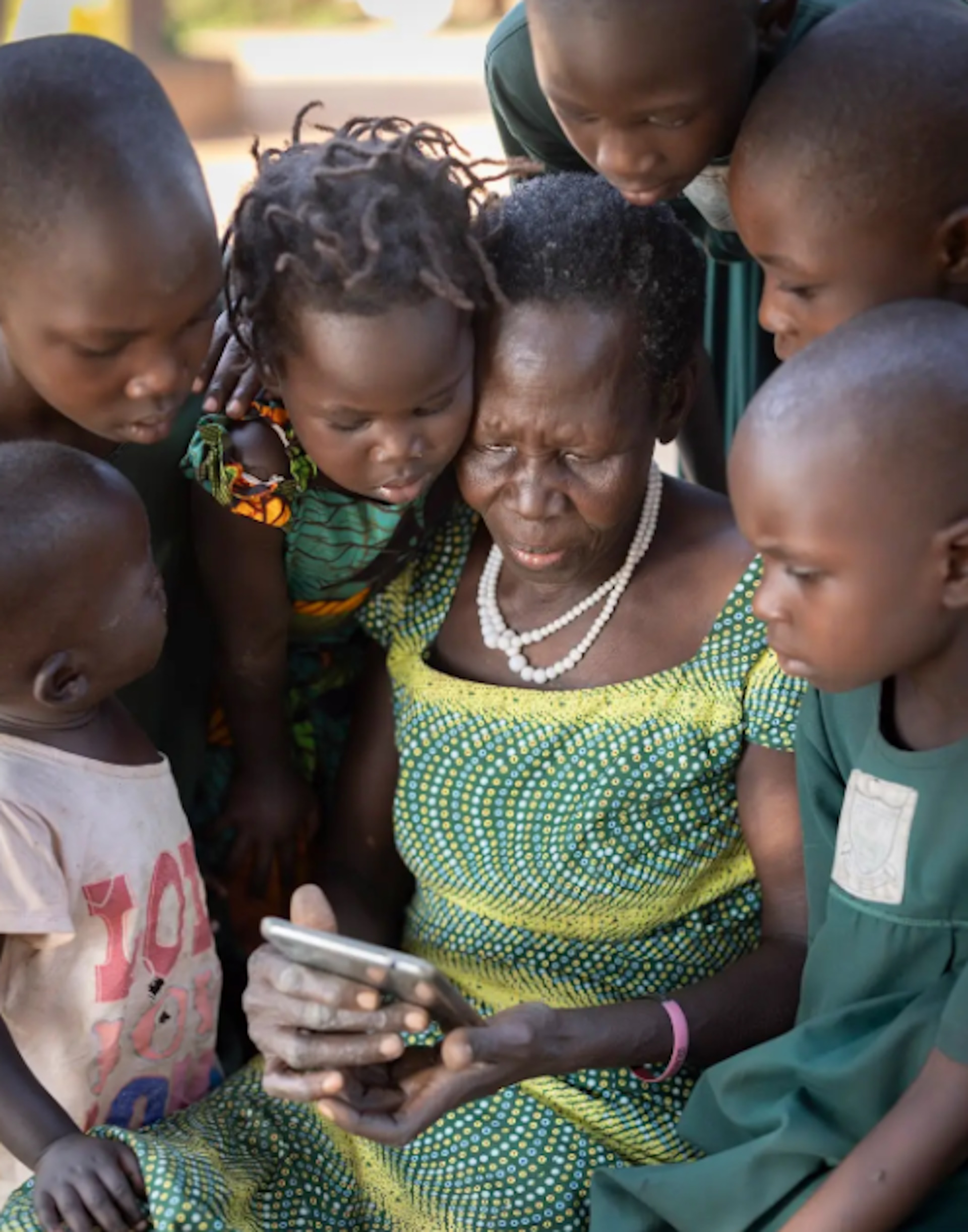 She watches content in one on the tablets provided by ChildFund.
“I hope they grow up to be responsible children,” she says. “They should love education, love God and be disciplined. The training we received under the project will help them achieve this.”


Related Resources

A backpack innovation supporting children carry less and learn more
Until recently, fetching water was one of the hardest parts of Samuel's day.

New ‘jerrybags’ ease water burden for refugee schoolchildren in Northern Uganda
Before the school bell rings, many children in Palorinya Refugee Settlement have already walked several...

Harnessing technology to expand access to SRH information for youth
Over 20,000 young people across Uganda will now have easier access to accurate, confidential and...