

2,200 learners in Teso and Lango get solar lamps
February 18, 2026
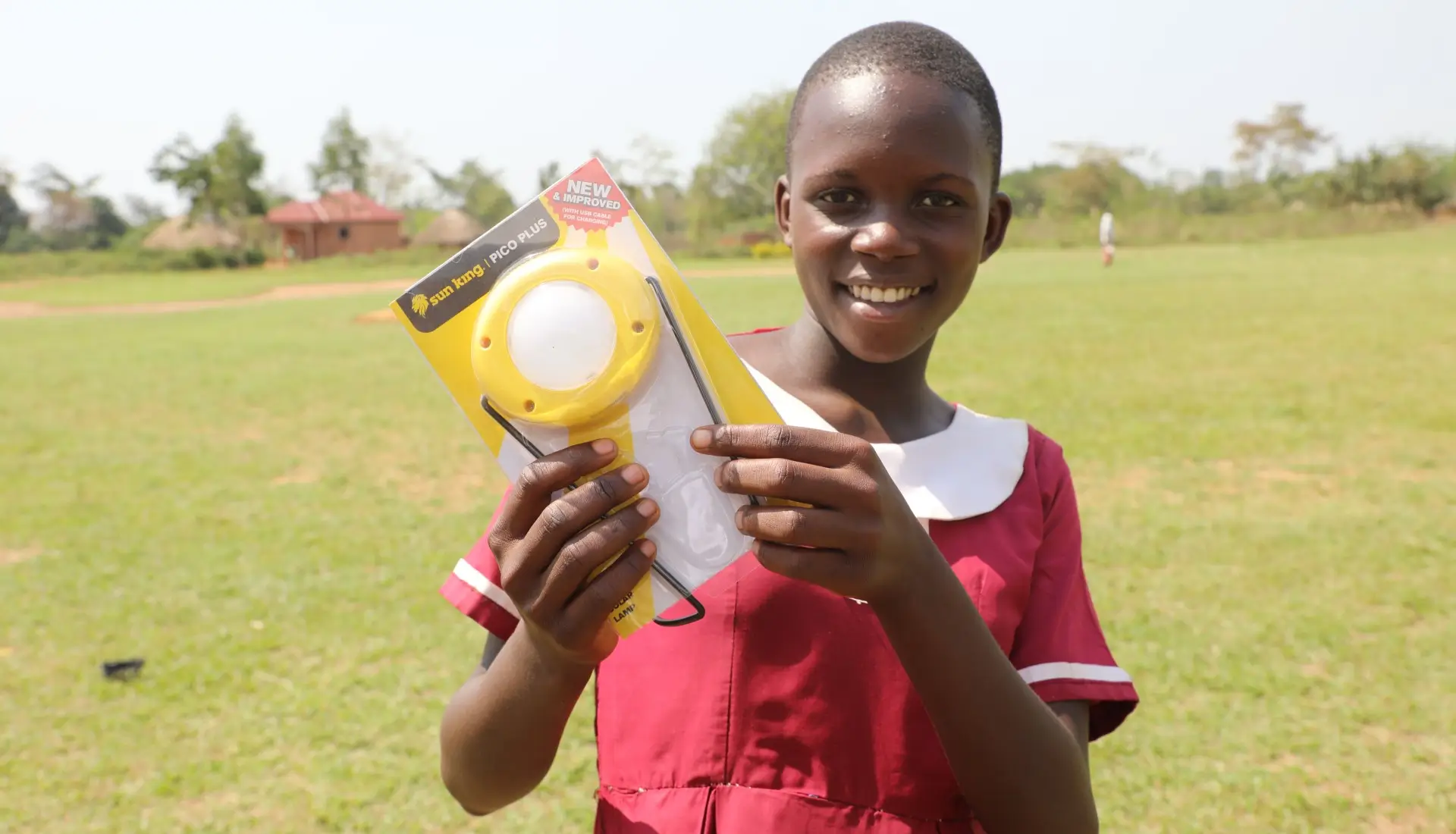
Mary holds a solar lamp.
One of the most familiar household items after sunset, in a typical rural home in Uganda, is something commonly known as a “tadoba”. Usually improvised from a small tin or bottle filled with kerosene and fitted with a piece of cloth as a wick, the tadoba produces a weak, flickering flame that barely lights up a room.
Its smoke stings the eyes, blackens the walls, and often fills the air with a choking smell. This is what most families who are not connected to the national electricity grid use as a source of lighting.
This crude lamp has long been the only source of light for cooking, chores, and most importantly, children trying to read their schoolbooks late into the evening.
It is this everyday struggle that the WattsON solar lighting project is now seeking to change.
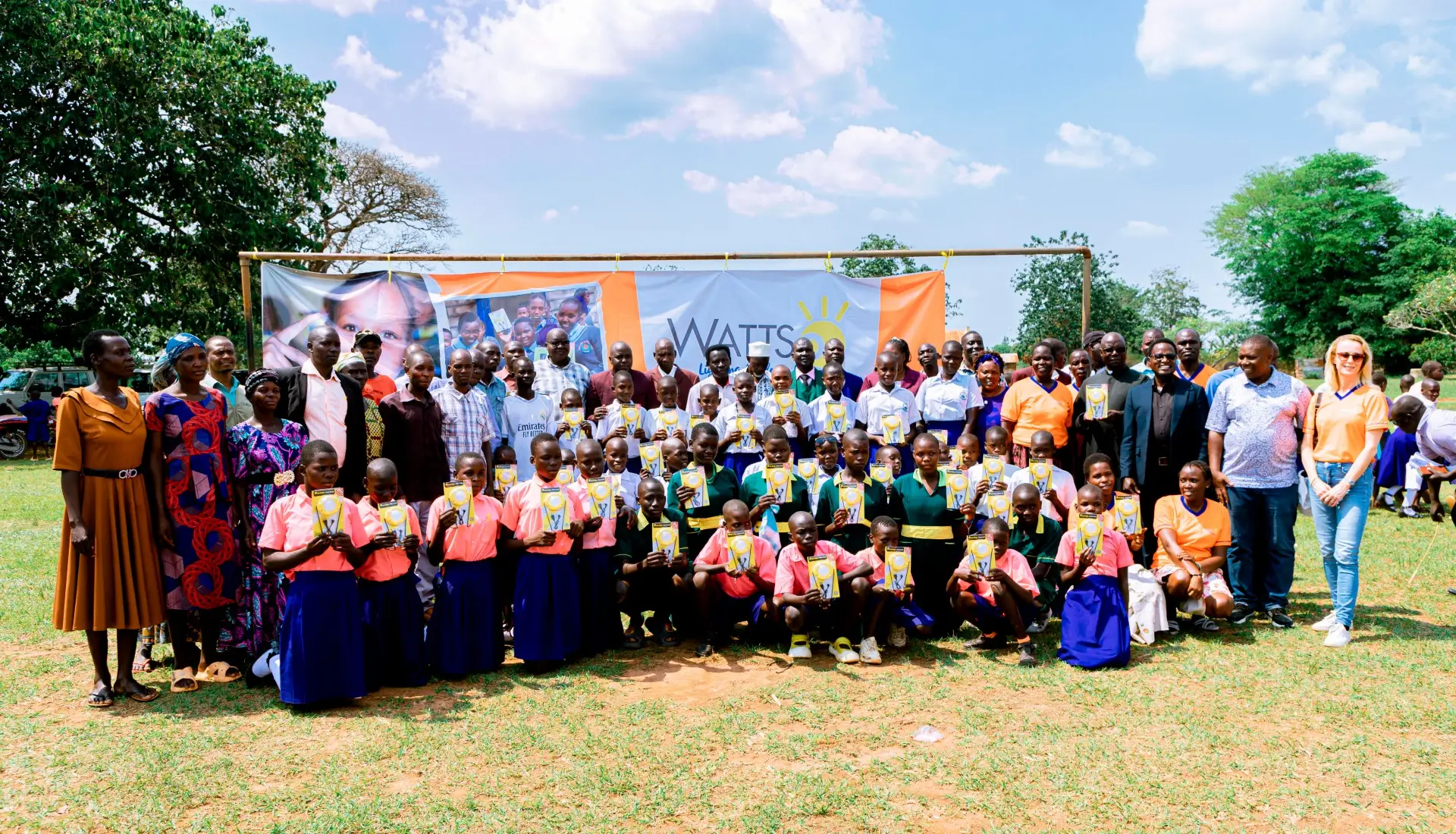
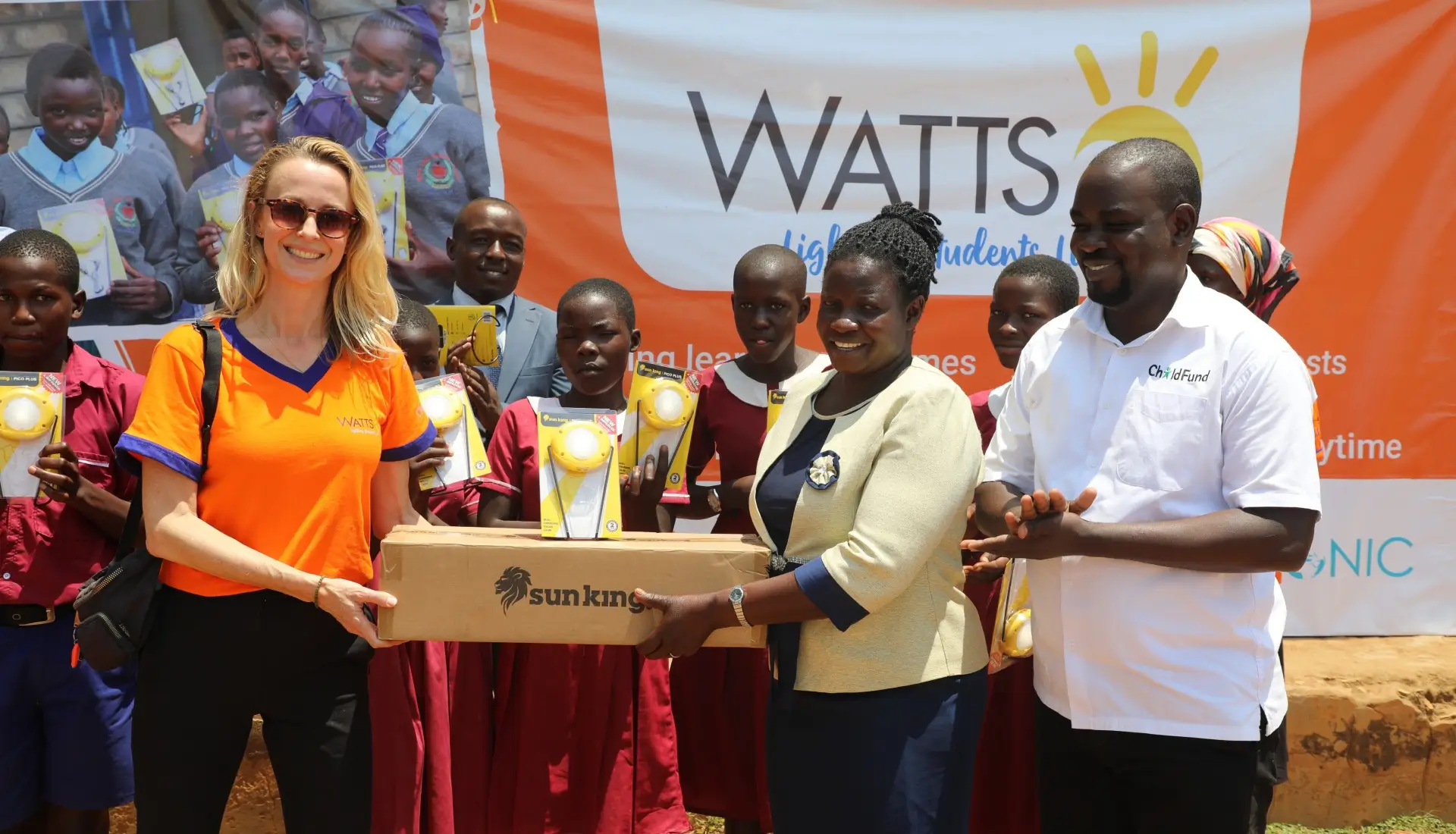
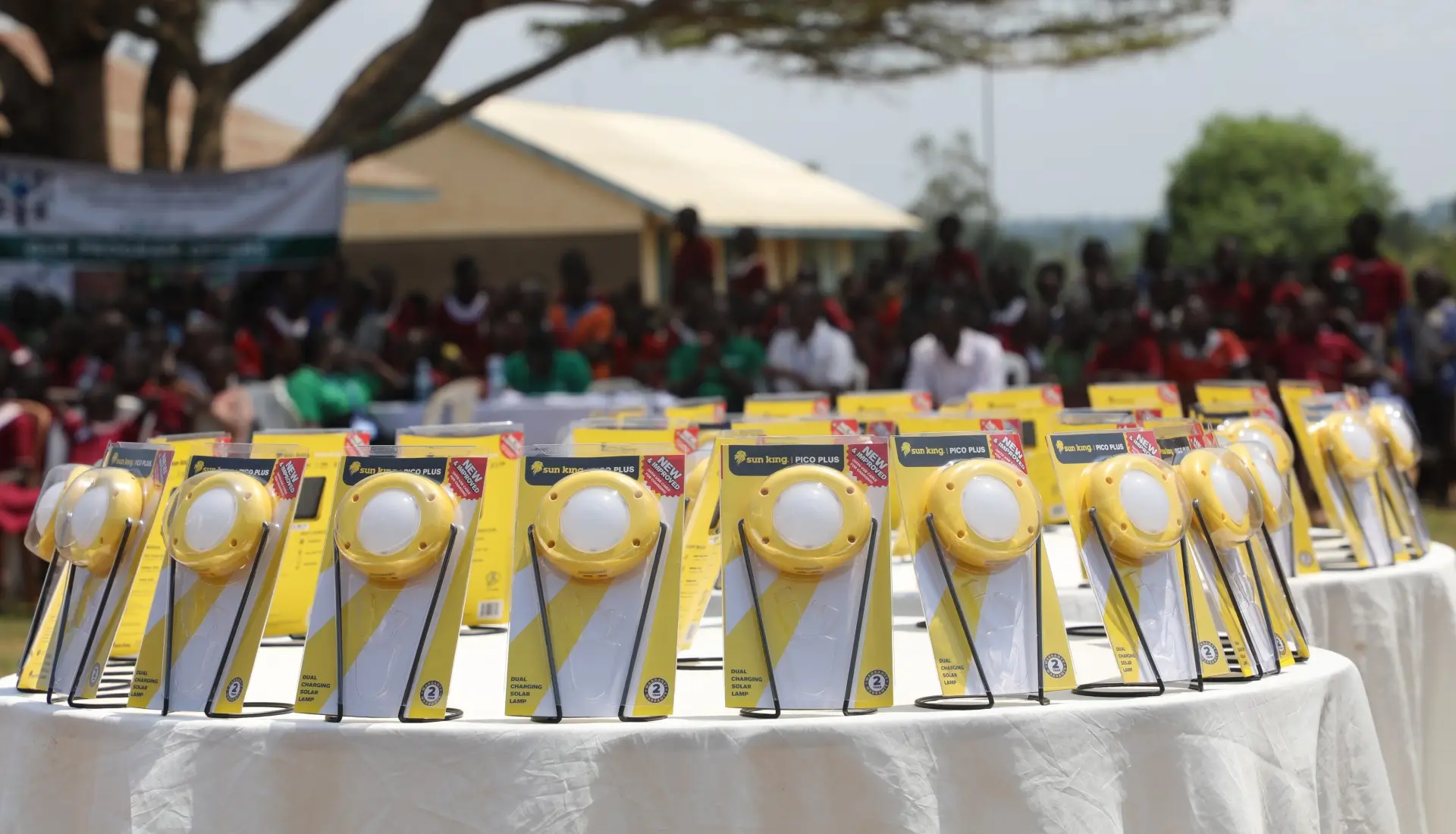
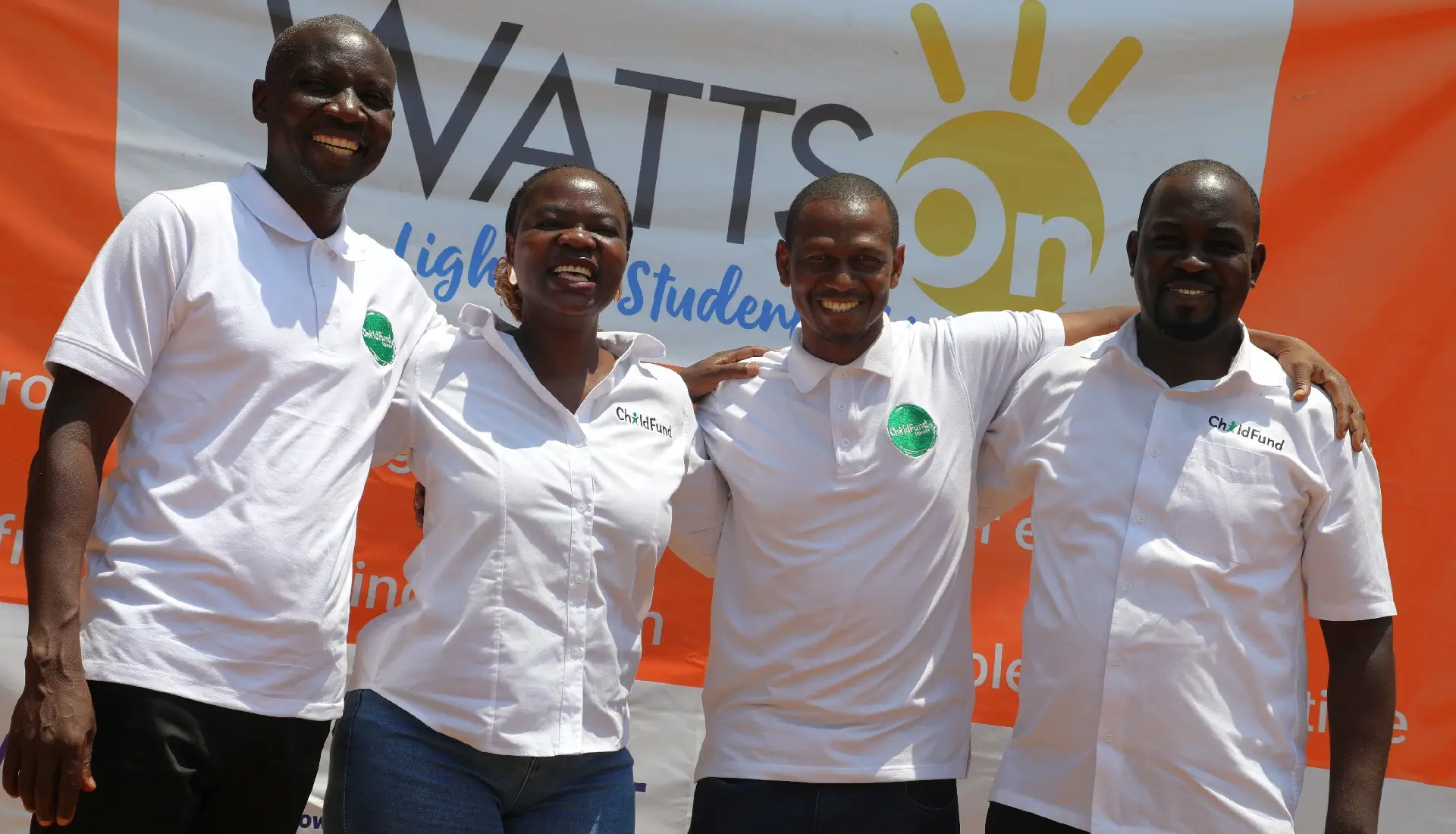
Through the WattsON Project, ChildFund, in partnership with Econic Earth, distributed a total of 2,200 solar lamps to learners in eight schools across the two sub-regions of Teso and Lango.
The initiative was officially launched at Abakuli Primary School and Akumoi Primary School, in Dokolo and Serere districts respectively, marking a step toward tackling one of the less visible barriers to education: energy poverty.
The problem
Access to electricity remains a major challenge in Uganda. According to the 2024 National Population and Household Census, only 25.3 percent of households have access to grid electricity. In Teso and Lango, the situation is even more constrained, with access as low as 5 percent in some communities.
“One of the challenges we face is that many learners come from rural homes that are not connected to the national electricity grid,” said David Eryeku, the District Education Officer of Dokolo. “Without proper lighting in the morning or evening, it becomes difficult for them to read effectively.”
Poor study conditions, he explained, contribute to low literacy and numeracy levels, which ultimately translate into weak performance in national examinations.
Solar access, while growing, is still limited, about 12.6 percent in Teso and 23.8 percent in Lango.
“For many children, evening study time is not possible because they simply have no safe lighting at home,” explained Nicole Watson, the founder Econic Earth, noting that the project was designed after recognizing that many learners revise their books in darkness or under hazardous alternatives.
Upper primary learners, especially those in Primary Six and Seven, preparing for the Primary Leaving Examination, are among the most affected. In overcrowded classrooms, where pupil-to-classroom ratios can exceed 100:1 in parts of northern and eastern Uganda, self-study at home becomes essential to reinforce lessons.
Lighting the path to better performance
The solar lamps aim to change that by giving learners the ability to study safely and comfortably at night.
“We officially launch the WattsON Project in Lango and Teso sub-regions, an initiative that reflects a simple but powerful belief that every child, regardless of where they are born, deserves the light to learn, dream and succeed,” said Titus Tumusiime, Country Director of ChildFund Uganda.
The lamps, he added, will increase the time available for homework and revision while eliminating dependence on kerosene lamps and candles, which pose health and fire risks.
Jane Akello, the headteacher of Akumoi Primary School in Serere District, said the introduction of the solar lamps will enable learners to complete assignments and feel motivated to succeed.
“Many children used to struggle to study after dark. Yet we give them homework and expect them to deliver it the next day. But some fail. I am happy that these lamps will help their learning,” Jane said.
Michael Ojara, who will sit his primary seven exam this year said, “Before the lamps, I had to read by candlelight, and sometimes the smoke would make me cough. But now, I will study comfortably and even help my younger siblings with their lessons.”
The WattsON Project builds on ChildFund Uganda’s broader education work across the country.
ChildFund initiatives
During the 2025 financial year, ChildFund reached 617,278 people, including 22,559 sponsored children, through programmes that strengthened foundational literacy and numeracy, promoted safe and inclusive learning environments and supported climate-resilient livelihoods.
The education initiatives supported 34,796 pupils and 1,105 teachers across 116 schools in 30 districts, while engaging 1,512 stakeholders.
These efforts helped 6,258 pupils complete their Primary Leaving Examinations, alongside 654 students who completed the Uganda Certificate of Education and 325 who finished the Uganda Advanced Certificate of Education.
In the Lango sub-region alone, ChildFund’s education interventions reached 11,811 primary school learners and teachers, while 7,046 learners in Teso benefited from similar programmes.


Related Resources

A backpack innovation supporting children carry less and learn more
Until recently, fetching water was one of the hardest parts of Samuel's day.

New ‘jerrybags’ ease water burden for refugee schoolchildren in Northern Uganda
Before the school bell rings, many children in Palorinya Refugee Settlement have already walked several...

Harnessing technology to expand access to SRH information for youth
Over 20,000 young people across Uganda will now have easier access to accurate, confidential and...